
Infectious Disease
Positive flu test? What it means and what to do next
December 18, 2025
10 min read


Medically reviewed by Alan Lucks | MD on June 17th, 2026 and Faith Coleman on October 26th, 2026.
Published on June 11th, 2026. Updated on October 26th, 2026.
Test between 48 and 72 hours after symptoms start, when virus levels are usually highest.
A test taken in the first 12 to 24 hours may read negative even with the flu.
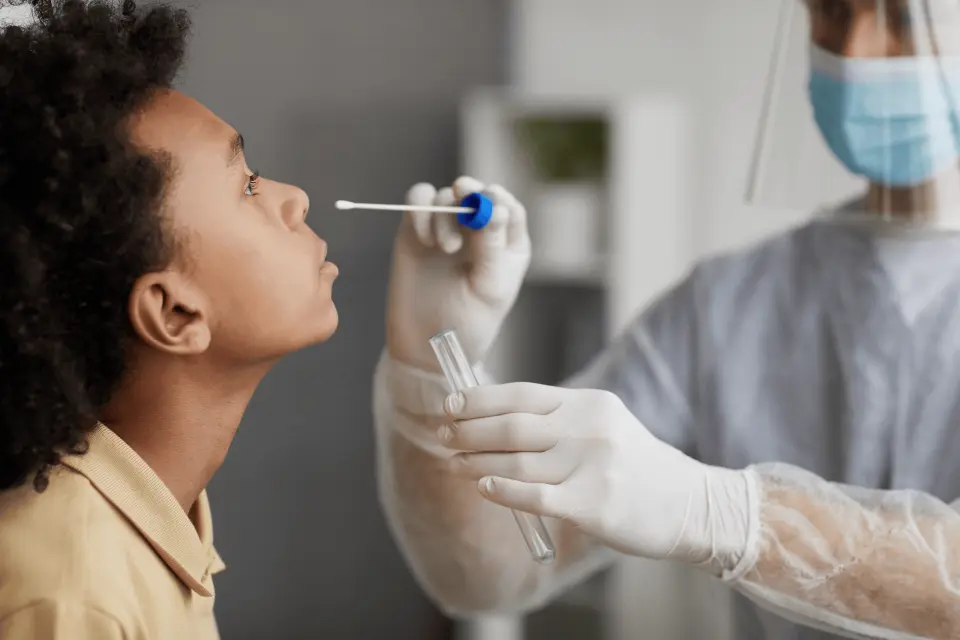
Insert the swab about half an inch and rotate it several times against the nasal walls.
A negative home test may still miss flu if you feel very sick.
Contact a clinician after a positive result, since antivirals work best within 48 hours.
At-home flu tests are most accurate for influenza A. A positive result is usually reliable, but home antigen tests miss more infections than lab tests, so a negative result is less certain. Sensitivity for influenza B tends to be lower. Results are best with proper technique and timing, and each test's package insert lists its own accuracy figures.
Real-world studies often show slightly lower accuracy rates than controlled clinical trials, reflecting the challenges of proper home use without healthcare provider guidance. False negatives become more likely when the swab is collected poorly or the test is taken too early.
Comparative studies between at-home tests and professional rapid tests show similar accuracy ranges, though healthcare provider-administered tests typically perform slightly better due to superior collection technique and immediate result interpretation. When managing the flu at home, understanding these accuracy limitations helps set appropriate expectations for test results.
At-home flu tests primarily use antigen detection technology to identify specific proteins from influenza viruses in nasal secretions. These rapid diagnostic tests work differently from the more sensitive molecular PCR testing used in laboratories. The antigen-based approach provides results within 10-20 minutes but requires sufficient viral load to trigger a positive result.
The testing process involves collecting a nasal swab sample from deep within the nostril, typically requiring insertion about half an inch into the nasal cavity. Proper collection technique is crucial for accurate results, since inadequate sampling is a common cause of false negatives. The sample is then mixed with testing reagents that react to viral proteins, producing visible lines or digital readouts indicating positive or negative results.
Unlike laboratory-based molecular tests that can detect tiny amounts of viral genetic material, at-home antigen tests need higher concentrations of virus to produce accurate results. This fundamental difference explains why timing and proper collection technique play such critical roles in test reliability.
Get flu treatment online today
A licensed doctor can review your symptoms and send a prescription to your pharmacy, often the same day.
Related medications we prescribe
Learn moreTake an at-home flu test 48 to 72 hours after symptoms start, when the amount of virus in your nose is usually highest. Testing in the first 12 to 24 hours may give a negative result even if you have the flu, because there may not be enough virus yet for the test to detect it.
That window overlaps with the timing for treatment. Antivirals (prescription medicines that fight the flu virus) work best when started within 48 hours of symptom onset, so waiting until day three to test can use up much of that time. If you are at higher risk of flu complications, contact a clinician early instead of waiting for a test result.
Use your symptom timeline to decide what to do:
Factor |
Impact on Accuracy |
Optimal Conditions |
|---|---|---|
Timing of Test |
High impact |
48-72 hours after symptom onset |
Collection Technique |
Very high impact |
Deep nasal swab, adequate sample size |
Storage Conditions |
Moderate impact |
Room temperature, within expiration date |
Viral Load |
High impact |
Peak viral shedding period |
User Experience |
Moderate impact |
Following instructions carefully |
The timing of a test relative to symptom onset affects how reliable it is. Viral loads typically peak within the first 2-3 days of illness, making this the optimal testing window. Testing too early, within the first 12-24 hours of symptoms, often produces false negatives because insufficient viral material may be present for detection.
Proper sample collection represents the most critical user-dependent factor affecting accuracy. Many individuals don't insert the swab deeply enough or rotate it adequately to collect sufficient sample material. The swab should be inserted approximately half an inch into the nostril and rotated several times against the nasal walls, which can feel uncomfortable but ensures adequate sampling.
Storage conditions and expiration dates also impact test performance. Tests stored in extreme temperatures or past their expiration dates may show decreased sensitivity.
False negative results occur more frequently than false positives with at-home flu tests. Early infection periods present the highest risk for false negatives because viral loads may not reach detectable levels during the first 12 to 24 hours after initial symptoms appear. This creates a challenging window where individuals feel sick but test negative despite having influenza.
User technique errors represent another major cause of inaccurate results. Common mistakes include inadequate swab insertion depth, insufficient sample collection time, improper mixing with reagents, or misreading results outside the specified time window. These errors typically lead to false negatives rather than false positives.
Cross-reactivity with other respiratory viruses occasionally causes false positive results, though this occurs less frequently than false negatives. Some at-home tests may react to similar proteins from other viral infections, leading to positive flu results when individuals have different respiratory illnesses.
If your test is positive: Contact a clinician right away to ask about antivirals (prescription medicines that fight the flu virus), such as oseltamivir (Tamiflu). They work best when started within 48 hours of symptom onset. CDC recommends treatment even after 48 hours for people at higher risk of complications, people who are hospitalized, and people who are severely ill. Our guide on what to do after a positive flu test walks through the next steps.
If your test is negative but you feel very sick: You may still have the flu. Home tests miss some infections, especially early in an illness. Use these steps:
If you want help sorting out your result or asking about Tamiflu as a treatment option, you can start a free AI consultation any time, day or night. The AI can review your symptoms and timeline and suggest next steps to take to a prescriber. If your test is positive and you want to weigh Xofluza vs. Tamiflu as treatment options, ask your clinician which one fits your health history. If you want to get Tamiflu online after a positive test, a clinician should still confirm that an antiviral is the right choice for your health history.
Laboratory-based PCR testing remains the gold standard for flu diagnosis, offering sensitivity rates above 95% for both influenza A and B. These molecular tests can detect viral genetic material even at low concentrations, making them more reliable than antigen-based home tests. However, PCR results typically require 1-3 days, limiting their usefulness for immediate treatment decisions.
Healthcare provider-administered rapid tests use similar antigen detection technology as home versions but typically achieve slightly better accuracy due to professional collection techniques and immediate result interpretation. Office-based rapid tests also allow for clinical correlation with symptoms and physical examination findings, providing more comprehensive diagnostic assessment.
Cost-benefit analysis reveals that home tests offer convenience advantages despite accuracy limitations. A home test usually costs less than a healthcare visit that includes testing fees. For many individuals, the convenience of immediate results and avoiding healthcare facility exposure outweighs the reduced accuracy, especially when symptoms are mild to moderate.
Doctronic's AI consultations provide an additional option for symptom evaluation and test result interpretation. This technology bridges the gap between home testing convenience and professional medical guidance, offering 24/7 access to clinical expertise for those managing respiratory symptoms.
When considering home testing versus professional evaluation, factors beyond accuracy should influence decisions. High-risk individuals, those with severe symptoms, or people with underlying health conditions may benefit from professional testing and evaluation regardless of home test results. Exploring various home remedies for cold relief options alongside accurate testing can provide comprehensive symptom management approaches.
For parents dealing with pediatric symptoms, understanding when to transition from home remedies for cough to professional medical evaluation becomes particularly important, as children may require different diagnostic and treatment approaches than adults. If flu is suspected, antiviral medications (prescription drugs that fight the flu virus) work best when started within 48 hours of symptom onset, so contacting a clinician early leaves the most time to begin treatment. CDC recommends antiviral treatment for people at higher risk of flu complications, people who are hospitalized, and people with severe or worsening illness, including when more than 48 hours have passed since symptoms began. If you want to know how long a flu test takes at urgent care, ask the staff when you check in, since rapid office tests and PCR lab tests return results on very different timelines.
Most at-home flu tests can detect both influenza A and B, but they typically detect influenza A more reliably than influenza B. The sensitivity varies by brand and test type.
The optimal testing window is within the first 48-72 hours of symptom onset when viral loads are typically highest. Testing too early (first 12-24 hours) may result in false negatives due to insufficient viral material.
False negatives commonly occur due to testing too early in infection, improper swab collection technique, low viral loads, or testing after the peak viral shedding period, which typically occurs within the first few days.
Price doesn't necessarily correlate with accuracy. FDA-approved tests must meet specific performance standards regardless of cost. However, some premium tests may offer additional features like easier collection methods or faster results.
Consider professional evaluation if symptoms persist or worsen despite a negative test, especially if you're high-risk, have severe symptoms, or tested early in illness when false negatives are more likely.
At-home flu tests provide convenient screening, though they have limitations including lower sensitivity for influenza B and potential for false negatives during early infection. While these tests offer valuable initial screening capabilities, they shouldn't replace professional medical evaluation for severe symptoms or high-risk individuals. Proper timing within 48-72 hours of symptom onset and correct swab collection technique are essential for reliable results.
Get care for your infection
Chat Now