
Sunburn: Causes, Symptoms, Treatment, and Prevention | Easy Guide

Medically reviewed by Oghenefejiro Okifo | MD, Harvard Medical School | Henry Ford Hospital - Detroit, MI on July 23rd, 2026.
Published on January 18th, 2024. Updated on July 23rd, 2026.
Key takeaways
Sunburn results from UV radiation damaging skin cell DNA, triggering inflammation that appears 4-6 hours after exposure and peaks at 24-48 hours—by the time you notice redness, the damage is already done.
First-degree burns cause redness and pain lasting 3-5 days; second-degree burns with blistering indicate deeper damage requiring medical evaluation for infection risk and potential scarring.
Five or more blistering sunburns before age 20 doubles lifetime melanoma risk; even non-blistering burns contribute to cumulative DNA damage that increases skin cancer probability over decades.
Treatment focuses on symptom relief: cool compresses, aloe vera, NSAIDs for pain and inflammation, and aggressive hydration since sunburn draws fluid to the skin surface and can cause mild dehydration.
SPF 30 blocks 97% of UVB rays, SPF 50 blocks 98%—the difference is minimal, but reapplication every 2 hours and after swimming/sweating matters far more than higher SPF numbers for actual protection.
Questions about sunburn?
Free. Anonymous. Built by doctors.
Talk to our AI doctor for a clear, personalized read on your situation.
Sunburn treatment starts with cooling the skin, staying hydrated, and using OTC pain relievers — but severe cases with blisters, high fever, or signs of dehydration need a doctor's attention. Sunburn is caused by overexposure to the sun's ultraviolet (UV) rays and can range from mild redness to second-degree burns. It also raises your long-term risk of skin cancer. This guide covers causes, symptoms, treatment by severity, and how to prevent sunburn.
What Causes Sunburn?
Sunburn is caused by exposure to the sun's UV rays, specifically UVA and UVB rays. These rays penetrate the skin and can cause damage to the DNA in skin cells. The amount of time it takes to get a sunburn depends on your skin type, the sun's intensity, and how long you're exposed to the sun.
Sunburn Symptoms
The most common symptoms of sunburn include:
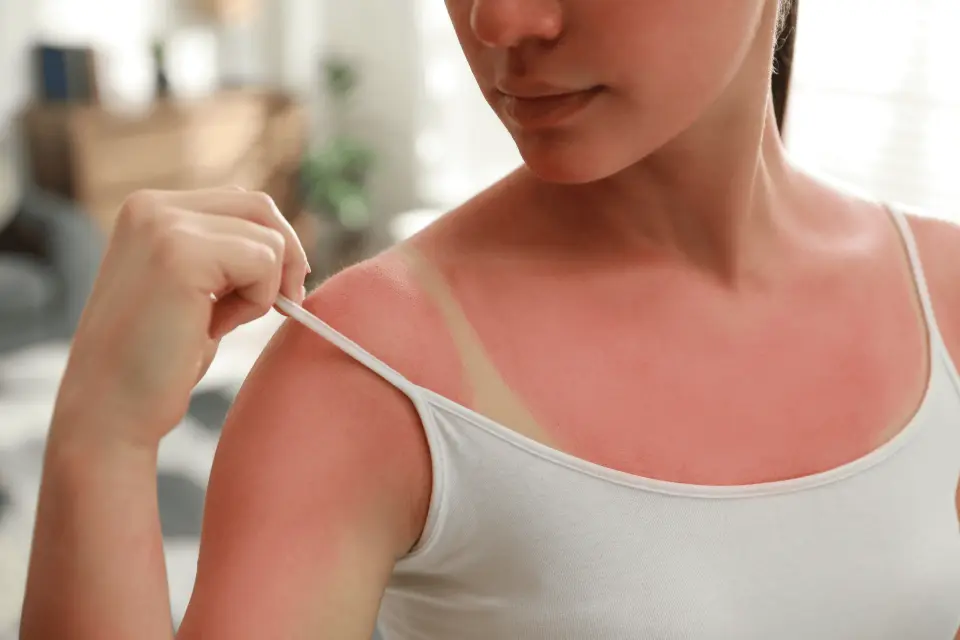
Red, painful skin
Swelling
Blisters (in severe cases)
Flu-like symptoms (fever, chills, nausea, headache, weakness)
Peeling and itching skin (a few days after the burn)
Get sunburn treatment online today
A licensed doctor can review your symptoms and send a prescription to your pharmacy, often the same day.
- $39 video visit
- Insurance accepted
- 4.8 on Trustpilot
Related medications we prescribe
Learn moreMild vs. Moderate vs. Severe Sunburn: How to Tell the Difference
Not all sunburns are the same. Knowing how severe yours is helps you choose the right treatment — and know when to get help.
Mild sunburn is the most common type. Skin looks pink or red, feels warm or tender, and may be slightly swollen. Symptoms typically appear within a few hours of sun exposure and peak around 24–36 hours. Mild sunburns usually heal on their own within 3–5 days, with peeling starting a few days after the burn.
Moderate sunburn covers a larger area of the body or produces more intense redness, significant pain, and swelling. You may feel tired, headachy, or slightly feverish. Skin can feel hot to the touch even in areas not directly burned. Moderate sunburns take 5–7 days to heal and benefit from consistent at-home care: cool compresses, aloe vera gel, ibuprofen, and extra fluids.
Severe sunburn — sometimes called sun poisoning — involves second-degree burns, where blisters form on the skin. This level of burn damages deeper layers of skin and requires careful management. Do not pop blisters; they protect the skin from infection. Alongside blisters, severe sunburn can cause:
High fever (above 103°F / 39.4°C)
Chills, nausea, or vomiting
Rapid pulse or rapid breathing
Dizziness or confusion
Extreme pain over a large body surface area
These symptoms can indicate heat exhaustion, dehydration, or an infection risk — all of which need prompt medical evaluation. Children, older adults, and people with light skin or certain medical conditions are at higher risk for severe reactions.
When to see a doctor: Seek care if you have blisters over a large area, a fever above 103°F, signs of dehydration, or if symptoms don't improve after a few days of home treatment. Our AI doctor can evaluate your sunburn severity, walk through your symptoms, and help you decide if an in-person visit is the right next step — without waiting on hold.
Sunburn Treatment
If you get a sunburn, there are several things you can do to find relief:
Apply cold compresses or take a cool bath to soothe the skin
Use creams or gels containing menthol, camphor, or aloe vera
Take over-the-counter pain relievers like ibuprofen or naproxen
Stay hydrated by drinking plenty of water and other fluids
Avoid further sun exposure until the burn heals
If you have a severe sunburn with blisters covering a large area of your body, a high fever (above 103°F), confusion, or signs of dehydration (dizziness, rapid heartbeat, no urination), seek medical care right away. Our AI doctor can help you assess your symptoms and decide if urgent care or an ER visit is needed.
Preventing Sunburn
The best way to deal with sunburn is to prevent it from happening in the first place. Here are some tips for protecting your skin from the sun:
Avoid sun exposure between 10 a.m. and 4 p.m. when the sun's rays are strongest
Wear protective clothing like a broad-brimmed hat, long-sleeved shirt, pants, and UV-blocking sunglasses
Apply broad-spectrum sunscreen with an SPF of at least 30 to all exposed skin, and reapply every 2 hours or after swimming or sweating heavily
Talk to your doctor about any medications you take that may increase your skin's sensitivity to the sun
By following these simple tips, you can enjoy time outdoors while keeping your skin safe from harmful UV rays and reducing your risk of sunburn and skin cancer. Remember, if you notice any unusual changes in your skin, such as a mole that is changing, growing, or bleeding, contact your doctor right away, as this may be a sign of skin cancer.
For more information on sun safety and skin protection, visit the CDC's sun safety page or the American Academy of Dermatology's sun protection guide.
Frequently Asked Questions
Mild sunburns typically heal within 3–5 days, while moderate burns can take up to a week. Severe sunburns with blistering may take 1–2 weeks to fully heal. Peeling usually starts 3–4 days after the burn as your body sheds damaged skin cells.
The fastest relief comes from applying a cool (not ice-cold) compress, using an aloe vera gel, and taking ibuprofen or naproxen to reduce pain and inflammation. Drink plenty of water, since sunburned skin loses moisture. Avoid further sun exposure and skip petroleum-based lotions, which can trap heat in the skin.
Yes — a mild, low-grade fever can occur with moderate sunburn as your body responds to skin damage. A high fever above 103°F, combined with chills, rapid heartbeat, or confusion, is a warning sign of severe sunburn or sun poisoning and warrants prompt medical attention.
Broad-spectrum sunscreen with SPF 30 or higher significantly reduces UV damage but doesn't block 100% of rays. Reapplying every 2 hours — and after swimming or sweating — is essential for it to work. Combining sunscreen with protective clothing and shade gives the best protection against sunburn.
The Bottom Line
Prevention through sunscreen, protective clothing, and avoiding peak UV hours (10am-4pm) is far more effective than treating sunburn after it occurs. If you have severe sunburn with extensive blistering, fever, or signs of heat exhaustion, Doctronic can help assess whether medical treatment is needed.
References
Related articles

Outdoor Injury First Aid: Essential Emergency Care for Wilderness Adventures

How Long Does Poison Ivy Last? Timeline, Stages, and Recovery Tips
Best Tick Repellents for Hiking, Gardening, and Outdoor Activities

Can Dehydration Cause Chest Pain? Signs, Symptoms & When to Seek Help
Check symptoms of sunburn
Chat Now