

Best Eczema Creams: OTC and Prescription Options Compared
Finding Relief: Your Guide to Eczema CreamsDry, itchy, inflamed skin keeps millions of people up at night. Eczema turns simple activities like showering or wearing certain [...]
Read More
Medically reviewed by Alan Lucks | MD , Alan Lucks MDPC Private Practice - New York on May 21st, 2026. Updated on May 21st, 2026
Eczema affects roughly 31.6 million Americans, making effective treatment selection a daily priority for millions of people
Ointments provide superior moisture retention compared to lotions and creams due to their higher oil content
Over-the-counter options work well for mild cases, while prescription treatments target moderate to severe flare-ups
Ceramides, colloidal oatmeal, and hydrocortisone represent the foundation of OTC eczema care
Prescription options include high-potency corticosteroids, calcineurin inhibitors, and newer PDE4 and JAK inhibitors
Proper application technique matters as much as choosing the right product
For help comparing eczema treatments tailored to your skin, Doctronic.ai offers AI-powered consultations and telehealth access
Dry, itchy, inflamed skin keeps millions of people up at night. Eczema turns simple activities like showering or wearing certain fabrics into painful experiences. The good news is that comparing the best eczema creams across OTC and prescription categories reveals real solutions that work. Approximately 31.6 million Americans live with some form of eczema, which means treatment options have expanded dramatically. The challenge lies in matching the right cream to individual skin needs. Some people find relief with drugstore moisturizers, while others require prescription-strength formulas. Light therapy (phototherapy) is also being used. Doctronic.ai helps patients understand their options through AI-powered consultations that consider personal medical history. This guide breaks down exactly what works, what to avoid, and how to build a treatment routine that actually delivers results.
Eczema disrupts the skin's natural protective layer, allowing moisture to escape and irritants to enter. Effective treatment focuses on repairing this barrier while calming inflammation. The goal is not just symptom relief but restoring skin function.
Healthy skin contains natural oils and proteins that lock in moisture and keep bacteria out. Eczema compromises this system, creating a cycle of dryness and irritation. Topical treatments work by replacing missing lipids, adding moisture, and sealing everything in place. The best formulas contain ingredients that mimic the skin's natural composition, particularly ceramides and fatty acids.
Lotions contain the most water and absorb quickly but provide the least protection. Creams offer a middle ground with balanced water and oil content. Ointments are generally the best choice for treating eczema due to their high oil content, which creates a protective seal over damaged skin. For severe dryness, ointments applied to damp skin deliver the most dramatic results.
Drugstore options handle mild to moderate eczema effectively when used consistently. The key is choosing products with proven ingredients and avoiding common irritants.
Colloidal oatmeal has centuries of use for irritated skin, and modern research confirms its effectiveness. It forms a protective film, reduces itching, and contains natural anti-inflammatory compounds. Look for products listing colloidal oatmeal as a primary ingredient rather than a minor additive. Brands like Aveeno built their reputation on this ingredient for good reason.
One percent hydrocortisone cream remains the only OTC steroid approved for eczema. It reduces inflammation quickly during mild flare-ups but should not become a daily habit. Limit use to affected areas for no longer than one to two weeks at a time unless directed by a healthcare provider. Overuse can thin the skin and reduce effectiveness over time.
Ceramides are lipids that naturally occur in healthy skin barriers. People with eczema often have lower ceramide levels, making supplementation through moisturizers essential. CeraVe and similar brands offer ceramide-focused formulas designed specifically for eczema-prone skin. Apply these products immediately after bathing to lock in moisture.
When OTC options fall short, prescription treatments provide significantly more power. These require medical supervision but can transform quality of life for people with stubborn eczema.
Prescription steroids range from mild to super-potent, with dermatologists matching strength to severity and body location. Triamcinolone and betamethasone represent commonly prescribed mid-to-high potency options. These work faster and more effectively than OTC hydrocortisone but carry higher risks with prolonged use. Doctronic.ai can help patients understand steroid potency classifications and discuss concerns with licensed physicians through convenient telehealth visits.
Tacrolimus and pimecrolimus offer steroid-free prescription alternatives that work by suppressing immune responses in the skin. These are particularly valuable for sensitive areas like the face and eyelids where steroids pose greater risks. TCIs can be used longer-term without the skin-thinning effects of corticosteroids.
Crisaborole represents the PDE4 inhibitor class, reducing inflammation through a different pathway than steroids. Newer JAK inhibitors like ruxolitinib and delgocitinib creams provide additional non-steroid options for moderate cases. These medications offer alternatives for patients who cannot tolerate or prefer to avoid corticosteroids.
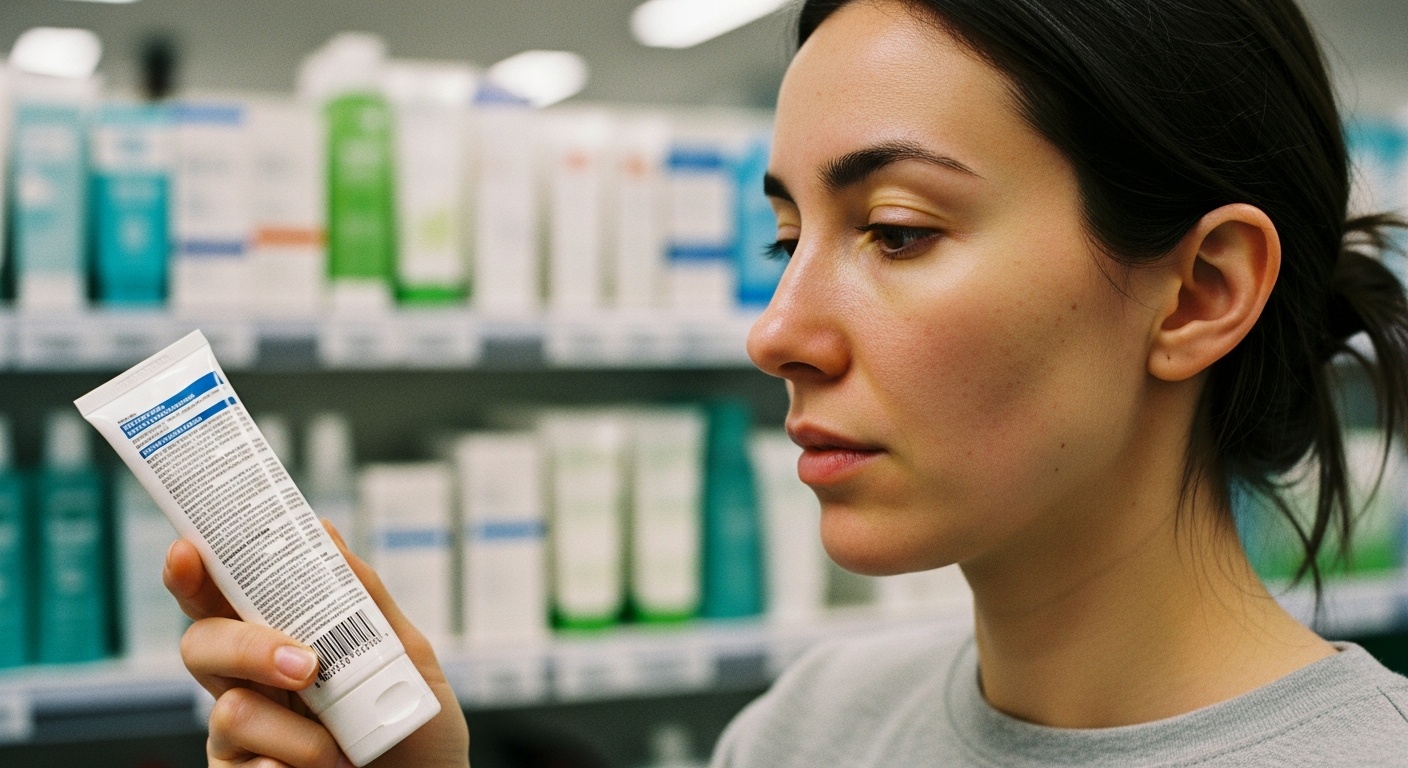
Understanding ingredient labels separates effective products from marketing hype. A few minutes of label reading prevents weeks of wasted time and money.
Humectants like glycerin and hyaluronic acid pull moisture into the skin. Emollients such as shea butter and squalane soften and smooth rough patches. Occlusives including petrolatum and dimethicone create a physical barrier that prevents moisture loss. The most effective eczema creams combine all three categories in one formula.
Fragrance tops the list of eczema triggers, even in products labeled "sensitive skin." Artificial dyes serve no therapeutic purpose and frequently cause reactions. Parabens are generally considered safe by the FDA and major dermatology associations, but some individuals with eczema may still react to them or to formaldehyde-releasing preservatives. Choose products explicitly labeled fragrance-free rather than unscented, as unscented products may contain masking fragrances.
Matching treatment to specific needs prevents both under-treatment and unnecessary medication use. Body location and severity guide these decisions.
Thin-skinned areas like the face, neck, and groin absorb medications more readily and require gentler formulas. Thick-skinned areas like palms and soles may need stronger treatments to penetrate effectively. Using high-potency steroids on the face can cause permanent damage, while weak formulas on the hands may provide no relief.
If OTC products fail to control symptoms after two to three weeks of consistent use, prescription options deserve consideration. Eczema that disrupts sleep, spreads rapidly, or shows signs of infection requires professional evaluation. Doctronic.ai offers 24/7 telehealth consultations with licensed physicians who can assess symptoms and prescribe appropriate treatments when needed.
Even the best cream fails when applied incorrectly. Timing and technique matter as much as the product itself. Apply moisturizers within three minutes of bathing while skin remains damp to trap maximum moisture. Use enough product to leave a slight sheen without dripping. Apply prescription medications to affected areas first, then layer moisturizer over the entire body. Consistency beats intensity: twice-daily application of a moderate product outperforms occasional use of stronger formulas.
Most OTC moisturizers are safe for children, but steroid use requires pediatric guidance. Children's skin absorbs medications more readily, increasing both effectiveness and risk. Consult a healthcare provider before using any prescription treatment on children.
Moisturizers may show improvement within days, while prescription treatments typically need between one and four weeks for noticeable effects. If no improvement occurs after three weeks, the treatment approach may need adjustment.
Layering moisturizers over prescription treatments is standard practice. Apply medications first, wait a few minutes, then seal with a thick moisturizer or ointment. Avoid mixing multiple prescription medications without medical guidance.
Some natural ingredients like colloidal oatmeal and coconut oil provide genuine benefits. Many "natural" products still contain potential irritants like essential oils. Evaluate ingredient lists rather than marketing claims.
Finding effective eczema relief requires matching the right cream to individual skin needs, whether that means OTC ceramide moisturizers or prescription-strength treatments. For personalized guidance on comparing eczema treatment options, visit Doctronic.ai for AI-powered consultations and convenient telehealth access to licensed physicians.
Finding Relief: Your Guide to Eczema CreamsDry, itchy, inflamed skin keeps millions of people up at night. Eczema turns simple activities like showering or wearing certain [...]
Read More
Join 50,000+ readers using Doctronic to understand symptoms, medications,
and next steps.
Add your phone number below to get health updates and exclusive VIP offers.
By providing your phone number, you agree to receive SMS updates from Company. Message and data rates may apply. Reply “STOP” to opt-out anytime. Read our Privacy Policy and Terms of Service for more details.
Save your consults. Talk with licensed doctors and manage your health history.
