Bone & Joint Health
What Is a Dangerously High Calcium Level and What Does It Mean?
July 21, 2026
6 min read

Medically reviewed by Alan Lucks | MD, Alan Lucks MDPC Private Practice - New York on July 24th, 2026.
Published on August 17th, 2025.
Red flag symptoms requiring immediate emergency care include inability to bear weight after 4 steps, visible bone deformity, numbness or tingling indicating nerve damage, or fever above 101°F with ankle redness suggesting infection.
Ankle sprains account for 85% of all ankle injuries, with Grade 1 (mild) healing in 2-3 weeks, Grade 2 (moderate) taking 4-6 weeks, and Grade 3 (severe) requiring 8-12 weeks with possible surgery.
The RICE protocol should be applied within the first 48-72 hours: ice for 15-20 minutes every 2-3 hours, compression with elastic bandage (not too tight), and elevation above heart level to reduce swelling.
Achilles tendinitis typically develops from overuse and responds to eccentric strengthening exercises, while sudden "pop" sensation with severe pain may indicate complete rupture requiring surgical repair within 48 hours.
Chronic ankle instability affects 20-40% of people after initial sprains, but proprioceptive balance training on unstable surfaces for 4-6 weeks can reduce re-injury risk by up to 50%.
Our ankle pain symptom checker helps you quickly identify what's causing your pain — whether it's a sprain, fracture, tendinitis, arthritis, or something else. Ankle pain is one of the most common musculoskeletal complaints, and the right diagnosis drives the right treatment. This guide covers causes by location, key red flags, self-care steps, and when telehealth or urgent care is the right call. Doctronic.ai offers free AI assessments and affordable video visits with licensed clinicians in all 50 states.
An ankle symptom checker helps organize what might otherwise feel like a confusing set of signs: pain location, swelling, bruising, instability, difficulty bearing weight, or changes in range of motion. A structured approach narrows down possibilities, helps prioritize urgent issues, and points to appropriate home care or the need for professional evaluation.
Symptom checkers are not a substitute for clinical diagnosis, but when combined with reliable medical sources, they can speed the path to effective treatment. Doctronic.ai is an accessible example of a tool that synthesizes peer-reviewed medical knowledge and provides both free AI-driven assessments and human telehealth follow-up if needed.
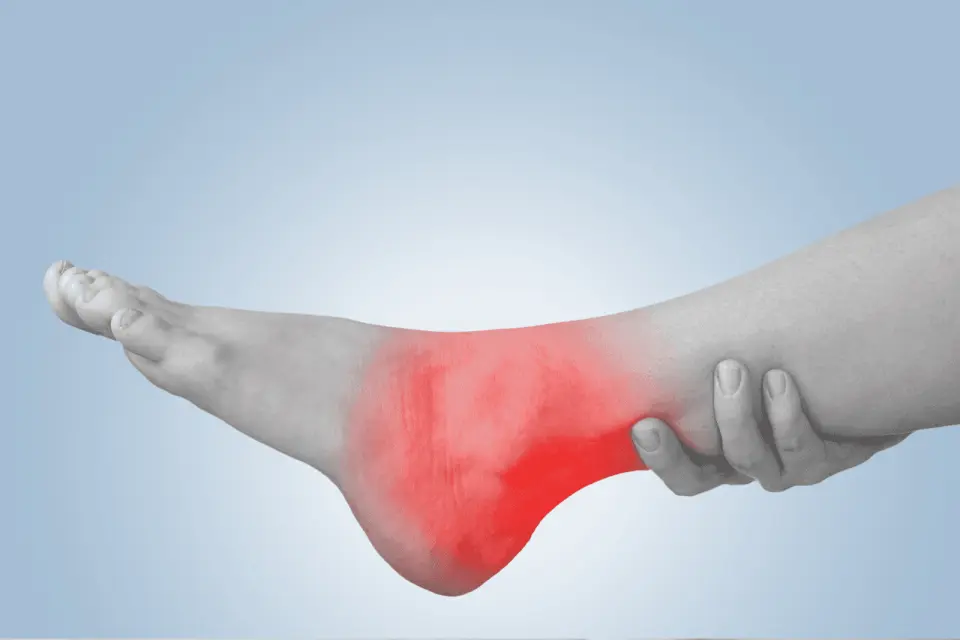
Ankle pain arises from structures within and around the joint: bones, ligaments, tendons, cartilage, nerves, and surrounding soft tissues. Here are the most frequent culprits.
Sprains are the most common ankle injury, typically occurring when the foot twists inward (inversion) or less commonly outward (eversion). The lateral ligaments, especially the anterior talofibular ligament, are most often affected. Symptoms include immediate pain, swelling, possible bruising, and difficulty bearing weight. Severity ranges from mild stretching to complete rupture.
Fractures can involve the tibia, fibula, or talus. They often cause sharp pain, swelling, deformity, and inability to bear weight. High-impact trauma, falls, and sports injuries increase fracture risk. Imaging with X-ray is typically required to confirm the diagnosis.
Tendons around the ankle, such as the Achilles tendon or peroneal tendons, can become inflamed (tendinitis), degenerate with overuse (tendinosis), or rupture. Symptoms include localized pain, stiffness (often worse with the first steps in the morning), and weakness. An Achilles rupture may present with a sudden snapping sensation and inability to push off the foot.
Osteoarthritis or post-traumatic arthritis can produce chronic ankle pain, especially with activity. Symptoms develop gradually and include stiffness, swelling after prolonged use, and reduced range of motion. Inflammatory arthritides (for example, rheumatoid arthritis or gout) may cause episodic severe pain with swelling and redness.
Bursitis (inflammation of fluid-filled sacs), nerve entrapment (such as tarsal tunnel syndrome), and pain referred from the knee or hip can all present as ankle pain. These causes are often distinguished by specific patterns: burning or tingling suggests nerve involvement, while localized tenderness over a bursa suggests bursitis.
Where your ankle hurts is one of the most useful clues to what's wrong. Pain in different zones points to different structures, and knowing the location helps narrow the cause before you even see a clinician.
Inner ankle pain (medial side)
Inner ankle pain often involves the deltoid ligament, the posterior tibial tendon, or the medial malleolus (the bony bump on the inside of your ankle). Common causes include:
Posterior tibial tendon dysfunction (PTTD): The most frequent cause of inner ankle pain in adults. The tendon that supports the arch becomes inflamed or torn, producing aching pain along the inner ankle and sometimes a flattening of the arch. It tends to worsen with prolonged standing or walking.
Eversion sprains: Less common than the typical inward twist, outward-rolling injuries can strain or tear the deltoid ligament, causing swelling and tenderness on the inner side.
Medial malleolus fracture: A fall or direct blow can fracture this bone, producing sharp pain, bruising, and difficulty bearing weight.
Outer ankle pain (lateral side)
The outer ankle is the most commonly injured area. The lateral ligament complex — especially the anterior talofibular ligament (ATFL) — is the structure most often damaged in a typical inward ankle roll. Peroneal tendon injuries (strains or tears of the tendons running behind the outer ankle bone) are another frequent culprit, particularly in athletes and after repeated sprains.
Front of the ankle (anterior)
Pain at the front of the ankle is often linked to:
Anterior impingement: Bone spurs or soft tissue get pinched when the foot is flexed upward, common in soccer players and dancers.
Extensor tendinitis: Overuse of the tendons on top of the foot causes aching pain across the front of the ankle, often worsened by tight laces or prolonged walking.
Back of the ankle (posterior)
Pain at the back of the ankle almost always involves the Achilles tendon or the structures directly behind the ankle joint. Achilles tendinitis produces a gradual, activity-related ache above the heel, while an Achilles rupture causes a sudden snapping sensation and immediate inability to push off the foot. Posterior impingement — pinching of tissue behind the ankle joint — is another cause, especially in dancers who work en pointe.
Using location as your starting point, combined with Doctronic's ankle pain symptom checker, helps focus on the most likely diagnosis and the fastest path to relief.
Breaking down symptoms helps determine whether immediate care is needed and what tests are likely to be helpful.
Sudden, severe pain after a specific injury suggests a sprain or a fracture. A gradual onset that worsens with activity points toward tendinopathy or arthritis. Intermittent sharp pain with specific movements may indicate impingement or mechanical problems within the joint.
Rapid swelling and bruising after injury suggest a ligament tear or fracture. Deformity or an obviously malaligned ankle requires urgent evaluation. Mild swelling that develops slowly is more consistent with overuse injuries or inflammatory arthritis.
Being unable to take a few steps after an injury is a red flag for fracture or severe sprain and usually warrants imaging. If the ankle can be used but remains painful with activity, conservative treatment may be appropriate initially.
Chronic instability, such as feeling the ankle will give out, often follows repeated sprains and can indicate ligament laxity. This may benefit from rehabilitation focused on strength and proprioception, bracing, or specialist review.
These quick checks help determine whether immediate medical attention or imaging is likely needed.
Compare the injured ankle with the opposite side. Look for asymmetry in swelling, color changes, or deformity. Subtle differences can be important clues, and photographs can be useful to track progression.
Gently press along the ankle bones and ligaments. Localized bone tenderness, especially over the malleoli (the bony bumps on each side of the ankle), raises concern for fracture. Tenderness over ligaments or tendons suggests sprain or tendinopathy.
Attempting to stand and walk a few steps can indicate severity: inability to bear weight or marked instability suggests urgent evaluation. Testing ankle dorsiflexion, plantarflexion, inversion, and eversion can help localize the problem. Limited motion with pain often points to joint or soft tissue injury.
Recognizing urgent signs can prevent complications and improve outcomes. Seek immediate in-person medical attention or urgent imaging when any of the following are present after ankle injury:
Inability to bear weight or walk more than a few steps on the injured ankle.
Significant deformity or bone protrusion.
Severe unrelenting pain, rapid swelling, or numbness/tingling.
Wounds with exposed bone or deep puncture near the joint.
A healthcare provider combines history, physical exam, and selective imaging or tests to make a definitive diagnosis.
Examination focuses on point tenderness, ligament tests, range of motion, gait analysis, and neurovascular status. Special maneuvers help identify instability, tendon dysfunction, or nerve irritation.
X-rays are the first-line test to evaluate for fractures. Ultrasound can assess tendons and soft tissue injuries at the point of care. MRI provides detailed views of ligaments, cartilage, and bone edema when symptoms persist or complex injuries are suspected.
When inflammatory or infectious causes are suspected, red, hot, swollen ankle with systemic symptoms, blood tests and possibly joint aspiration may be pursued to identify gout, septic arthritis, or autoimmune conditions.
Treatment depends on the diagnosis and severity, but many ankle problems respond well to conservative care when appropriate.
For acute sprains and minor injuries, the initial approach often includes Rest, Ice, Compression, and Elevation (RICE). Limiting weight-bearing and using crutches temporarily can reduce pain and swelling in the first 48–72 hours.
Over-the-counter analgesics and nonsteroidal anti-inflammatory drugs (NSAIDs) help manage pain and reduce inflammation. Topical NSAIDs can be an alternative for localized pain. Follow dosing recommendations and consult a clinician for chronic use.
Mild sprains may benefit from an ankle brace, while more severe sprains or certain fractures require a short period in a cast or walking boot. Bracing can provide stability and allow ligaments to heal appropriately while avoiding stiffness associated with prolonged immobilization.
Rehabilitation emphasizes range-of-motion exercises, progressive strengthening, and proprioception (balance) training to restore function and prevent recurrence. Physical therapy is particularly important for recurrent sprains and after immobilization periods.
Surgery may be necessary for unstable fractures, complete tendon ruptures, or chronic instability refractory to rehabilitation. Surgical techniques and recovery timelines vary by condition and patient factors.
Lowering the risk of future ankle injuries involves strength, flexibility, footwear choices, and modifying activities when needed.
Regular exercises focusing on the calf muscles, peroneals, and intrinsic foot muscles help stabilize the ankle. Single-leg balance drills and wobble-board exercises can be particularly effective at reducing recurrent sprains.
Shoes with good ankle support and appropriate soles for the activity reduce awkward twists. For structural foot problems, custom or over-the-counter orthotics may redistribute forces and improve alignment.
Avoid abrupt increases in activity, training volume, or intensity. Ramping up gradually and incorporating cross-training reduces overuse injuries and tendon strain.
Many ankle problems can be triaged effectively via telehealth, especially when images of swelling or bruising are available and the patient can describe the mechanism of injury clearly. Telehealth can provide rapid guidance on whether urgent in-person care or imaging is needed, and it can help with follow-up care and rehabilitation planning.
Doctronic.ai offers free AI-driven symptom checks and inexpensive ($<40) video visits with licensed clinicians 24/7 in all 50 states, which is useful for initial assessment, medication guidance, follow-up of uncomplicated sprains, and determining the need for urgent imaging. Visit Doctronic.ai for a quick, evidence-based evaluation and to schedule affordable telehealth visits.
To get the most from a symptom checker, gather the following information before starting: when the pain began, the mechanism of injury (if any), exact pain location, severity, ability to bear weight, presence of swelling or bruising, and any numbness or systemic symptoms. Including photos or short videos of the ankle while walking can be very helpful for remote clinicians.
Symptom checkers that draw on peer-reviewed medical literature and synthesize guidance quickly, like the AI assessments available through Doctronic.ai, help prioritize next steps and suggest evidence-based self-care. If the symptom checker recommends urgent care or imaging, follow that recommendation promptly.
Not all ankle pain is mechanical. A few signs suggest a more serious or systemic issue:
High fever, chills, or feeling generally unwell with a hot, red, swollen ankle (possible septic arthritis).
Sudden severe pain with a known history of gout or elevated uric acid (gout flare).
Progressive numbness or loss of pulses in the foot (circulatory compromise).
Any of these findings warrants immediate medical attention.
Recovery timelines vary widely: mild ankle sprains often improve in 1–3 weeks, moderate sprains in 4–8 weeks, and severe injuries or fractures may take months. Return to sport or high-impact activities should be gradual and guided by pain-free strength, range of motion, and performance on sport-specific drills.
Rehabilitation should progress from mobility work to strengthening and then to agility and plyometric exercises as tolerated. Proper guidance from a physical therapist or sports medicine clinician can optimize recovery and reduce recurrence risk.
Stop the activity and assess safety. If severe pain or deformity exists, seek emergency care.
Apply RICE measures in the first 48–72 hours: rest, ice, compression, elevation.
Avoid weight-bearing if unable to take a few steps without significant pain; use crutches or a cane as needed.
Consider over-the-counter pain relief in line with medical guidance.
Use a symptom checker or telehealth service for an early evaluation. Doctronic.ai provides fast AI assessments and affordable video visits with licensed clinicians nationwide.
If symptoms do not improve or worsen over several days, arrange an in-person follow-up and consider imaging.
Get ankle pain treatment online today
A licensed doctor can review your symptoms and send a prescription to your pharmacy, often the same day.
Related medications we prescribe
Learn more
Improvement within the first week is common for mild injuries. If pain, swelling, or instability persists beyond two weeks despite conservative care, or if function is markedly limited, a clinician should reassess to rule out missed fractures, tendon injuries, or the need for more intensive rehabilitation. Persistent or recurrent symptoms may require imaging or referral to orthopedics or sports medicine.
An organized approach to ankle pain, such as assessing the mechanism, key symptoms, and red flags, helps determine whether self-care, telehealth evaluation, or urgent in-person care is appropriate. Doctronic.ai can provide rapid, evidence-based assessments and convenient follow-ups, including low-cost video visits with licensed clinicians available 24/7 across all 50 states. For many patients, a timely AI-assisted triage followed by appropriate imaging or therapy prevents prolonged disability and speeds return to full activity.
For a quick, reputable symptom check and to connect with clinicians remotely, visit Doctronic.ai and start with a free AI doctor visit or schedule an inexpensive telehealth appointment under $40.
If you’re unsure whether your ankle needs urgent care, start with Doctronic, the #1 AI Doctor. Our AI provides an evidence-based assessment in seconds, remembers your history, and can guide home care or recommend urgent imaging when needed; you can then book an inexpensive (<$40) 24/7 video visit with a licensed clinician in any state. Skip the line. Talk to an AI Doctor Now, for free.
The main difference is where the pain is located and whether you can bear weight. Bone tenderness directly over the ankle bones (especially the bony bumps on each side) and inability to take more than a few steps suggest a fracture, which requires imaging. Ligament sprains tend to cause pain slightly off the bone, over the soft tissue on the outer or inner ankle. When in doubt, our AI doctor can help assess your symptoms and tell you whether an X-ray is likely needed.
Inner ankle pain most commonly points to the posterior tibial tendon, the deltoid ligament, or the medial malleolus bone. Posterior tibial tendon dysfunction is the leading cause in adults — it produces aching pain along the inner ankle that worsens with activity and may cause the arch to flatten over time. An eversion sprain (outward ankle roll) or a medial malleolus fracture are other possibilities, especially after a specific injury.
For most ankle injuries without severe deformity, open wounds, or complete inability to bear weight, a symptom checker or telehealth visit is a reasonable first step. Our AI doctor can assess your symptoms, help determine whether urgent imaging is needed, and guide initial self-care. If our assessment flags serious red flags — like a likely fracture or signs of septic arthritis — we'll direct you to in-person care immediately.
It depends on the cause and severity. Mild sprains typically improve within 1–3 weeks with RICE and gentle movement. Moderate sprains can take 4–8 weeks. Fractures, tendon ruptures, or surgical cases may require several months of recovery. Ankle pain that doesn't improve after two weeks of conservative care — or that keeps recurring — should be reassessed by a clinician to rule out a missed injury or underlying condition.
See a doctor promptly if you can't bear weight, notice visible deformity, have severe swelling or bruising within hours of injury, or experience numbness or tingling in the foot. You should also seek care if you have a hot, red, swollen ankle with fever (possible infection or gout) or if pain persists beyond two weeks without improvement. A telehealth visit with Doctronic is a fast, affordable way to get guidance without waiting for an in-person appointment.
Most ankle pain from sprains heals well with proper rest and rehabilitation, but inability to walk or visible deformity requires immediate medical evaluation. Early, appropriate treatment prevents chronic instability and long-term complications. If you're experiencing severe ankle pain or concerning symptoms, Doctronic can help you determine the right level of care quickly.
Get pain relief advice
Chat Now