
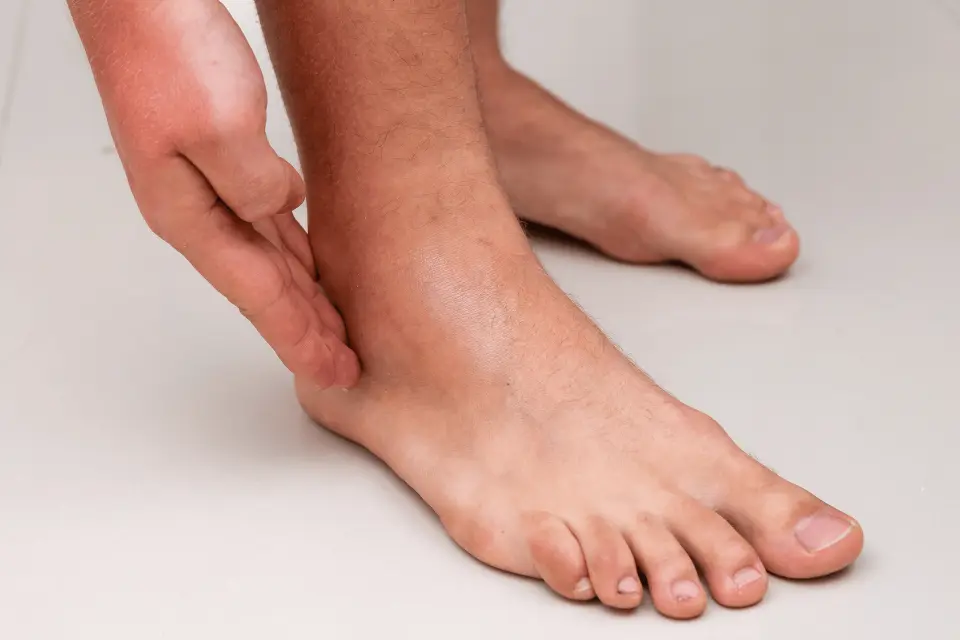
Swollen Feet and Ankles: When Spring Activity Causes Unexpected Swelling

Medically reviewed by Lauren Okafor | MD, The Frank H Netter MD School of Medicine, Loyola University Medical Center on April 23rd, 2026.
Published on April 17th, 2026. Updated on July 24th, 2026.
Key takeaways
Warmer spring temperatures cause blood vessels to dilate, allowing fluid to accumulate in the lower extremities
Sudden increases in physical activity after winter can strain muscles, tendons, and joints, leading to inflammation
Dietary changes, inadequate footwear, and poor hydration habits contribute to seasonal edema
The POLICE method (Protect, Optimal Loading, Ice, Compression, Elevation), compression therapy, and gentle exercises provide effective relief
Unilateral swelling, severe pain, or swelling accompanied by shortness of breath requires immediate medical attention
Doctronic.ai offers telehealth visits to help determine whether swelling needs professional evaluation
Understanding Spring Swelling in Your Lower Extremities
Spring arrives with longer days and an irresistible urge to get outside after months of winter hibernation. Many people notice something unexpected: their feet and ankles begin to swell. The combination of rising temperatures and sudden increases in physical activity creates conditions conducive to lower-extremity edema. Understanding why this happens and knowing how to address it makes the difference between enjoying spring activities and being sidelined by discomfort.
Why Spring Weather and Increased Activity Lead to Edema
The Impact of Warmer Temperatures
When spring warmth arrives, blood vessels dilate to release excess heat through the skin. This vasodilation is essential for temperature regulation, but dilated veins can reduce venous return efficiency, allowing mild fluid accumulation in the lower extremities, where gravity already encourages fluid pooling.
Overuse and Strain from Sudden Activity
Winter often means reduced movement and less time on your feet. When spring arrives, the temptation to jump straight into gardening, hiking, or outdoor sports proves hard to resist. Muscles, tendons, and joints that spent months relatively inactive now face demands they are not prepared for, leading to soft-tissue injuries that cause inflammation and swelling. The body simply needs time to adapt to higher activity levels, much like the gradual approach recommended for returning to exercise after time off.
Common Causes of Seasonal Foot and Ankle Swelling
Venous Insufficiency
Veins in the legs work against gravity to return blood to the heart. Small valves inside these vessels prevent backflow, and when these valves weaken or fail, blood pools in the lower legs, causing swelling. Spring activities often involve prolonged standing at outdoor events, gardening in one position, or sitting during long drives. Anyone with existing venous insufficiency will notice symptoms intensifying during active seasons.
Dietary Shifts and Hydration
Spring and summer bring barbecues, picnics, and processed convenience foods that tend to be sodium-heavy. Excess sodium causes the body to retain water, and that extra fluid often settles in the feet and ankles. Inadequate hydration can also contribute, because the body responds by holding onto available water. Proper hydration actually helps reduce swelling by encouraging the body to release excess fluid.
Inadequate Footwear
Flip-flops, sandals, and worn-out sneakers make appearances as soon as warm weather hits. These choices often lack proper arch support, cushioning, and stability. Without adequate support, feet work harder during activity, leading to inflammation and swelling. Investing in appropriate footwear for specific activities prevents many cases of seasonal foot swelling before they start.
See a doctor online today
A licensed doctor can review your symptoms online, talk through next steps, and send a prescription to your pharmacy if appropriate.
- $39 video visit
- Insurance accepted
- 4.8 on Trustpilot
Related medications we prescribe
Learn moreEffective At-Home Strategies for Reducing Swelling
The POLICE Method
The updated POLICE method (Protect, Optimal Loading, Ice, Compression, Elevation) is now recommended by sports medicine specialists for managing mild swelling. Protect the affected area, use gentle movement as tolerated, apply ice for 15 to 20 minutes several times a day, use compression with elastic bandages or compression socks, and elevate the limb above heart level. This approach balances rest with gradual reactivation for better recovery, similar to the strategies used for recovering from muscle strains.
Compression Therapy
Graduated compression hosiery applies pressure that decreases from ankle to knee, helping veins push blood upward against gravity. For spring activities, compression socks with 15 to 30 mmHg pressure work well for most people. Wear them during extended periods of standing or walking, and avoid socks with tight bands at the top that can cut off circulation and worsen swelling below the constriction point.
Gentle Exercises to Improve Circulation
Movement is medicine for swollen feet and ankles. Ankle circles, toe raises, and calf pumps activate the muscle pump mechanism that assists venous return. Walking in a pool provides exercise with reduced impact and the added benefit of water pressure acting as natural compression. Yoga poses that elevate the legs combine gentle movement with elevation, and even simple foot flexion while sitting at a desk makes a measurable difference over time.
When to Seek Professional Medical Advice
Identifying Red Flags
Swelling that affects only one leg demands attention, as this pattern can indicate a blood clot, infection, or injury requiring treatment. Severe pain accompanying swelling, especially with redness or warmth, suggests something more serious than simple edema. Swelling that appears suddenly and does not improve with elevation warrants evaluation.
Distinguishing Between Injury and Systemic Issues
Localized swelling following a specific activity usually indicates overuse or minor injury. Swelling that persists despite rest and elevation, affects multiple areas, or accompanies other symptoms like shortness of breath or chest discomfort may signal systemic problems including heart, kidney, or liver conditions. A medical professional can distinguish between these causes and recommend appropriate treatment.
Preventing Future Swelling
Gradually increase activity levels rather than jumping from winter sedentary habits to intense spring workouts. Choose supportive footwear appropriate for each activity. Stay hydrated and limit sodium intake, especially on active days. Take breaks during prolonged standing or sitting to move around and elevate your feet. Wear compression socks during activities known to cause swelling.
Frequently Asked Questions
Most cases of activity-related swelling improve within a few days to a week with consistent use of elevation, compression, and reduced activity. Swelling that persists beyond 7 to 10 days despite these measures needs professional evaluation.
In rare cases, severe allergic reactions or medication side effects may contribute to swelling. However, most mild seasonal allergies do not directly cause noticeable lower extremity edema.
Compression socks work best when worn during activities that cause swelling or during prolonged standing and sitting. Remove them at night unless specifically instructed otherwise by a healthcare provider.
Seek immediate care if swelling appears suddenly in one leg with pain, if swelling accompanies chest pain or difficulty breathing, or if the affected area is hot, red, and tender to the touch.
The Bottom Line
Swollen feet and ankles during spring result from predictable factors that respond well to simple interventions. Understanding the causes leads to better prevention and more effective treatment decisions. For personalized guidance on managing swelling or determining whether symptoms need professional attention, Doctronic.ai offers telehealth visits with licensed physicians available around the clock.
Related articles
Get advice about swollen feet and ankles
Chat Now