
Infectious Disease
Pneumonic Plague: What We Know About Symptoms, Spread, and Treatment
October 8, 2026
4 min read

Medically reviewed by Lauren Okafor | MD, The Frank H Netter MD School of Medicine, Loyola University Medical Center on April 22nd, 2026.
Published on April 17th, 2026. Updated on July 23rd, 2026.
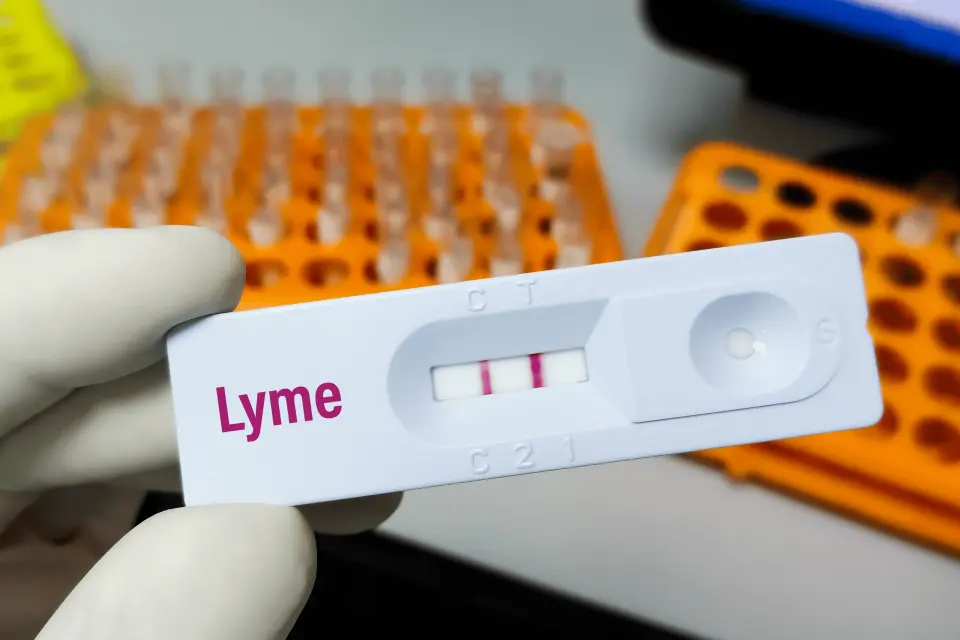
Lyme disease diagnosis uses a two-tier blood test: an ELISA screen first, followed by a Western blot to confirm positive or equivocal results.
Antibodies take 2 to 4 weeks to develop after infection, so testing too early often produces false negatives.
If you have the classic expanding bullseye rash after a tick bite, treatment should begin immediately without waiting for test results.
A negative test does not rule out early Lyme disease. Clinical judgment and symptom history matter as much as lab results.
Persistent positive antibody tests after completed treatment do not mean the infection is still active.
If your test comes back negative but symptoms and exposure history strongly suggest Lyme disease, a clinical diagnosis is valid, especially with a visible rash.
Doctronic.ai offers telehealth evaluations for post-tick-bite concerns, helping you navigate testing decisions and next steps with a licensed clinician.
Questions about Lyme disease testing?
Free. Anonymous. Built by doctors.
This article covers general information. Ask Doctronic about your symptoms, medications, side effects, or treatment options.
Lyme disease, caused by the bacterium Borrelia burgdorferi, is the most common tick-borne illness in the United States. Each year, tens of thousands of people are diagnosed, with the highest concentrations in the Northeast, upper Midwest, and parts of the Pacific Coast.
Despite its prevalence, testing for Lyme disease trips up patients and providers alike. The tests available detect your immune response to the bacteria, not the bacteria themselves. That distinction has real consequences for when to test, how to interpret results, and what to do when the numbers and the clinical picture don't match.
The standard approach to Lyme disease testing uses two sequential blood tests. This two-tier system is endorsed by the CDC and most major medical organizations.
The first test is an enzyme-linked immunosorbent assay, commonly called an ELISA or EIA. It screens your blood for antibodies to Borrelia burgdorferi. The test is sensitive, meaning it catches most true infections, but it also generates false positives from other conditions like autoimmune diseases, certain viral infections, and even other tick-borne illnesses.
Because of this tendency toward false positives, a positive or equivocal ELISA alone is not enough to diagnose Lyme disease.
Any positive or borderline ELISA result moves to a Western blot, which looks for specific antibody bands against multiple bacterial proteins. This test is more specific, meaning it filters out most false positives from the first round.
The Western blot reports results in two categories. IgM bands appear earlier in infection, typically within the first few weeks. IgG bands develop later and reflect more established immune response. A positive IgM with a negative IgG early in illness may indicate active infection. A positive IgG alone or with IgM at later stages strongly supports the diagnosis.
A result is only considered positive when enough specific bands are present, not just any reaction. This cutoff is defined by CDC criteria and is what distinguishes a true positive from background immune noise.
This is where most testing confusion originates. After Borrelia burgdorferi enters your body, your immune system needs time to mount a detectable antibody response. That window is typically 2 to 4 weeks.
If you test during this early phase, your ELISA can return negative even when infection is present. This is called a false negative, and it is common in early Lyme disease. Testing the same person two to four weeks later often yields a positive result as antibodies reach detectable levels.
This is why the testing timeline cannot be separated from the clinical context. A negative test one week after a tick bite means almost nothing on its own.
Not every situation calls for testing first. The right approach depends heavily on what symptoms are present.
Erythema migrans, the expanding circular or oval rash that often (though not always) shows a central clearing, is the hallmark early sign of Lyme disease. It appears in roughly 70 to 80 percent of confirmed cases, typically developing 3 to 30 days after a bite.
When a patient presents with a classic erythema migrans rash and a history of tick exposure in an endemic area, treatment with antibiotics should begin immediately. Testing is not required to initiate therapy. The rash is diagnostic on its own, and waiting for lab confirmation delays treatment unnecessarily.
If you had a tick bite and develop flu-like symptoms (fever, fatigue, headaches, joint pain) without a visible rash, testing makes sense. These symptoms are common to many illnesses, so lab confirmation helps narrow the diagnosis.
In this scenario, the timing of the bite matters. Testing within the first week or two will likely return a false negative regardless of whether infection is present. Your provider may order tests and ask you to repeat them in two to four weeks, or start empirical treatment if symptoms are significant and exposure risk was high.
Patients who present weeks to months after a potential exposure with joint swelling, neurological symptoms (facial palsy, numbness), or cardiac issues are more likely to have detectable antibodies. At this stage, two-tier testing is more reliable and a negative result carries more weight.
This combination, meeting the CDC band criteria, is considered a positive Lyme disease test. Combined with compatible symptoms, it supports a diagnosis and a course of treatment.
This is a common outcome. The Western blot filtering out the ELISA signal usually means a false positive from the ELISA, not Lyme disease. Other conditions may need investigation.
If the screen is negative, the Western blot is not run. A negative ELISA in a patient with a rash and recent tick exposure in an endemic area should be interpreted with caution if symptoms only started within the past two weeks. The antibody window may not have opened yet.
Some tests return a borderline result. These are typically retested, sometimes with a repeat draw in two to four weeks to see whether antibody levels rise as expected with active infection.
Understanding what these tests cannot do is as important as knowing what they can.
The tests detect antibodies, not the bacteria. They cannot tell whether Borrelia burgdorferi is still present and actively replicating. Once your immune system responds to infection, IgG antibodies can remain elevated for months or even years after treatment and full recovery. A positive test long after completed therapy does not mean the infection persists or that more antibiotics are needed.
False negatives are common in early infection, as described above. False positives occur with certain autoimmune conditions, other spirochete infections, and occasionally with viral illnesses. Neither outcome is rare.
The tests also do not directly measure disease severity or predict complications. Two people can have identical test results with very different clinical courses.
Talk to a doctor about lyme disease
Connect with a licensed doctor online to talk through your symptoms, understand your treatment options, and find out which medications may be available through telehealth.
Researchers have worked to develop tests that detect Borrelia burgdorferi directly rather than relying on antibody response. PCR testing for bacterial DNA exists, but it has limited sensitivity in blood because the bacteria rarely circulates in detectable concentrations there. PCR on joint fluid in Lyme arthritis cases performs better and is used in that context. Additional antigen and metabolite-based assays are under study, but none have displaced the two-tier antibody method as the standard of care. The current Lyme disease lab tests available reflect this reality: antibody detection remains the backbone of diagnosis.
Some patients, particularly those with persistent symptoms, seek out practitioners who advertise themselves as "Lyme-literate" doctors. These providers sometimes use non-standard tests, including certain commercial labs that apply different interpretive criteria than the CDC-endorsed guidelines, or tests not approved by the FDA.
The CDC and most academic medical centers do not endorse these alternative testing methods. Studies have found high rates of false positives, leading patients to receive prolonged antibiotic courses for what may not be active Lyme infection. If you are experiencing ongoing symptoms after treatment, discuss them with your physician. Post-treatment Lyme disease syndrome is real, but extended antibiotic therapy has not been shown to help, and non-standard tests should be interpreted with caution.
A negative test does not automatically close the door on a Lyme disease diagnosis.
If you have an erythema migrans rash, a clinical diagnosis is valid on its own, and treatment should proceed without waiting for positive serology. The rash is considered diagnostic.
If symptoms are non-specific and exposure history is clear, discuss timing with your provider. A second test in two to four weeks may turn positive if the first was drawn during the antibody development window.
If you have been treated and now have new symptoms weeks to months later, reinfection is possible and new symptoms should be assessed on their own merits.
Yes. Many urgent care centers can order the ELISA screening test. However, results typically take a day or more since samples go to an outside lab. If you have a rash consistent with erythema migrans, most urgent care providers can begin treatment the same day without waiting for results.
Wait at least 2 to 4 weeks from the date of the bite, or from the appearance of symptoms, for the most meaningful results. Testing sooner is unlikely to detect infection even if it is present.
Not necessarily. A negative test in the first two weeks of infection carries little diagnostic weight. If symptoms persist or your provider has a high clinical suspicion, retesting or a clinical evaluation is the right next step.
It means the results fall in a borderline range. Your provider may recommend repeat testing in a few weeks or additional evaluation depending on your symptoms and exposure history.
Yes. A classic erythema migrans rash, combined with potential tick exposure in an endemic area, is sufficient for a clinical diagnosis. Blood tests are not required to initiate treatment in this scenario.
Some patients continue to experience fatigue, joint pain, and cognitive difficulty for months after completing antibiotic treatment. This is called post-treatment Lyme disease syndrome. It is not caused by ongoing infection, and further antibiotics have not been shown to help. Management focuses on symptom relief and time.
Lyme disease testing works best when you understand what it can and cannot tell you. The two-tier blood test is reliable in the right clinical context but has real limitations in early infection. A negative result in the first two weeks means little. A classic rash means you should start treatment now, not later.
If you have been bitten by a tick, are unsure whether and when to test, or have received unclear results, Doctronic.ai connects you with a licensed clinician who can evaluate your full picture and guide you through the next steps.
Get allergy care advice
Chat Now