
Diseases and Conditions
How to Get Rid of Skin Tags Safely: Home vs. Professional Methods
April 9, 2026
8 min read

Medically reviewed by Alan Lucks | MD, Alan Lucks MDPC Private Practice - New York on May 23rd, 2026.
Published on April 15th, 2026. Updated on July 23rd, 2026.
Skin tags are common, affecting nearly half of all adults, but certain changes warrant professional evaluation.
Rapid growth, bleeding, color changes, or multiple sudden growths require a dermatologist's assessment.
At-home removal carries serious risks including infection, scarring, and potentially missing skin cancer.
Professional removal methods like cryotherapy, cauterization, and surgical excision are safer and more effective.
Underlying metabolic factors and friction can contribute to recurring skin tags.
Doctronic.ai offers convenient ways to discuss skin concerns with medical professionals.
Small skin growths are something most people notice at some point. These soft, flesh-colored bumps hanging from the skin's surface often appear without warning. While most skin tags are harmless, knowing when to see a dermatologist can help prevent complications and catch potentially serious conditions early. Approximately 25-46% of people develop skin tags in their lifetime, making them among the most common skin concerns.
The decision to seek professional care depends on several factors: the tag's appearance, any recent changes, and its impact on daily life. A dermatologist can provide accurate diagnosis, safe removal, and peace of mind that what looks like a simple skin tag isn't something more concerning. For a look at what at-home removal attempts actually accomplish, see our guide to overnight skin tag removal and the risks involved.
Skin tags, medically called acrochordons, are benign growths that form when skin cells cluster together. They develop when collagen and blood vessels become trapped inside thicker skin tissue. Most remain small and cause no problems, but understanding their typical features helps identify when something unusual requires attention.
Typical skin tags are soft, flesh-colored, or slightly darker bumps that hang from the skin by a thin stalk called a peduncle. They range from one to five millimeters in diameter, though some grow larger. The surface is usually smooth or slightly wrinkled, and they feel soft when touched. Most importantly, healthy skin tags maintain consistent color and size over time.
These growths tend to occur in areas where skin rubs against skin or clothing. The neck, armpits, and under the breasts are frequent locations. Eyelids, groin folds, and areas beneath the belly are also common spots. Friction from jewelry, clothing seams, or skin folds creates the irritation that triggers their formation.
Skin tags differ from moles and warts in important ways. Moles are flat or raised and often darker, with a broader base. Warts have rough, grainy surfaces and are caused by a viral infection. Skin tags are soft, hang freely, and aren't contagious. When a growth doesn't match typical skin tag characteristics, professional evaluation becomes necessary.
Not every skin tag needs medical attention, but certain warning signs indicate that seeing a dermatologist is essential. These changes can signal that a growth isn't a simple skin tag or that complications have developed.
A skin tag that suddenly grows larger, changes shape, or darkens deserves immediate attention. Healthy skin tags remain stable for years. Rapid changes may indicate that the growth is actually a different type of lesion requiring biopsy. Color variations, especially darkening or the appearance of multiple colors within one growth, can signal concerning cellular changes.
While skin tags occasionally snag on clothing or jewelry, persistent bleeding without a clear cause is abnormal. Itching that doesn't resolve, crusting, or oozing fluid all warrant evaluation. These symptoms can indicate infection, irritation, or that the growth isn't a benign skin tag. Attempting home removal can lead to bleeding, infection, and scarring, making professional assessment the safer choice.
When numerous skin tags appear quickly, underlying health conditions may be responsible. Sudden clusters can indicate insulin resistance, hormonal changes, or other metabolic issues. A dermatologist can evaluate whether these growths indicate a condition that requires treatment beyond simple removal. Doctronic.ai provides a convenient starting point for discussing sudden skin changes with medical professionals.
Internet tutorials and drugstore products make DIY removal seem simple. The reality is far more complicated and potentially dangerous. Understanding these risks explains why professional removal remains the gold standard.
Cutting, tying off, or freezing skin tags at home creates open wounds in unsterile conditions. Infection can develop quickly, especially in warm, moist areas where skin tags commonly grow. Improper technique often leads to incomplete removal, causing the tag to regrow or leaving permanent scars. The skin around the eyes and neck is particularly vulnerable to scarring from amateur removal attempts.
The most serious risk of home removal is treating a skin cancer as if it were a harmless tag. Certain skin cancers, including melanoma, can resemble skin tags in early stages. Removing these growths at home destroys tissue that a pathologist could have examined for cancer cells. Early skin cancer is highly treatable when properly diagnosed; missing that diagnosis can have devastating consequences.
Dermatologists offer several safe, effective removal methods. Each technique suits different situations, and all provide advantages over home remedies. Professional removal typically costs $100 to $300 for a small group of skin tags, a reasonable investment for safety and proper care.
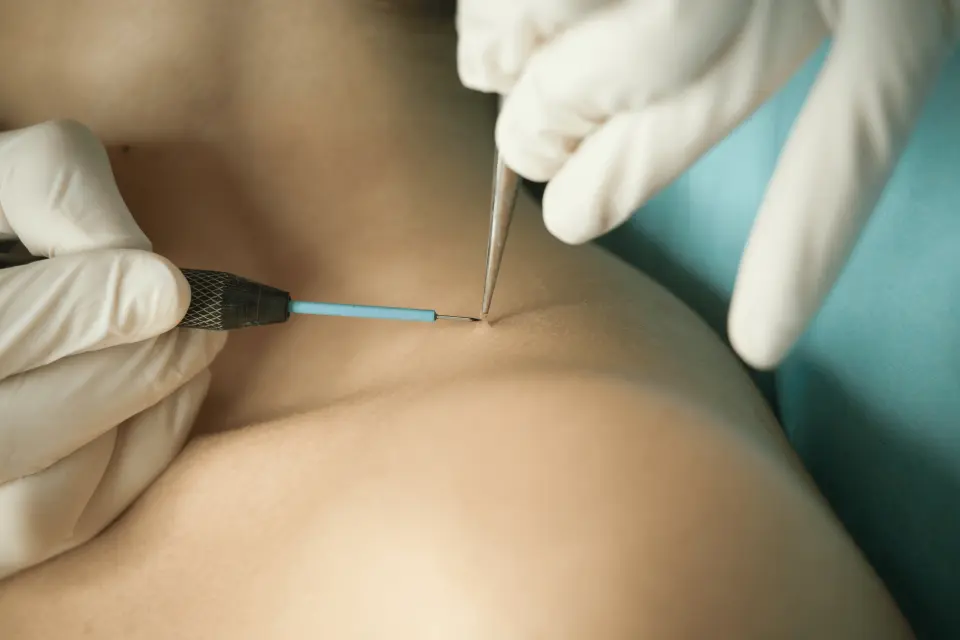
Cryotherapy uses liquid nitrogen to freeze the skin tag, causing it to fall off within days. The procedure takes seconds and requires no anesthesia for small tags. Cauterization burns the tag using electrical current, sealing blood vessels to minimize bleeding. Both methods work well for small to medium growths and rarely leave noticeable scars.
For larger skin tags or those in sensitive areas, surgical excision provides precise removal. The dermatologist numbs the area with a local anesthetic before cutting the tag at its base with sterile surgical scissors. This method offers immediate results and allows the tissue to be sent for pathology testing if needed.
When the nature of a growth is unclear, dermatologists send the removed tissue to a laboratory for examination. Pathologists analyze cells under microscopes to confirm the diagnosis and rule out cancer. This testing provides definitive answers that home removal can never offer, protecting patients from missed diagnoses.
Some people develop skin tags repeatedly despite removal. Understanding the factors that contribute to their formation helps reduce future occurrences and guides decisions about when professional intervention makes sense.
Frequent skin tag development can sometimes signal metabolic conditions such as insulin resistance or diabetes. Hormonal changes during pregnancy or menopause also increase the risk of skin tag formation. Working with healthcare providers to address these underlying factors can reduce new growth development. Doctronic.ai helps users explore potential connections between skin tags and metabolic health through AI-powered consultations.
Minimizing skin-on-skin contact reduces irritation, which can trigger new tags. Wearing moisture-wicking fabrics, using powder in skin folds, and maintaining a healthy weight all help. Avoiding tight jewelry and clothing that rub against the skin repeatedly provides additional protection.
Before visiting a dermatologist, document any changes in existing skin tags with photos. Note when growths first appeared and any symptoms experienced. List all medications and supplements currently taken, as some can affect skin health. Prepare questions about removal options, costs, and recovery expectations.

Most skin tags are completely benign. Growths that change rapidly, bleed without cause, or have unusual colors should be evaluated to rule out other conditions including skin cancer.
Multiple skin tags, especially when they appear suddenly, can be associated with insulin resistance and type 2 diabetes. A healthcare provider can determine whether metabolic testing is appropriate.
Most removal procedures take only a few minutes per tag. Patients typically return to normal activities immediately, though some redness or tenderness may persist for several days.
Once properly removed, individual skin tags don’t regrow. People prone to developing them may form new tags in the same or different locations over time.
Insurance may cover removal if medically necessary, such as irritation, bleeding, or diagnostic uncertainty. Purely cosmetic removals are usually not covered.
Knowing when to see a dermatologist for skin tags protects against complications and ensures accurate diagnosis. For quick answers about skin concerns before scheduling an appointment, visit Doctronic.ai to access AI-powered medical guidance available around the clock.
Get skin care advice
Chat Now
Join 50,000+ readers using Doctronic to understand symptoms, medications,
and next steps.
Add your phone number below to get health updates and exclusive VIP offers.
By providing your phone number, you agree to receive SMS updates from Company. Message and data rates may apply. Reply “STOP” to opt-out anytime. Read our Privacy Policy and Terms of Service for more details.
Save your consults. Talk with licensed doctors and manage your health history.