
Cancer
Black Lines on Fingernails: When a Nail Streak Could Signal Melanoma
March 30, 2026
8 min read

Medically reviewed by Alan Lucks | MD, Alan Lucks MDPC Private Practice - New York on May 17th, 2026.
Published on March 21st, 2026. Updated on July 23rd, 2026.
Early melanoma often appears as asymmetrical moles with irregular borders and multiple colors
Stage 0 melanoma stays in the top skin layer while advanced stages spread deeper and to other organs
The ABCDE rule helps identify suspicious moles: Asymmetry, Border, Color, Diameter, Evolving
Monthly self-examinations combined with annual dermatologist visits catch 80% of melanomas early
Telehealth may not be appropriate for every medication or condition. Doctronic can help you understand your options and determine the appropriate next step.
Melanoma represents the deadliest form of skin cancer, claiming over 7,000 lives annually in the United States. Yet when caught early, this aggressive cancer has a 99% five-year survival rate. The key lies in recognizing the visual warning signs that distinguish melanoma from harmless moles.
Visual identification serves as your first line of defense against melanoma. Understanding what to look for through pictures and detailed descriptions empowers you to spot potential problems early. While no online resource can replace professional medical evaluation, learning these visual cues could save your life. Doctronic's AI-powered consultations can help evaluate concerning skin changes and guide you toward appropriate care when needed.
Melanoma develops distinct visual characteristics that set it apart from normal moles. The most telling feature is asymmetry, where one half of the lesion looks completely different from the other half. Unlike round, symmetrical moles, melanomas often display irregular, lopsided shapes that catch the eye.
Border irregularities provide another crucial identifier. Melanoma edges appear scalloped, notched, or poorly defined, often blurring into surrounding skin. Normal moles maintain crisp, well-defined borders that create clear separation from healthy skin. This border confusion occurs because melanoma cells grow aggressively and unpredictably.
Color variation within a single lesion signals serious concern. While benign moles typically display uniform brown coloration, melanomas showcase multiple colors including black, brown, red, white, blue, or pink. These color changes result from different melanoma cell behaviors and varying depths of invasion. Similar to distinguishing melanoma: skin spot conditions, color patterns provide vital diagnostic clues.
Size matters significantly in melanoma identification. Any mole larger than 6mm (pencil eraser diameter) deserves attention, though melanomas can appear smaller initially. More importantly, any mole that stands out as obviously different from your other moles requires evaluation, regardless of size.
New moles appearing after age 30 raise immediate red flags, particularly in sun-exposed areas like face, neck, arms, and legs. Adult skin rarely develops new moles naturally, making any fresh growth suspicious. Pay special attention to areas with previous sun damage or frequent ultraviolet exposure.
Existing moles that change over weeks or months demand urgent evaluation. Document any alterations in size, shape, color, texture, or elevation. Take monthly photos of suspicious moles to track changes over time. Even subtle modifications can signal malignant transformation, especially when changes occur rapidly.
Physical symptoms beyond visual appearance warrant concern. Moles that become itchy, tender, or bleed without injury suggest underlying problems. Some melanomas develop a burning or stinging sensation. Others become painful to touch or clothing contact. These symptoms indicate inflammation and potential malignant activity.
Family history compounds individual risk factors significantly. People with close relatives who developed melanoma face 2-3 times higher risk than the general population. Combined with fair skin, multiple moles, or history of severe sunburns, genetic predisposition creates urgent need for vigilant monitoring. Understanding conditions like vs melanoma comparisons helps distinguish benign changes from concerning developments.
Talk to a doctor about melanoma
Connect with a licensed doctor online to talk through your symptoms, understand your treatment options, and find out which medications may be available through telehealth.
Stage 0 melanoma, also called melanoma in situ, appears as flat, discolored patches confined to the skin's outermost layer. These lesions often measure several centimeters across and display irregular brown, black, or tan coloration. The flat appearance distinguishes early melanoma from raised moles, though some areas may show slight elevation.
Stage I melanomas present as small tumors less than 2mm thick with generally intact overlying skin. These lesions may appear raised or dome-shaped, contrasting with the flat appearance of Stage 0 disease. Color patterns become more distinct, often showing the classic multiple-color presentation that characterizes melanoma.
Stage II features thicker lesions measuring 2-4mm in depth that frequently ulcerate or show rapid growth. Surface breakdown creates bleeding, crusting, or scab formation that fails to heal normally. Growth acceleration becomes noticeable over weeks rather than months, with expanding borders and increasing elevation.
Advanced stages involve spread beyond the original site. Understanding metastatic melanoma progression helps recognize when melanoma has moved to lymph nodes or distant organs. Stage III may show satellite nodules around the primary tumor, while Stage IV can present as new lumps under skin or organ-specific symptoms.
Stage |
Appearance |
Size/Depth |
Key Features |
|---|---|---|---|
Stage 0 |
Flat, discolored patches |
Confined to epidermis |
Irregular brown/black areas, no elevation |
Stage I |
Small raised lesions |
Less than 2mm thick |
Distinct color patterns, dome-shaped growth |
Stage II |
Thicker tumors |
2-4mm depth |
May ulcerate, rapid growth, surface breakdown |
Stage III |
Primary plus satellites |
Variable thickness |
Spread to nearby lymph nodes, satellite lesions |
Stage IV |
Multiple locations |
Any depth |
Distant metastases, organ involvement |
Normal moles maintain consistent characteristics throughout life. They display uniform brown coloration, smooth or slightly textured surfaces, and symmetrical round or oval shapes. Benign moles rarely change after age 30 and typically measure less than 6mm in diameter. Their borders remain well-defined and stable over years.
Melanomas violate every rule of normal mole behavior. They show asymmetrical growth patterns, irregular borders that may fade into surrounding skin, and multiple colors within single lesions. Size often exceeds normal mole dimensions, though early melanomas can appear deceptively small initially.
Atypical moles, called dysplastic nevi, occupy a middle ground between normal moles and melanoma. These lesions share some melanoma features including larger size, irregular borders, and color variation, but remain benign. However, people with multiple atypical moles face increased melanoma risk and require regular monitoring.
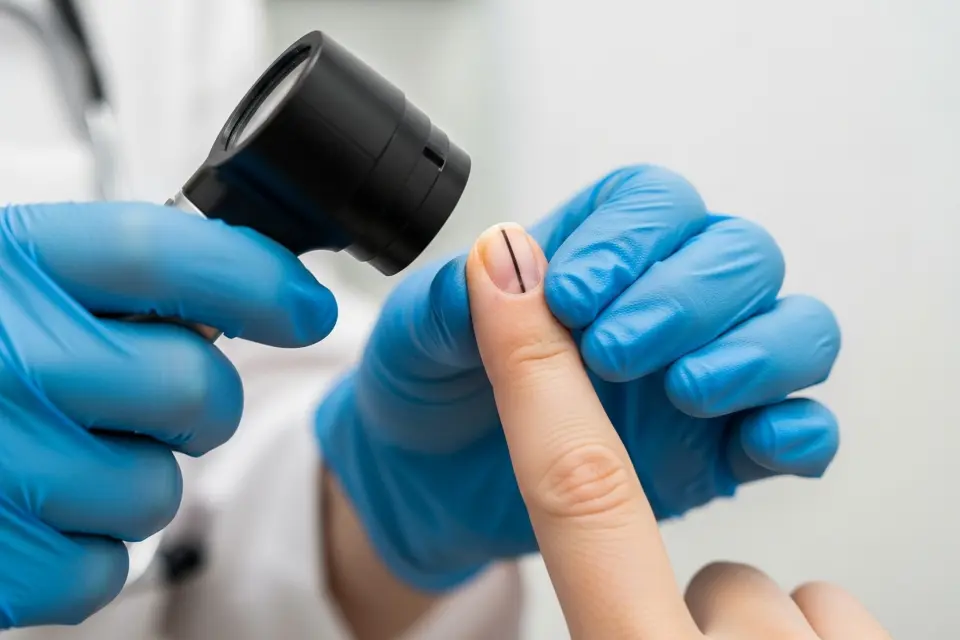
Professional evaluation distinguishes between these categories definitively. Dermatoscopy reveals microscopic features invisible to naked eye examination. When comparing suspicious lesions to images like eczema rash pictures, remember that skin conditions can sometimes mimic melanoma appearance, making professional assessment essential.
Understanding non-melanoma skin cancer helps distinguish melanoma from other skin cancers that may appear similar but behave differently. This knowledge prevents unnecessary anxiety while maintaining appropriate vigilance.
Online melanoma pictures serve as educational tools but cannot provide definitive diagnosis. Professional examination remains essential for accurate evaluation. Images help recognize suspicious features that warrant medical attention, but dermatoscopic examination and possible biopsy confirm melanoma diagnosis definitively.
Studies show that 2-5% of biopsied suspicious moles prove to be melanoma, while 15-20% are atypical moles requiring monitoring. Most concerning lesions turn out benign, but early biopsy ensures proper diagnosis and prevents delayed treatment of actual melanomas.
Melanoma can change rapidly, sometimes within 2-4 weeks. Monthly self-examinations catch most significant changes early. Some aggressive melanomas alter appearance weekly, emphasizing the importance of immediate evaluation for any rapidly changing mole or new suspicious lesion.
The American Academy of Dermatology and Skin Cancer Foundation maintain reliable image databases. Medical textbooks and peer-reviewed dermatology journals provide accurate visual references. Avoid unverified social media sources that may contain mislabeled or poor-quality images.
AI tools supplement but cannot replace professional screening. While artificial intelligence shows promise in melanoma detection, dermatologists provide comprehensive evaluation including family history, risk factors, and physical examination that AI cannot replicate. Similar concerns arise when people wonder what's under nail changes.
Melanoma pictures provide invaluable educational tools for recognizing the visual warning signs of this aggressive skin cancer. Understanding the ABCDE criteria and stage-specific appearances empowers individuals to identify suspicious lesions early, when treatment outcomes remain most favorable. However, visual identification alone cannot replace professional dermatological evaluation, as many skin conditions can mimic melanoma appearance. Monthly self-examinations combined with annual professional skin checks create the most effective screening strategy. Early detection dramatically improves survival rates, making visual awareness a potentially lifesaving skill. When you notice concerning skin changes, prompt medical evaluation ensures accurate diagnosis and appropriate treatment planning.
Ready to take control of your health? Get started with Doctronic today.
Explore treatment options
Chat Now