
Skin Health
Best UV Index for Tanning: Balancing Bronze Skin and Sun Safety
March 30, 2026
7 min read

Medically reviewed by Alan Lucks | MD, Alan Lucks MDPC Private Practice - New York on May 24th, 2026.
Published on April 17th, 2026. Updated on July 23rd, 2026.
Tanning begins at a UV index of around 2 to 3, but skin damage can occur at any UV level.
UVA rays cause aging and deep skin damage, while UVB rays trigger tanning and burning.
The Fitzpatrick Scale helps predict how skin responds to sun exposure based on melanin levels.
Safe exposure times decrease steadily as the UV index rises: approximately 30 minutes at UV 3 versus about 15 minutes at UV 10.
Any tan is a sign of skin damage, making protective measures essential.
Doctronic.ai offers AI-powered consultations to help assess skin concerns and sun damage risks.
The desire for sun-kissed skin continues to grow. Recent surveys indicate that about 60% of Americans reported getting a tan in 2024, up from roughly 55% in 2020, showing that tanning remains popular despite known risks. The science behind safe sun exposure requires understanding what UV index levels actually mean for skin. Most people check weather apps that display UV numbers without knowing what those digits represent or how they affect tanning speed and burn risk. This knowledge gap leads to painful sunburns and long-term skin damage. The UV index required to tan varies depending on several factors, including skin type, time of day, and geographic location. Understanding these variables helps people make smarter choices about sun exposure while still enjoying outdoor activities.
The UV index measures the strength of ultraviolet radiation reaching the Earth's surface. This scale runs from 1 to 11 or higher, with each number representing a different level of risk. Low levels (1-2) pose minimal danger, while extreme levels (11+) can cause skin damage in minutes.
UVA and UVB rays affect skin differently. UVA rays penetrate deep into the skin and cause premature aging, wrinkles, and cellular damage. These rays remain constant throughout the day and can pass through clouds and glass. UVB rays are responsible for the actual tanning process and sunburns. They trigger melanin production, which creates that bronzed appearance. UVB rays are strongest between 10 AM and 4 PM and cannot penetrate glass. Both ray types contribute to skin cancer risk, making protection important regardless of tanning goals.
Scientists measure UV radiation using ground-based instruments and satellite data. The calculation accounts for sun angle, ozone layer thickness, cloud cover, and altitude. A UV index of 6 in Denver differs from a 6 in Miami because UV exposure increases by about 10 to 12 percent for every 1,000 meters of elevation. Weather services update these readings throughout the day, providing real-time information for outdoor planning.
Tanning can technically occur at any UV level, but meaningful results require specific conditions. The body needs sufficient UV exposure to trigger melanin production without overwhelming the skin's natural defenses.
A UV index of about 2 to 3 marks the threshold where noticeable tanning may begin for lighter to medium skin types. Below this level, the skin receives too little UVB radiation to stimulate significant melanin production. At UV index 3, fair-skinned individuals can develop a light tan within 30 to 45 minutes of unprotected exposure. This level typically occurs during mid-morning or late afternoon hours in temperate climates. Starting at lower UV levels allows skin to build melanin gradually, reducing burn risk while developing color.
Moderate UV levels (3-5) offer the safest window for gradual tanning. Exposure times can extend to 20 to 30 minutes without significant burn risk for medium skin tones. High UV levels (6-7) speed up the tanning process but dramatically increase burn probability. Very high to extreme levels (8-11+) provide rapid tanning but require strict time limits and protection. The average commercial sunbed emits UV radiation equivalent to a UV index of about 11 to 12, which explains why indoor tanning causes such rapid skin damage.
See a doctor online today
A licensed doctor can review your symptoms online, talk through next steps, and send a prescription to your pharmacy if appropriate.
Related medications we prescribe
Learn moreGenetics play the largest role in determining how skin responds to UV radiation. Two people sitting in the same sun for the same duration will have completely different results based on their biological makeup.
Melanin is the pigment that gives skin its color and provides natural UV protection. The Fitzpatrick Scale classifies skin into six types based on melanin content and sun response. Type I (very fair) always burns and never tans. Type VI (very dark) rarely burns and tans easily. Understanding personal skin type helps predict safe exposure times and realistic tanning expectations. Those with more melanin have built-in sun protection but still face skin damage risks from excessive exposure.
Fair-skinned individuals produce pheomelanin, a lighter pigment that provides minimal UV protection. Their skin burns before producing enough eumelanin (darker pigment) to create a tan. This biological reality means some people simply cannot tan safely without burning first. For these skin types, Doctronic.ai can provide personalized guidance on skin protection strategies and help identify early signs of sun damage through AI-powered consultations.
Medical experts maintain a clear position on tanning safety. There is no such thing as a safe tan, as any tan is a sign of skin damage. This reality requires balancing outdoor enjoyment with protective measures.
Safe exposure varies dramatically based on UV index and skin type. At UV index 3, Type III skin can tolerate approximately 40 minutes before burning if unprotected. At UV index 8, that same skin may burn in about 10 minutes. Type I skin can burn in under 10 minutes at UV index 5 or higher. Tracking exposure time with phone timers helps prevent accidental overexposure. Starting with half the estimated safe time and gradually increasing allows skin to adapt.
Effective sun protection requires broad-spectrum sunscreen that blocks both UVA and UVB rays. SPF 30 filters about 97% of UVB radiation when applied correctly. Most people apply only 25 to 50% of the recommended amount, reducing actual protection significantly. Reapplication every two hours maintains effectiveness. Water-resistant formulas provide better protection during swimming or sweating but still require reapplication.
Skin that feels warm or tight indicates early damage. Pink coloring that appears within hours signals a developing sunburn. Blistering, severe pain, or fever require medical attention. Long-term signs of sun exposure damage include new moles, changes in existing spots, or rough patches that do not heal. Doctronic.ai offers 24/7 telehealth consultations for evaluating concerning skin changes and determining when in-person dermatology visits are necessary.
Smart tanning strategies focus on gradual exposure and proper skin care. Rushing the process leads to burns, peeling, and increased cancer risk.
Early morning (before 10 AM) and late afternoon (after 4 PM) provide lower UV levels ideal for gradual tanning. These windows allow longer exposure times with reduced burn risk. The sun's angle during these periods means UVB rays must travel through more atmosphere, naturally filtering intensity. Midday sun should be avoided for tanning purposes due to extreme UV levels.
Sun exposure depletes skin moisture and damages the protective barrier. Aloe vera gel soothes mild irritation and provides hydration. Moisturizers containing hyaluronic acid help restore water content. Avoiding hot showers after sun exposure prevents additional moisture loss. Drinking extra water supports skin recovery from the inside.
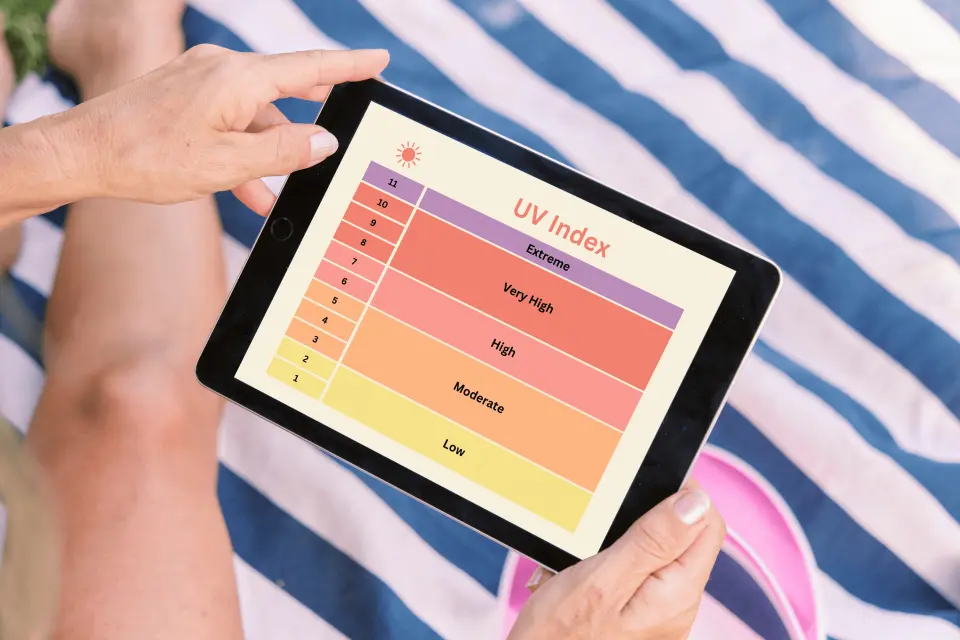
A UV index of 11 or higher is considered extreme. Unprotected exposure at this level causes burns within minutes for all skin types. Outdoor activities should include shade, protective clothing, and sunscreen during these conditions.
Yes. Between 50% and 80% of UV radiation penetrates cloud cover. Overcast days create a false sense of security, leading to unexpected burns. UV index readings remain the most reliable indicator of exposure risk regardless of cloud conditions.
Most tans fade within 7 to 10 days as skin naturally sheds dead cells. The outer layer of skin replaces itself approximately every two to four weeks. Moisturizing can help maintain appearance slightly longer, but the tan will eventually disappear.
Self-tanners containing DHA provide color without UV exposure. These products stain the outer skin layer and pose no cancer risk. Results typically last 3 to 7 days and require reapplication for maintenance.
Understanding UV index levels and personal skin type determines safe sun exposure limits. Any tan represents skin damage, making protective measures essential for long-term health. For personalized guidance on skin protection or concerns about sun damage, visit Doctronic.ai for AI-powered medical consultations available 24/7.
Get skin care advice
Chat Now