
Sunspots on Skin: How to Identify, Prevent, and Treat Them

Medically reviewed by Faith Coleman, University of New Mexico School of Medicine on May 26th, 2026.
Published on April 17th, 2026. Updated on July 24th, 2026.
Key takeaways
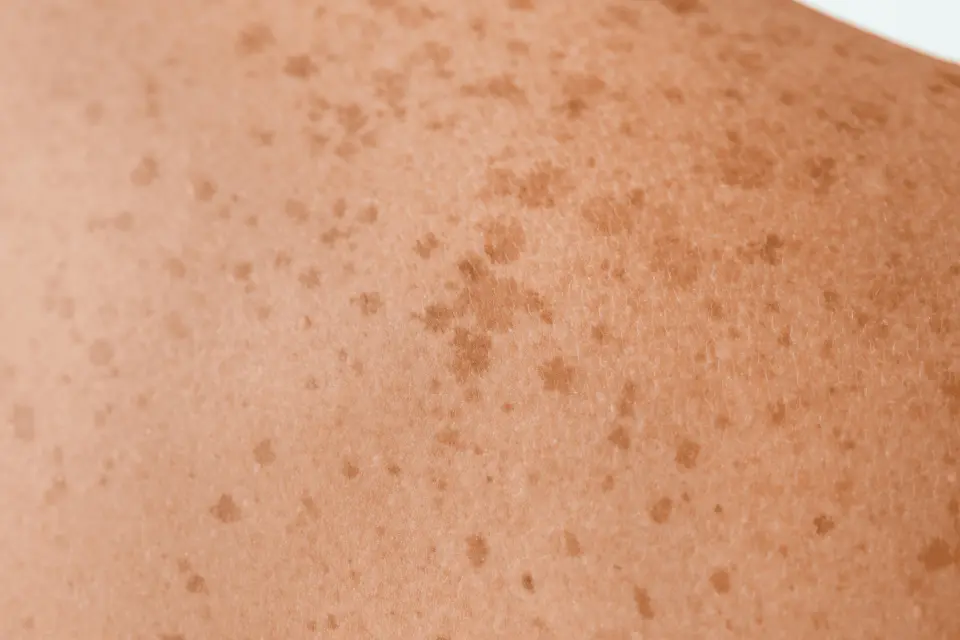
Sunspots are flat, brown patches caused by melanin overproduction from years of UV exposure, most common on the face, hands, and shoulders
The ABCDE rule helps distinguish harmless sunspots from potentially dangerous skin changes that need medical attention
Daily broad-spectrum sunscreen with SPF 30 or higher is the most effective prevention strategy
Topical treatments containing vitamin C, niacinamide, and retinoids can fade existing spots over several months of consistent use
Professional treatments like laser therapy, IPL, and chemical peels offer faster results for stubborn discoloration
Doctronic.ai offers telehealth visits to help assess skin concerns and determine whether professional treatment is necessary
What Are Those Brown Spots Appearing on Your Skin?
Those flat, brown patches appearing on the face, hands, and shoulders are likely sunspots, and they tell a story of cumulative UV exposure over the years. Unlike a sunburn that appears within hours, these marks develop gradually as skin cells respond to decades of sun damage. Understanding how to identify, prevent, and treat sunspots helps maintain a clear, even complexion while staying alert to changes that might need medical attention.
Understanding Sunspots and Their Causes
The Science of Melanin Overproduction
Melanin is the pigment that gives skin its color. When UV rays repeatedly hit the skin, melanocytes become overactive in certain areas, creating concentrated pigment deposits that appear as dark spots. Each sunburn or extended sun exposure triggers melanocytes to produce extra pigment as a protective response, and years of repeated stimulation cause some melanocytes to malfunction permanently, producing excess melanin even without current sun exposure.
Differentiating Sunspots from Freckles
Sunspots, medically called solar lentigines, differ from freckles in several important ways. Freckles typically appear in childhood, fade during winter months, and darken with sun exposure. Sunspots develop later in life, remain constant regardless of season, and do not fade on their own. Freckles are usually small, scattered, and light brown, while sunspots tend to be larger, fewer in number, and darker in color. Understanding whether brown spots are harmless or worth watching helps people make informed decisions about seeking evaluation.
How to Identify Sunspots
Common Physical Characteristics
Sunspots share distinct features that make identification straightforward. They appear as flat, oval patches ranging from tan to dark brown with well-defined borders and consistent color. They do not itch, hurt, or change texture. These spots develop on sun-exposed areas: the face, backs of hands, forearms, shoulders, and upper back. People over 40 with fair skin see them most frequently, though anyone with significant sun exposure can develop them.
When to See a Dermatologist: The ABCDE Rule
Not every dark spot is a harmless sunspot. Performing a regular skin self-exam using the ABCDE rule helps identify changes requiring medical evaluation: Asymmetry where one half looks different from the other, Border irregularity with ragged or blurred edges, Color variation with multiple shades within one spot, Diameter larger than a pencil eraser, and Evolving appearance with any change in size, shape, or color. Any spot with any of these criteria warrants a dermatologist visit.
Effective Prevention Strategies
Choosing the Right Sunscreen
Broad-spectrum sunscreens with SPF 30 to 50 protect against both UVB and UVA rays. UVB causes sunburn, while UVA penetrates deeper and drives the pigmentation changes leading to sunspots. Apply a nickel-sized amount to the face alone and more to other sun-exposed areas, reapplying every two hours during sun exposure. Water-resistant formulas work best for swimming or sweating. Sunscreen should be used on the face year-round.
Protective Clothing and Lifestyle Adjustments
Long sleeves, wide-brimmed hats, and UV-blocking sunglasses provide reliable protection without reapplication concerns. Seeking shade during peak UV hours between 10 AM and 4 PM reduces exposure significantly. Tinted car windows and UV-filtering window film protect during daily commutes, and these lifestyle adjustments compound protection over time.
Get hyperpigmentation treatment online today
A licensed doctor can review your symptoms and send a prescription to your pharmacy, often the same day.
- $39 video visit
- Insurance accepted
- 4.8 on Trustpilot
Related medications we prescribe
Learn moreAt-Home Topical Treatments
Brightening Agents
Vitamin C serums interrupt melanin production at the cellular level. Applied daily at 10 to 20 percent concentration, they gradually fade existing spots while preventing new ones, with results typically appearing after 8 to 12 weeks. Niacinamide works differently by blocking the transfer of melanin from melanocytes to surrounding skin cells, while also strengthening the skin barrier.
Retinoids and Chemical Exfoliants
Retinoids accelerate cell turnover, pushing pigmented cells to the surface faster where they shed naturally. Over-the-counter retinol works gradually, while prescription tretinoin produces faster results. Alpha hydroxy acids like glycolic and lactic acid dissolve bonds between dead skin cells, revealing fresher skin beneath. These ingredients increase sun sensitivity, making daily sunscreen essential during treatment.
Professional Procedures
Laser Therapy and IPL
Laser treatments target melanin directly, breaking up pigment deposits that the body then clears naturally. Q-switched lasers and fractional lasers offer different approaches depending on spot depth and skin type. Most patients need two to four sessions spaced several weeks apart. Intense Pulsed light (IPL) uses broad-spectrum light to target pigmentation across larger areas and works well for scattered spots on the face or hands.
Chemical Peels and Cryotherapy
Professional-strength chemical peels remove the top skin layers where most pigmentation resides. Glycolic and trichloroacetic acid peels offer varying depths of treatment, with deeper peels requiring more recovery time but producing more dramatic results. Cryotherapy freezes individual spots with liquid nitrogen, and the treated area blisters, scabs, and heals with lighter skin beneath. Exploring the full range of professional dark spot treatments helps people find the right approach for their needs.
Long-Term Skin Maintenance
Treating existing sunspots means little without preventing new ones. Daily SPF 30 or higher sunscreen remains essential even after successful treatment, as many people see spots return within months when they abandon sun protection. Maintenance products containing vitamin C or niacinamide support ongoing clarity. Monthly self-examinations help catch new spots early, and annual dermatologist visits provide professional monitoring for anyone with significant age spot concerns.
Frequently Asked Questions
Unlike freckles, sunspots represent permanent changes in melanocyte function. Without treatment, they remain stable or darken with additional sun exposure.
True sun spots are benign, but the concern is misidentifying a melanoma or pre-cancerous lesion as a harmless sunspot. Any spot that changes warrants professional evaluation.
Most people notice improvement after 8 to 12 weeks of consistent daily use. Complete fading may take six months or longer depending on spot depth and treatment strength.
Laser and IPL treatments cause mild stinging, often described as a rubber band snap. Cryotherapy produces brief burning during application. Most procedures require no anesthesia.
The Bottom Line
Sun spots are preventable with consistent sun protection and treatable with both at-home and professional options. For personalized guidance on identifying skin changes or determining the right treatment approach, Doctronic.ai offers telehealth visits with licensed physicians available around the clock.
Related articles
Get skin care advice
Chat Now