Symptoms and Diagnosis
Dark Spots on Skin: Causes, Treatment, and Prevention Guide
January 24, 2026
3 min read

Medically reviewed by Alan Lucks | MD, Alan Lucks MDPC Private Practice - New York on May 23rd, 2026.
Published on April 9th, 2026. Updated on July 24th, 2026.
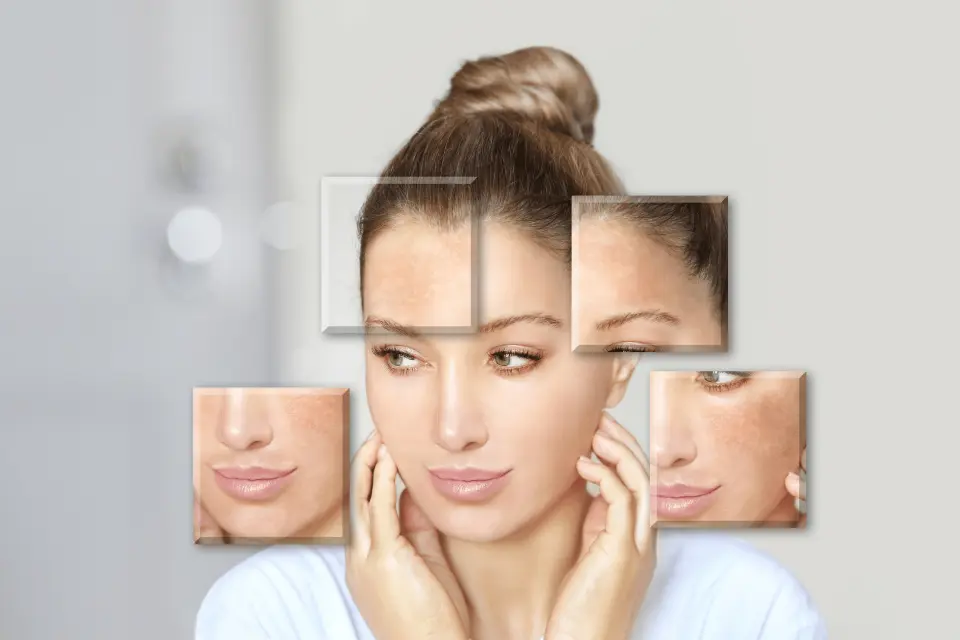
The face is more prone to dark spots than most other body areas because it receives more cumulative sun exposure, carries more oil and acne activity, and is highly responsive to hormonal fluctuations
At-home treatments with the strongest evidence include vitamin C serum, prescription-strength retinoids (tretinoin), azelaic acid, niacinamide, alpha arbutin, and kojic acid, each working through distinct biological mechanisms
Professional options including chemical peels, fractional laser, IPL, and microneedling can accelerate results for stubborn facial pigmentation, though darker skin tones require careful provider selection to avoid post-treatment worsening
Correct product layering order matters: applying actives in the wrong sequence reduces efficacy and increases irritation risk
Most at-home treatments require 8 to 12 weeks of consistent use before visible improvement; professional treatments often require multiple sessions
Daily broad-spectrum SPF on the face is the single most important step in any dark spot treatment plan, without it, all other treatments are undermined
If you want prescription-strength options like tretinoin or hydroquinone without a long wait for an in-person appointment, Doctronic.ai connects you with licensed physicians via telehealth who can evaluate your skin and prescribe the right treatment
Questions about dark spots?
Free. Anonymous. Built by doctors.
This article covers general information. Ask Doctronic about your symptoms, medications, side effects, or treatment options.
The face is the most sun-exposed area of the body year-round, accumulating UV damage even through incidental exposure like driving or sitting near a window. Melanocytes in chronically exposed facial skin become progressively more reactive over time.
Hormonal sensitivity is also concentrated on the face. Estrogen and progesterone receptors across the cheeks, forehead, and upper lip make the face the primary site for melasma, a form of hormonally triggered hyperpigmentation that is notoriously difficult to treat and prone to recurrence.
The T-zone adds another layer of complexity. The forehead, nose, and chin produce more sebum and more frequent breakouts. Every inflamed pimple or picked blemish can trigger post-inflammatory hyperpigmentation (PIH), leaving behind a flat dark mark that outlasts the original breakout by months.
Prescription tretinoin is the most evidence-backed topical treatment for facial hyperpigmentation. It accelerates cell turnover, pushing pigmented cells toward the surface, and disperses melanin granules within the skin. Visible improvement typically appears within 8 to 12 weeks, with continued fading over six months. Start slowly (two nights per week) to get through the adjustment period of initial dryness and peeling. Doctronic.ai can connect you with a physician who can prescribe tretinoin through a quick telehealth visit.
L-ascorbic acid at 10% to 20% is the strongest OTC brightening ingredient with solid clinical backing. It inhibits tyrosinase and provides antioxidant protection against UV-triggered oxidative stress. Applied in the morning, it treats existing spots and buffers against new damage. Expect 10 to 12 weeks before meaningful fading.
Azelaic acid occupies a strong position in any facial dark spot routine because it addresses multiple problems simultaneously: it inhibits tyrosinase, reduces inflammation, and treats acne. This triple action makes it particularly effective for PIH on the face, where breakouts are the primary trigger. It is available OTC at lower concentrations (around 10%) and by prescription at 15% to 20% for more significant pigmentation.
Azelaic acid is also one of the few brightening actives safe for use during pregnancy, making it a first-line option for melasma diagnosis and treatment in that population.
Niacinamide prevents the transfer of melanin-containing melanosomes from melanocytes to surrounding skin cells, reducing visible pigmentation at the surface. It also strengthens the skin barrier and reduces redness. At 5% to 10%, it is well-tolerated across all skin types, complements vitamin C, and can be used safely with it.
Alpha arbutin inhibits tyrosinase with greater stability and less irritation than hydroquinone, making it a reliable OTC choice for darker skin tones. At 2% concentration, it shows measurable brightening in clinical studies over 8 to 12 weeks.
Hydroquinone at 4% is available by prescription and is considered the gold-standard bleaching agent in dermatology. It directly inhibits tyrosinase and reduces melanocyte activity. It should be cycled (three months on, then at least one month off) and used only under medical supervision, because prolonged unsupervised use can cause paradoxical darkening in rare cases. Doctronic.ai connects patients with physicians who can prescribe and supervise hydroquinone use properly.
Professional chemical peels use higher acid concentrations than any OTC product. Superficial peels address surface PIH and sun spots over four to six sessions. Medium-depth TCA peels reach dermal pigmentation in one session with five to seven days of downtime. Peels are more cost-effective than laser and carry lower PIH risk in darker skin tones.
Fractional lasers stimulate collagen remodeling and accelerate pigment dispersal, with three to five sessions required for sun spots, post-acne marks, and melasma. In darker skin tones (Fitzpatrick types IV through VI), they carry a meaningful risk of triggering PIH worse than the original concern. Choosing a provider with experience treating deeper skin tones is not optional.
IPL targets melanin with broad-spectrum light pulses, making it effective for solar lentigines and surface sun damage. It covers large areas efficiently, with treated spots darkening briefly before sloughing off. Results appear after one to three sessions. IPL is most effective on fair to medium skin tones and is not appropriate for very dark skin due to melanin absorption risk.
Microneedling creates controlled microchannels that trigger collagen production and enhance the penetration of topical brightening agents (vitamin C, tranexamic acid, niacinamide) applied during the session. It carries a lower risk of post-inflammatory pigmentation than ablative lasers, making it a useful option for deeper skin tones when the laser is too aggressive.
Layer from thinnest to thickest, most active to most supportive. Morning: cleanser, vitamin C serum, moisturizer, SPF 30+ (always last). Evening: cleanser, niacinamide or azelaic acid, then tretinoin applied to dry skin, followed by moisturizer.
Keep vitamin C in the morning and tretinoin in the evening. Combining them increases irritation and can destabilize tretinoin. Avoid using chemical exfoliants (AHAs, BHAs) and tretinoin on the same night.
Most OTC actives require 8 to 12 weeks of consistent daily use before meaningful fading. Prescription tretinoin shows improvement in the same window and continues improving for up to six months. Hydroquinone acts faster, with visible lightening in four to eight weeks.
Professional treatments require multiple visits: four to six sessions for a peel series, one to three for IPL, three to five for fractional laser, and three to six for microneedling. Stopping treatment early because results are not immediately visible is the most common reason people cycle through products without success.
Every effective dark spot treatment on the face becomes significantly less effective without daily SPF. UV exposure, even brief incidental exposure through windows or cloudy-day outdoor time, directly stimulates melanin production, which re-darkens spots you are actively trying to fade. Sunscreen is not an optional addition to a dark spot routine; it is the foundation that determines whether any other treatment has a chance of working.
For sun spots and PIH, broad-spectrum SPF 30 to 50 every morning is sufficient. For melasma specifically, a tinted mineral sunscreen containing iron oxides is strongly preferred because it also blocks the visible light wavelengths that trigger melasma flares. Standard chemical sunscreens do not block visible light.
Reapply every two hours outdoors, even on overcast days. A wide-brim hat provides meaningfully better protection than sunscreen alone.
Over-exfoliating is the most prevalent error. Running a physical scrub, AHA toner, retinoid, and vitamin C in the same routine strips the barrier and triggers new PIH. If your skin is red, tight, or peeling, you are doing too much.
Using too many actives at once makes it impossible to know what is working. Introduce one new ingredient at a time, wait four weeks, then add the next. Skipping sunscreen while using retinoids or AHAs can deepen existing spots rather than fade them, since both ingredients increase photosensitivity.
Picking or squeezing acne is the fastest way to guarantee new dark marks. Every manual trauma deepens the inflammatory cascade and prolongs the PIH it leaves behind.
Most facial dark spots are cosmetic, but any spot that is growing, changing color, bleeding without injury, or looks distinctly different from the surrounding skin warrants prompt evaluation. Knowing when a dark spot needs medical evaluation rather than a serum is an important part of monitoring your skin.
Professional treatments produce the fastest results. A series of IPL sessions or a medium-depth chemical peel can visibly fade sun spots within two to four weeks. For PIH, prescription tretinoin or hydroquinone can show improvement in four to eight weeks when used consistently with SPF. There is no OTC product that removes dark spots overnight.
Solar lentigines and mild PIH often fade permanently with treatment and ongoing SPF use. Melasma is more likely to recur because it has a hormonal component that persists. Any return to UV exposure without protection can also restore dark spots that have been treated.
They work through different mechanisms and are best used together. Vitamin C in the morning blocks new melanin production and protects against UV damage. Tretinoin in the evening accelerates cell turnover to shed pigmented cells. Together, they address both the cause and the discoloration already present.
Yes, with careful selection. Niacinamide, azelaic acid, alpha arbutin, and vitamin C are well-tolerated across all skin tones. Tretinoin and hydroquinone are also effective in darker skin tones when introduced gradually. Professional laser treatments require extra care and an experienced provider.
Sun spots tend to appear where sun exposure is highest: cheeks, forehead, nose bridge, temples. They are flat and evenly pigmented. PIH appears in the exact location of a prior inflamed pimple, scratch, or burn. A telehealth consultation is a practical way to get a professional assessment.
Many actives in dark spot serums (vitamin C, niacinamide, alpha arbutin, azelaic acid) are clinically supported. The catch is concentration: many serums are formulated below the effective range, and irregular use produces minimal results. Check actual percentages on the label and commit to at least eight weeks of daily use.
Getting rid of dark spots on your face requires matching the right treatment to the specific type of pigmentation you have, using it consistently for long enough to see results, and protecting your skin with daily SPF so that progress sticks. At-home actives like vitamin C, niacinamide, and azelaic acid work well for mild to moderate pigmentation, but prescription-strength tretinoin and hydroquinone are faster and more effective for persistent facial dark spots. Professional treatments like IPL, fractional laser, and chemical peels can deliver significant improvement that would take months with topical-only approaches. If you want access to prescription options without a long wait, Doctronic.ai connects you with a licensed physician via telehealth for a fast, convenient evaluation of your skin.
Get personalized health advice
Chat Now