
Skin Cancer on Your Feet: Signs Most People Miss

Medically reviewed by Alan Lucks | MD, Alan Lucks MDPC Private Practice - New York on May 23rd, 2026.
Published on April 17th, 2026. Updated on July 23rd, 2026.
Key takeaways
Skin cancer on the feet often goes unnoticed because people rarely check between toes, soles, and under toenails during self-exams
Acral lentiginous melanoma affects areas with little sun exposure and is more common among people with darker skin tones, representing up to 70% of melanomas in Black patients
Dark streaks under toenails, non-healing bruises, and pigmented patches on soles are warning signs that require immediate medical attention
The CUBED assessment helps identify suspicious foot lesions that need professional evaluation
Regular foot self-exams using mirrors and good lighting can catch skin cancer early when treatment is most effective
Connect with a doctor through Doctronic.ai for free AI consultations and affordable telehealth visits available 24/7
Questions about skin cancer?
Free. Anonymous. Built by doctors.
Talk to our AI doctor for a clear, personalized read on your situation.
Telehealth may not be appropriate for every medication or condition. Doctronic can help you understand your options and determine the appropriate next step.
Why Your Feet Are Vulnerable to Undetected Skin Cancer
Most people never think to check their feet for skin cancer. They apply sunscreen to their face, arms, and shoulders while completely ignoring the skin below their ankles. This oversight can be deadly. Melanoma can develop in areas that receive little to no direct sunlight, such as the soles of the feet, between the toes, and under toenails. These hidden locations make foot skin cancer one of the most frequently missed diagnoses in dermatology. The signs most people miss are often right there, visible during a simple inspection that takes less than five minutes. Understanding what to look for could save a life.
The feet present a unique challenge for skin cancer detection. Unlike the face or arms, most people simply do not look at their feet regularly. When they do, they are usually checking for blisters or athlete's foot, not suspicious moles or lesions.
The Myth of Sun Exposure and Foot Lesions
Many people believe skin cancer only develops on sun-exposed areas. This is wrong. While UV radiation certainly increases risk, certain types of skin cancer develop regardless of sun exposure. The soles of feet rarely see sunlight, yet they remain vulnerable to aggressive forms of melanoma. This misconception causes people to dismiss unusual spots on their feet as harmless, delaying diagnosis until the cancer has advanced significantly.
Commonly Overlooked Areas: Soles and Between Toes
In people with darker skin tones, acral lentiginous melanoma most often occurs on the soles, accounting for about 30% to 40% of melanomas in these populations. The spaces between toes and the nail beds are equally neglected during routine skin checks. These areas hide in plain sight, making them perfect locations for cancer to grow undetected. Most people have never spread their toes apart to examine the skin between them or looked closely at the underside of their feet.
Recognizing Acral Lentiginous Melanoma
Acral lentiginous melanoma is the most common type of melanoma found on the feet. Unlike other melanomas, it does not require sun exposure to develop. This makes it particularly dangerous because it defies expectations about where skin cancer appears. Melanoma detection resources emphasize that early identification dramatically improves survival odds, and this holds especially true for foot melanomas that are so easily overlooked.
Dark Streaks Under the Toenails
A dark line running lengthwise under a toenail should never be ignored. While some people naturally have pigmented nail bands, a new streak or one that changes over time warrants immediate evaluation. The streak may widen at the base of the nail or cause the surrounding skin to darken. These changes indicate the pigment-producing cells beneath the nail are behaving abnormally.
Unexplained Bruises That Don't Heal
A bruise that lingers for weeks without fading is not normal. On the foot, persistent dark spots are often dismissed as injuries from stubbing a toe or dropping something heavy. Most bruises resolve within about two weeks. Any dark spot that remains unchanged or grows larger needs medical attention. Doctronic can help evaluate these concerning changes through a free AI consultation before scheduling an in-person appointment.
Pigmented Patches on the Soles of the Feet
Flat, irregularly shaped patches on the sole of the foot are classic presentations of acral lentiginous melanoma. These patches may have uneven borders, multiple colors, or an asymmetrical appearance. They often start small and grow slowly, making them easy to overlook. Any new pigmented area on the sole, regardless of size, deserves professional evaluation.
See a doctor online today
A licensed doctor can review your symptoms online, talk through next steps, and send a prescription to your pharmacy if appropriate.
- $39 video visit
- Insurance accepted
- 4.8 on Trustpilot
Non-Melanoma Cancers: Basal and Squamous Cell Carcinoma
Not all foot skin cancers are melanoma. Basal cell carcinoma and squamous cell carcinoma also occur on the feet, though they are less aggressive. These cancers still require treatment and can cause significant damage if left untreated.
Scaly Patches Mistaken for Fungal Infections
Squamous cell carcinoma often presents as a rough, scaly patch that looks remarkably similar to a fungal infection. People may treat these spots with antifungal creams for months without improvement. If a scaly patch does not respond to appropriate treatment within four to six weeks, it needs a biopsy. The key difference is that fungal infections typically itch and respond to medication, while cancerous lesions do not.
Pearly Bumps or Non-Healing Ulcers
Basal cell carcinoma appears as a shiny, pearly bump or a sore that repeatedly scabs over and reopens. On the foot, these lesions are often attributed to friction from shoes or minor injuries. A wound that does not heal within three weeks, or one that heals and then reopens, requires evaluation. These non-healing ulcers are the body's warning sign that something is wrong at the cellular level.
The CUBED Assessment for Foot Lesions
The CUBED acronym provides a simple framework for evaluating suspicious foot lesions. C stands for colored lesions where part or all is not skin-colored. U represents uncertain diagnosis after initial evaluation. B indicates bleeding or crusting that occurs repeatedly. E refers to enlargement or worsening despite treatment. D means delay in healing beyond normal timeframes. Any lesion meeting one or more of these criteria should prompt a visit to a healthcare provider. This assessment tool helps patients communicate concerns effectively and ensures potentially dangerous lesions receive appropriate attention.
How to Perform a Comprehensive Foot Self-Exam
Regular self-examination catches skin cancer early when treatment is most successful. A thorough foot exam takes only five minutes but could identify life-threatening changes before they progress.
Tools for Success: Mirrors and Good Lighting
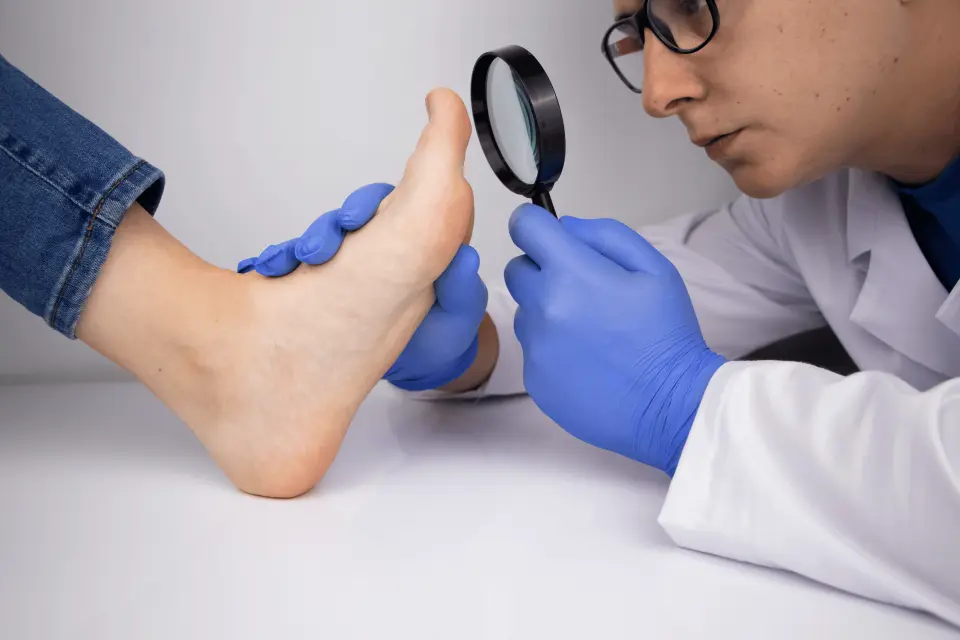
A handheld mirror and bright lighting are essential for examining the soles of feet. Sit in a well-lit area and use the mirror to view the bottom of each foot completely. Check between every toe by spreading them apart. Examine the tops of feet, ankles, and heels. Look at each toenail individually, checking for dark streaks or discoloration. A magnifying glass helps identify subtle changes in small areas.
Removing Nail Polish for Regular Inspections
Nail polish hides the nail bed completely, making it impossible to spot dark streaks or other abnormalities. Remove polish from toenails at least once monthly for a thorough inspection. This is especially important for people who keep polish on continuously. The brief inconvenience of bare nails is worth catching potential cancer early. Consider scheduling these inspections around regular pedicure appointments to maintain consistency.
When to See a Podiatrist or Dermatologist
Any new, changing, or unusual spot on the foot deserves professional evaluation. Do not wait to see if it goes away on its own. Early-stage skin cancer is highly treatable, but delays allow cancer cells to spread to lymph nodes and other organs. Specific warning signs requiring immediate attention include dark streaks under nails, non-healing wounds, growing or changing moles, and any lesion meeting CUBED criteria.
Frequently Asked Questions
Yes. Acral lentiginous melanoma develops on palms, soles, and under nails regardless of UV exposure. This type accounts for a small overall percentage of melanomas but a higher proportion among people with darker skin tones.
Monthly self-exams are recommended. People with a history of skin cancer, many moles, or weakened immune systems should check more frequently and have annual professional skin exams.
Early acral lentiginous melanoma often appears as a small, flat, irregularly shaped patch with uneven coloring. Under toenails, it presents as a dark streak running from the cuticle toward the nail tip.
While anyone can develop foot skin cancer, it disproportionately affects people with darker skin tones. Family history, previous skin cancer, and weakened immune systems also increase risk.
Podiatrists are trained to recognize suspicious lesions and can perform biopsies or refer patients to dermatologists for further evaluation. They are often the first to identify foot skin cancer during routine visits.
The combination of low awareness, infrequent self-exams, and cancer types that develop without sun exposure means lesions often grow undetected for months. By the time they are noticed, they may already be in more advanced stages.
The Bottom Line
Skin cancer on the feet is frequently missed because people simply do not look there. Regular self-exams using proper lighting and mirrors can catch dangerous changes early. For quick answers about concerning spots or to connect with a doctor 24/7, visit Doctronic for free AI consultations and affordable telehealth visits.
Related articles
Explore treatment options
Chat Now