Diseases and Conditions
Does Skin Cancer Itch? What Dermatologists Want You to Know
April 6, 2026
6 min read

Medically reviewed by Alan Lucks | MD, Alan Lucks MDPC Private Practice - New York on May 24th, 2026.
Published on April 17th, 2026. Updated on July 31st, 2026.
The ABCDE method identifies melanoma through asymmetry, border irregularity, color variation, diameter, and evolution of moles
Skin cancer can also appear as non-healing sores, pearly bumps, scaly patches, and waxy lesions that look nothing like typical moles
Hidden areas, including nail beds, palms, soles of feet, and mucous membranes, require regular inspection during self-exams
Monthly self-examinations using bright lighting and the "ugly duckling" method catch suspicious changes early
Any rapidly changing lesion warrants immediate evaluation by a dermatologist, regardless of whether it meets all ABCDE criteria
To get quick guidance on concerning skin changes before scheduling a dermatology appointment, Doctronic.ai provides AI-powered medical consultations available around the clock
Questions about skin cancer?
Free. Anonymous. Built by doctors.
This article covers general information. Ask Doctronic about your symptoms, medications, side effects, or treatment options.
Telehealth may not be appropriate for every medication or condition. Doctronic can help you understand your options and determine the appropriate next step.
A strange spot appears on the arm. It looks different from other marks on the body. Should a person worry? Knowing the signs and symptoms of skin cancer can mean the difference between early treatment and a serious health problem. Experts estimate that roughly 70% of all melanoma cases are linked to ultraviolet exposure from sunlight or indoor tanning, and approximately 100,000 new cases of invasive melanoma are expected in the United States in 2026 alone. This guide covers exactly what to look for, where to look, and when to seek professional help.
Basal cell carcinoma is the most common form of skin cancer. It grows slowly and rarely spreads to other parts of the body. These cancers typically appear on sun-exposed areas like the face, neck, and hands. Because it grows slowly, early detection allows for straightforward treatment in most cases.
Squamous cell carcinoma is the second most common type. Unlike basal cell carcinoma, it can spread if left untreated, which makes early detection more consequential. It most often develops on areas that have received significant sun exposure over time.
Melanoma is the most dangerous form of skin cancer. It develops in the cells that give skin its color and, unlike other types, can spread quickly to lymph nodes and internal organs. Early-stage melanoma has high survival rates when caught and removed promptly. Late-stage melanoma is substantially harder to treat.
Excessive UV radiation from the sun and tanning beds contributes to most, though not all, skin cancers. Resources on melanoma skin cancer note that it is often called the most serious skin cancer because of its ability to spread. People with fair skin, light eyes, and red or blonde hair face higher risks, as do people with a personal or family history of skin cancer and those who experienced severe sunburns during childhood.
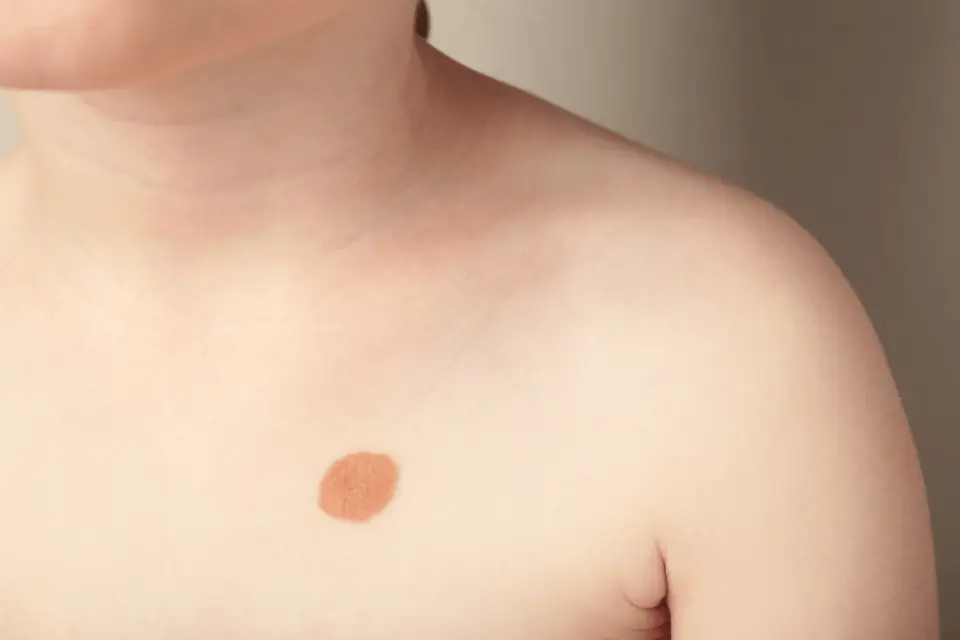
Normal moles are usually round and roughly symmetric. If a line were drawn through the middle, both halves would match. Melanomas often look uneven, with one half visibly different from the other. Borders matter equally. Healthy moles have smooth, even edges. Melanomas frequently show ragged, notched, or blurred borders that fade into surrounding skin without a clear line.
A single mole should be one consistent color throughout. Melanomas often contain multiple shades within the same spot: brown, tan, black, red, white, or blue. Size provides another clue. Most benign moles are smaller than the eraser on a pencil (about 6 millimeters). Melanomas are often larger, though they can start smaller and grow over time.
Many dermatologists consider evolution the most important sign in the ABCDE framework. Any mole that changes in size, shape, color, or texture over weeks or months needs professional attention. New symptoms like itching, bleeding, or crusting also signal a need for evaluation. A mole that was stable for years and then begins to change is particularly concerning.
A sore that bleeds, oozes, or crusts and does not heal within three weeks may indicate skin cancer. These lesions often appear to heal partially and then reopen. Persistent scabs that keep returning to the same location deserve attention. Many people dismiss recurring wounds as minor injuries, but a lesion that repeatedly opens in the same spot warrants a dermatologist visit.
Basal cell carcinoma often appears as a pearly or waxy bump with visible blood vessels running through it. These growths sometimes look like flesh-colored or pink raised areas with a shiny, slightly translucent surface. They are commonly found on the face and neck, areas with the highest cumulative sun exposure over a lifetime.
Squamous cell carcinoma frequently presents as rough, scaly red patches that may crust or bleed. Raised growths with a central depression also occur. Some lesions resemble warts. Any persistent rough patch that does not respond to basic moisturizing or treatment over several weeks needs professional evaluation.
Melanoma can develop under fingernails and toenails, appearing as a dark streak running lengthwise under the nail. The streak may widen over time or extend to the surrounding skin. Nail discoloration that cannot be explained by injury requires evaluation. This form is uncommon but can affect people of all skin tones.
Skin cancer can develop in places that rarely see sunlight. The palms of hands, soles of feet, and spaces between toes all need to be checked during self-exams. Mucous membranes in the mouth, nose, and genital areas can also develop melanoma. Dark spots in these locations are particularly concerning and should prompt timely medical consultation.
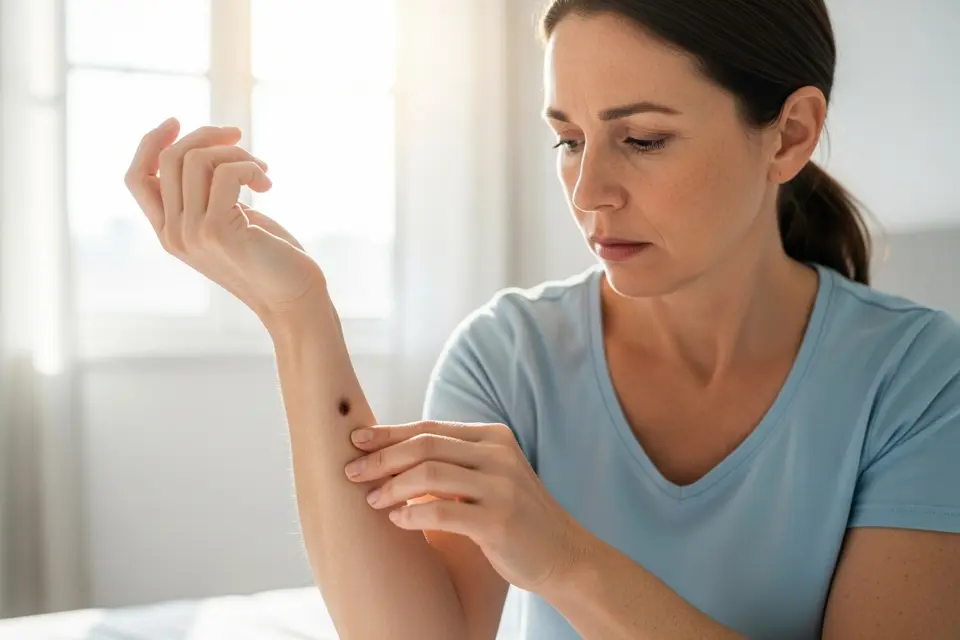
Effective self-exams require bright lighting and a full-length mirror. A hand mirror helps examine hard-to-see areas like the back, scalp, and backs of thighs. A fine-toothed comb helps part hair to check the scalp thoroughly. Examine the entire body monthly, including between fingers and toes, under the arms, and behind the ears. Photographing findings and tracking them over time makes it easier to notice changes at the next monthly check.
The ugly duckling approach compares moles to their neighbors. Most moles on a person's body look similar to each other in size, shape, and color. A mole that stands out as noticeably different from the others (the ugly duckling) needs closer examination regardless of whether it meets every ABCDE criterion. This method catches melanomas that technically pass individual criteria but still look wrong compared to surrounding spots.
Skin cancer basics identify it as the most common cancer in the United States, with excessive UV radiation from the sun or artificial sources like tanning beds as the leading preventable cause.
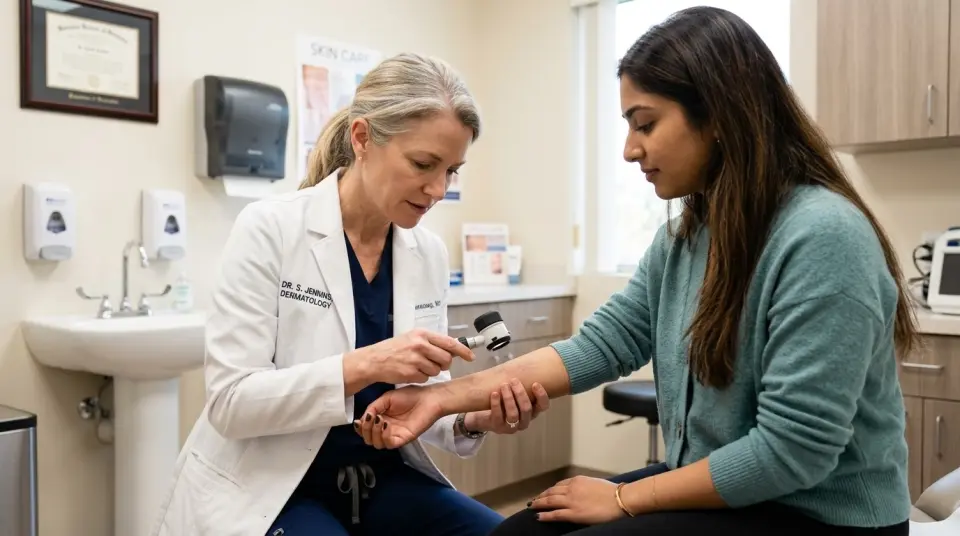
Before visiting a dermatologist, note all concerning spots and their locations. Record when changes were first noticed. Bring photographs showing how spots have evolved. List any family history of skin cancer and mention previous sunburns, tanning bed use, or radiation exposure. Doctronic.ai can help organize symptom information before appointments and provide guidance on which changes are most urgent.
For more detail on spotting melanoma specifically, the Doctronic.ai blog has a dedicated guide on early-stage melanoma and why early detection makes such a significant difference.
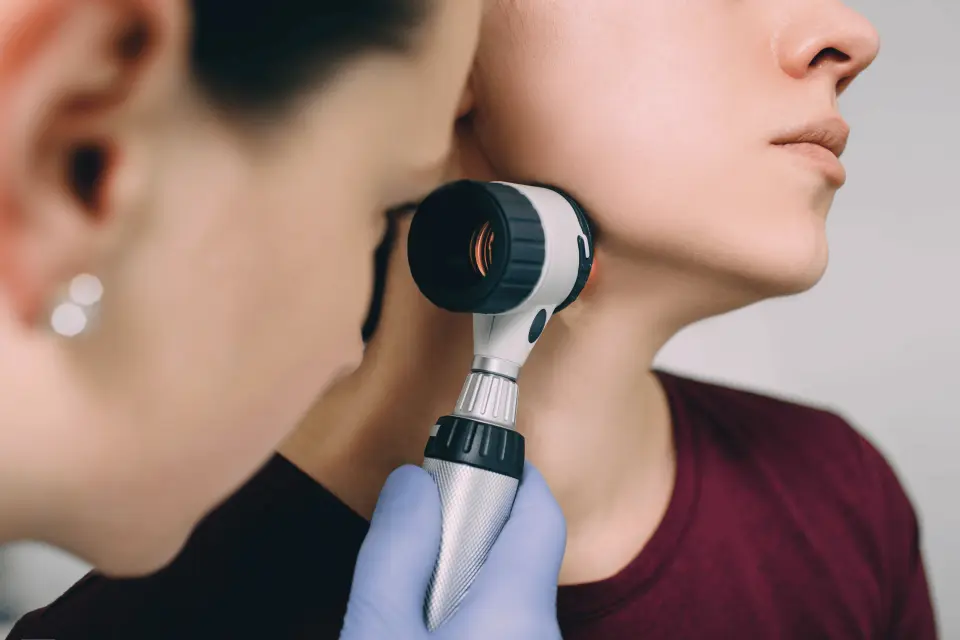
Monthly self-examinations are recommended for everyone. People with higher risk factors, such as fair skin, a family history of skin cancer, or a history of significant sun exposure, should be especially consistent. Annual professional skin exams provide an additional layer of protection.
Yes. While UV exposure causes most skin cancers, melanoma can develop anywhere on the body, including the scalp, between the toes, under nails, and on mucous membranes that never receive direct sun.
Early skin cancer often causes no pain or discomfort. Some lesions may itch or feel slightly tender, but many are completely asymptomatic. Visual examination is the primary and most reliable detection method, not physical sensation.
Darker skin has more melanin, which offers some protection from UV radiation. However, skin cancer still develops in people with darker skin tones and is often diagnosed at later stages because awareness is lower, and lesions in non-sun-exposed areas are easy to miss. Everyone needs regular skin checks regardless of skin color.
Skin cancer is rare in children, but not impossible. More importantly, severe sunburns during childhood significantly increase adult skin cancer risk. Sun protection habits, including sunscreen and protective clothing, should begin in early childhood.
Knowing what skin cancer looks like gives people the power to catch it early, when treatment is most effective. Regular self-exams using the ABCDE method and the ugly duckling approach, combined with annual professional screenings, save lives. For quick answers about skin changes and guidance on when to see a dermatologist, visit Doctronic.ai for AI-powered medical guidance available around the clock.
Explore treatment options
Chat Now