
SAD Lamps: How to Choose the Right Light Therapy Device

Medically reviewed by Alan Lucks | MD, Alan Lucks MDPC Private Practice - New York on May 24th, 2026.
Published on April 17th, 2026. Updated on May 28th, 2026.
Key takeaways
Light therapy devices should deliver 2,500 to 10,000 lux of brightness while filtering out harmful UV rays to treat seasonal affective disorder safely
Morning light exposure produces the best results, with early morning sessions consistently showing the strongest symptom improvement compared to other times of day
The size of the light surface matters: larger boxes allow more flexibility in positioning while smaller portable models suit travel needs
Sessions typically last 20 to 40 minutes when using a 10,000 lux device at a distance of 16 to 24 inches from the face
Anyone with eye conditions, bipolar disorder, or taking photosensitizing medications should consult a healthcare provider before starting light therapy
Doctronic.ai offers free AI doctor visits to help determine whether light therapy is right for your specific health situation.
How SAD Lamps Work
Mimicking Natural Sunlight
SAD lamps work by delivering bright light that mimics the intensity of outdoor light on a clear day. Natural sunlight ranges from 32,000 to over 100,000 lux, depending on conditions, while typical indoor lighting only provides 100 to 500 lux. This massive difference explains why spending time indoors during the winter months can disrupt normal biological processes.
Quality light therapy devices compress the beneficial spectrum of natural light into a compact form. They filter out ultraviolet radiation while preserving the wavelengths that signal the brain to adjust its chemistry. The goal is to replicate the biological effects of being outside on a bright morning without the UV exposure that causes skin damage.
The Role of Circadian Rhythms and Serotonin
The human body runs on an internal clock that responds to light signals. When winter reduces natural light exposure, this clock can drift out of alignment with actual day-night cycles. Seasonal affective disorder is closely linked to this circadian misalignment, combined with reduced serotonin activity and elevated melatonin production during waking hours.
Bright light exposure suppresses melatonin production and stimulates serotonin release. These chemical shifts improve mood, increase alertness, and help reset sleep patterns. Without adequate light signals, the brain continues producing sleep hormones during waking hours, creating the fatigue and low mood characteristic of seasonal affective disorder.
Seasonal affective disorder is treated primarily with light therapy, psychotherapy, and antidepressant medications, and light therapy has been a first-line approach since the 1980s.
Technical Specifications That Actually Matter
Lux Output: The 10,000 Standard
Not all bright lights qualify as therapeutic. A device must deliver at least 2,500 lux at the recommended usage distance to be effective, with 10,000 lux being the widely used clinical standard. Many cheaper products claim high brightness but measure it at unrealistic distances or fail to maintain intensity across the full light surface.
Check specifications carefully. A lamp rated at 10,000 lux at 6 inches provides far less therapeutic value than one rated at the same intensity at 16 to 24 inches. The practical difference determines whether someone can use the device comfortably during normal activities or must sit uncomfortably close to get the therapeutic dose.
UV Filtering
Therapeutic light therapy requires bright visible light, not ultraviolet radiation. Quality devices include filters that block UV-A and UV-B rays completely. This protection matters because users position their faces near these lights for extended periods daily.
Look for devices tested to recognized safety standards. Reputable manufacturers provide documentation showing their products filter harmful wavelengths. Avoid any lamp that does not explicitly state UV filtering, since prolonged exposure to unfiltered bright light can damage eyes and skin.
Light Surface Area
The physical size of the light-emitting surface affects usability more than many buyers realize. A larger light box creates a wider beam spread, meaning users can move their heads naturally without leaving the therapeutic zone. Smaller surfaces require more precise positioning.
Devices with at least a 12-by-12-inch light surface offer the most flexibility for desktop use. Compact models work for travel but typically require closer positioning and more careful attention to angle. The trade-off between portability and ease of use depends on individual circumstances.
Get seasonal affective disorder treatment online today
A licensed doctor can review your symptoms and send a prescription to your pharmacy, often the same day.
- $39 video visit
- Insurance accepted
- 4.8 on Trustpilot
Related medications we prescribe
Learn moreTypes of SAD Lamps
Desktop Light Boxes
Desktop light boxes remain the most effective option for daily home use. Their larger size allows comfortable positioning during morning routines like eating breakfast or reading. These units typically deliver the full 10,000 lux at practical distances and are designed for consistent daily sessions.
Portable models suit frequent travelers or those with limited space. They deliver therapeutic light in smaller packages but often require closer positioning or longer sessions. Some people keep both: a full-size unit at home and a compact version for work or travel.
Dawn Simulators
Dawn simulators take a different approach by gradually increasing light intensity before wake time. They mimic natural sunrise, helping the body transition from sleep more gently. These devices typically reach lower peak intensities than dedicated SAD lamps.
Wake-up lights work best as supplements rather than replacements for light therapy. They improve morning alertness and may help with sleep timing, but most do not deliver the intensity needed to treat seasonal affective disorder on their own. Combining a dawn simulator with a separate SAD lamp covers both bases.
Adjustable Settings
Variable brightness settings allow users to customize intensity based on sensitivity and session timing. Starting at lower settings and gradually increasing brightness helps those who find full intensity uncomfortable at first.
Color temperature options have also become more common. Some research suggests blue-enriched white light may work at lower intensities, while others prefer warmer tones for comfort. The evidence does not strongly favor either option, so personal preference can guide this choice without sacrificing effectiveness.
Using a SAD Lamp Effectively
Positioning for Best Results
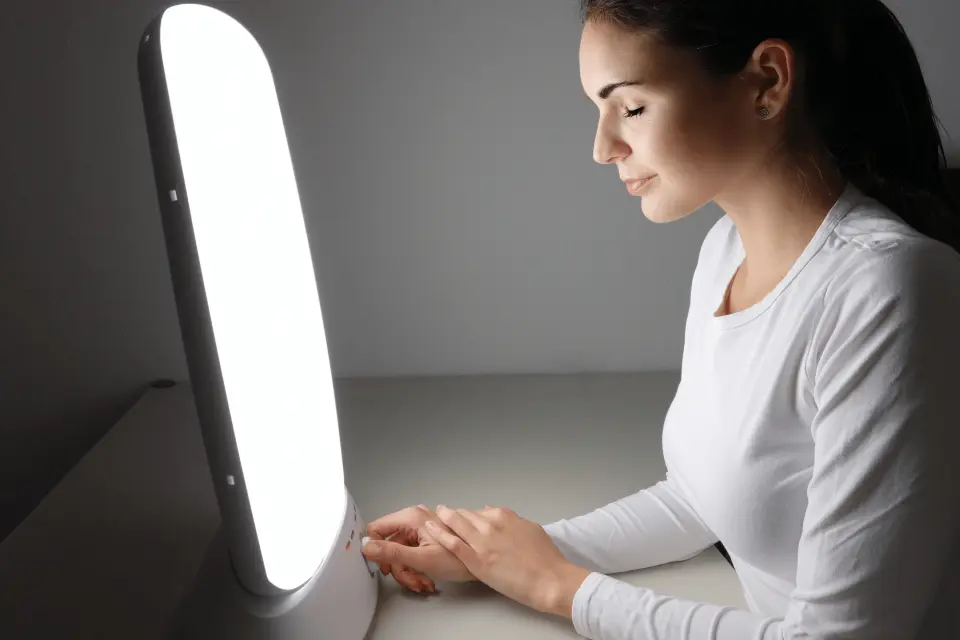
Position the light at eye level or slightly above, angled downward toward the face. The light should enter the eyes indirectly: staring directly at the lamp is unnecessary and uncomfortable. Most devices work best at 16 to 24 inches from the face.
Consistency matters more than perfection. A setup that integrates into existing morning routines produces better results than an ideal configuration that feels inconvenient. Place the lamp where it can be used while doing something else, like eating or working.
Timing Your Sessions
Morning sessions produce the strongest results. Research consistently shows that early morning light exposure achieves the best symptom remission rates compared to evening or midday sessions. Starting within the first hour after waking aligns best with natural circadian rhythms.
Session length depends on intensity. At 10,000 lux, 20 to 40 minutes typically suffices. Lower intensities require proportionally longer exposure. Using the device at the same time daily helps establish consistent biological signals.
Seasonal affective disorder responds to multiple treatment approaches, with light therapy fitting into a broader plan alongside medication and psychotherapy options.
Safety Considerations
Common Side Effects and How to Manage Them
Some users experience headaches, eye strain, or nausea when starting light therapy. These effects usually diminish within a few days. Starting with shorter sessions at lower intensity helps minimize initial discomfort.
Using light therapy too late in the day can disrupt sleep. Avoid sessions within four hours of bedtime. If sleep problems develop, shifting sessions earlier in the morning usually resolves the issue.
When to Check With a Provider First
People with eye conditions like macular degeneration or glaucoma should get medical clearance before using light therapy. Certain medications, including some antibiotics and antipsychotics, increase light sensitivity and may require adjusted protocols.
Those with bipolar disorder need particular caution, as light therapy can trigger manic episodes. Doctronic provides free AI consultations to help evaluate whether light therapy is appropriate for specific health situations before purchasing a device.
Frequently Asked Questions
Most people notice improvements within one to two weeks of consistent daily use. Some experience benefits within the first few days, while others need three to four weeks. Stopping treatment typically causes symptoms to return within days, so continued use through the winter months is important.
Light therapy often works well alongside antidepressant medications and may enhance their effectiveness. A healthcare provider can advise on safely combining treatments and on monitoring for any interactions or overlap.
No. The therapeutic light must enter through open eyes to affect brain chemistry. Sleeping under a bright light does not provide the same benefits as active, wakeful exposure during a morning session.
Some studies suggest that blue-enriched light may work at lower intensities, but standard white-light devices at 10,000 lux remain the most proven and widely used option. Both types can be effective when used correctly and consistently.
Light therapy has been studied in children and adolescents with seasonal affective disorder, but device selection and session length should be guided by a pediatrician or child psychiatrist to ensure safety and appropriate use.
The Bottom Line
Choosing the right SAD lamp means prioritizing 2,500 to 10,000 lux intensity with proper UV filtering over flashy features that have no impact on therapeutic value. Consistent morning use is more important than any single device feature. For personalized guidance on whether light therapy fits your health needs, Doctronic.ai offers free AI doctor visits and affordable telehealth consultations available any time.
Related articles
Get sleep health advice
Chat Now