
Skin Health
What Does Poison Oak Look Like? Identifying It Before You Touch It
April 17, 2026
6 min read

Medically reviewed by Alan Lucks | MD, Alan Lucks MDPC Private Practice - New York on May 24th, 2026.
Published on April 17th, 2026. Updated on July 23rd, 2026.
Poison oak and poison ivy both contain urushiol oil, which causes the same allergic rash regardless of which plant is the source
Poison oak leaves are distinctly lobed and rounded, resembling oak leaves, while poison ivy has smooth or toothed, pointed leaflets
The rash typically appears within 12 to 72 hours after contact and lasts one to three weeks in most cases
Home treatment with calamine lotion, hydrocortisone cream, and cool compresses manages the majority of mild to moderate reactions
See a doctor if the rash covers large areas of the body, affects the eyes or throat, or shows signs of infection
If you are unsure whether your rash is poison oak or another skin condition, Doctronic.ai connects you with a licensed provider at any time of day
The two plants belong to the same genus (Toxicodendron) and cause identical reactions, but they look and grow differently. Knowing the distinction helps with plant identification in the field, even though it has no bearing on how you treat the rash.
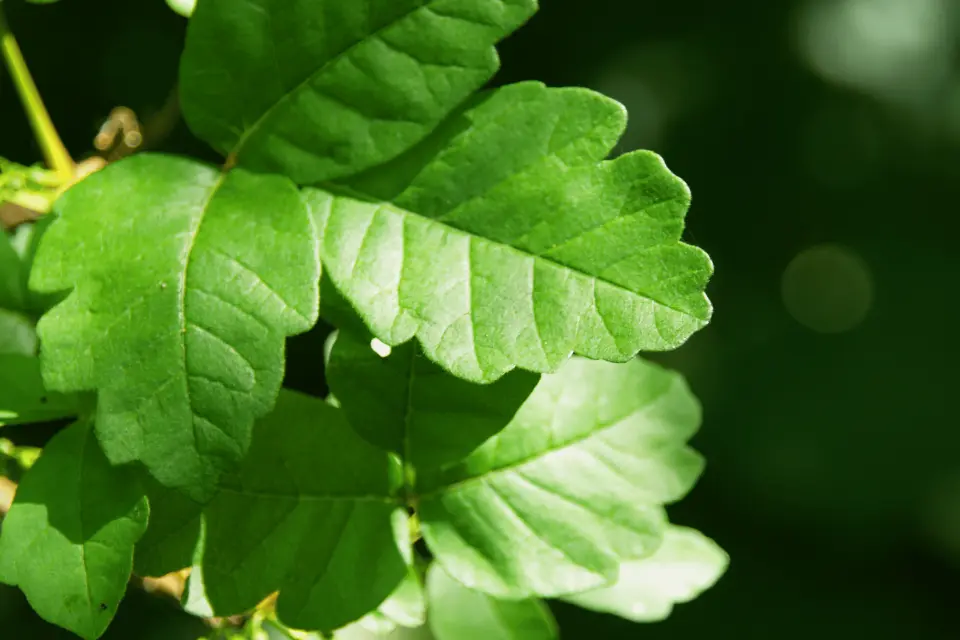
Poison oak leaves are deeply lobed and rounded at the tips, closely resembling the leaves of a white oak tree. Each stem holds three leaflets, though some plants have groups of five or seven. The surface is typically dull to slightly waxy and may be hairy on the underside. In spring and summer, leaves are green. In the fall, they shift to yellow, orange, and red. Poison oak produces clusters of small, pale berries similar to those of poison ivy.
There are two main species in North America. Atlantic or eastern poison oak grows primarily in the southeastern United States, often as a low shrub in sandy soils or pine forests. Pacific or western poison oak grows along the West Coast, commonly in coastal scrub and woodlands. It can grow as a dense shrub or as a climbing vine, depending on its environment.
Poison ivy, by contrast, grows throughout most of North America, including areas where poison oak is uncommon. Its leaves are pointed and smooth-edged or lightly toothed, and the plant frequently climbs as a vine. Both plants follow the "leaves of three" pattern and produce urushiol throughout, including roots, stems, and berries.
Urushiol is a sticky, colorless oil that binds to skin proteins and triggers a delayed hypersensitivity reaction in people who have been previously sensitized. First contact typically causes little or no visible reaction but primes the immune system to respond more aggressively afterward. Subsequent exposures cause faster and often more intense reactions.
Roughly 85 percent of people will develop a rash with sufficient urushiol exposure. Sensitivity tends to increase over a lifetime of repeat contact.
The oil transfers easily from contaminated surfaces. Clothing, gardening tools, and pet fur can all carry urushiol long after direct plant contact. This is a common explanation for rashes that appear in people who were not visibly near poison oak during recent outdoor activity.
The rash caused by poison oak is clinically identical to poison ivy rash. Symptoms typically appear 12 to 72 hours after exposure.
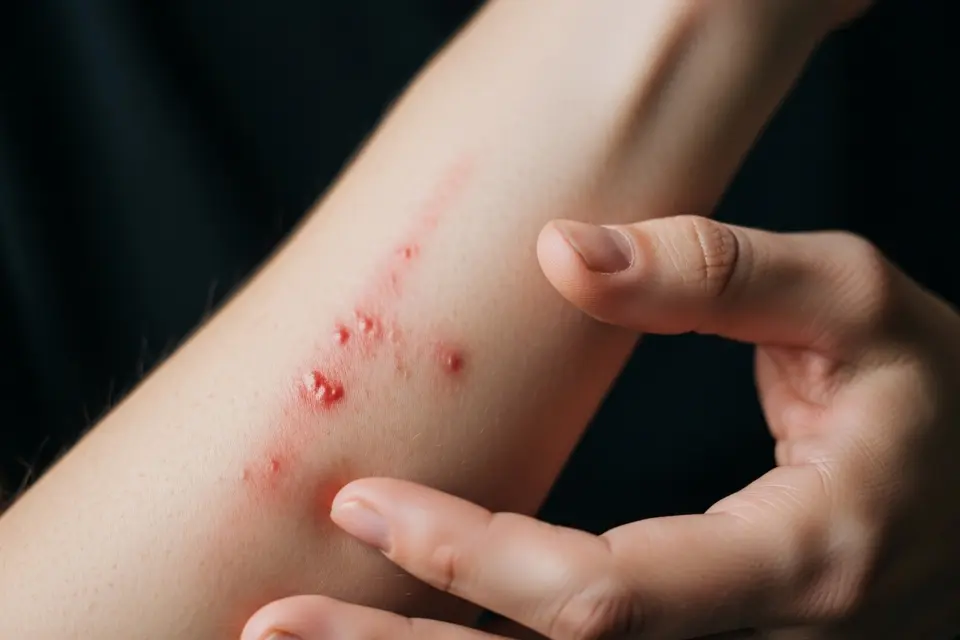
Initial signs include intense itching, redness, and mild swelling in the affected area. Within a day or two, small blisters form, which may weep clear fluid as they enlarge. The fluid inside blisters is serum, not urushiol, and cannot spread the reaction to other people or to untouched areas of your own skin.
The rash often appears in streaky linear patterns that follow the path where the plant or a contaminated surface made contact. Multiple distinct patches are common when different areas of skin received varying amounts of urushiol. Areas that received less oil may develop symptoms a day or two after the initial patch, which is often misinterpreted as spreading.
The face, forearms, lower legs, and backs of hands are the most frequently affected areas. Thinner or more sensitive skin tends to react more quickly and severely.
Get poison ivy treatment online today
A licensed doctor can review your symptoms and send a prescription to your pharmacy, often the same day.
Related medications we prescribe
For mild to moderate poison oak reactions, home care controls symptoms while the immune system works through the response.
Washing exposed skin promptly is the most important early step. Using soap and cool water within 30 minutes of contact can significantly reduce the amount of urushiol absorbed. Avoid hot water during the initial wash, as it opens pores and can facilitate deeper urushiol penetration.
Once the rash has developed:
Calamine lotion helps dry oozing blisters and reduces itching when applied directly to affected skin several times daily. Over-the-counter hydrocortisone cream (1 percent) reduces inflammation and itching, particularly useful on moderate patches. Cool compresses applied for 15 to 30 minutes provide temporary itch relief. Colloidal oatmeal baths help when the rash covers larger areas or affects multiple body parts. Oral antihistamines like diphenhydramine are useful at night when itching disrupts sleep, though they do not speed recovery.
Avoid scratching, which breaks the skin and increases infection risk. Trim fingernails short to limit damage during sleep.
Most cases resolve within one to three weeks with consistent home care.
Urushiol remains potent on surfaces for months and can survive washing in cold water. Wash contaminated clothing, gloves, and fabric items in hot water with laundry detergent. Items that cannot be laundered, such as leather boots or belts, should be discarded or treated with rubbing alcohol.
Dogs and cats rarely react to poison oak because their fur acts as a barrier. However, the oil clings to fur and transfers easily to human hands during petting. Bathe pets that have been in areas with poison oak, wearing gloves during the bath, and then wash your hands thoroughly afterward.
Most poison oak reactions resolve without medical treatment, but some situations require professional evaluation.
Seek care promptly if the rash covers a large portion of the body. Reactions involving the face, particularly around the eyes or inside the mouth, warrant medical attention because swelling can interfere with vision or breathing. Significant swelling of the throat or difficulty breathing is a medical emergency requiring immediate care.
Signs of a secondary bacterial infection also require attention. These include yellow or green discharge from blisters, expanding areas of redness and warmth beyond the rash margins, fever, or red streaks extending from the rash site.
If symptoms are severe enough to disrupt daily functioning or sleep significantly, a doctor can prescribe oral corticosteroids such as prednisone. A tapered course typically runs 10 to 21 days and provides significantly better symptom control than over-the-counter options for serious cases. Dermatologist-reviewed poison ivy and oak treatment guidelines outline when prescription treatment is warranted versus when home care is sufficient.
Poison oak rash can also be confused with allergic contact dermatitis caused by other exposures, including certain metals, latex, or cosmetic ingredients. Understanding the range of contact rash triggers helps narrow down the cause when the source is not obvious. If you are uncertain whether your rash is from a plant, your own product use, or another trigger, a provider evaluation helps clarify the cause and guide treatment.
Yes. Both plants produce urushiol oil, and the rash caused by either plant is medically identical. Appearance, progression, duration, and treatment are the same regardless of which plant caused the reaction.
Poison oak rash typically follows streaky linear patterns in areas that made contact with vegetation. It appears 12 to 72 hours after exposure and is accompanied by intense itching. If the pattern and timing are consistent and you were outdoors in an area where poison oak grows, it is a reasonable assumption. A provider can help confirm the diagnosis if you are unsure.
No. Once urushiol has bonded to the skin or been washed off, it is no longer transferable. The blisters contain serum, not urushiol, and contact with another person's rash will not cause a reaction in someone who has not been directly exposed to the oil.
Calamine lotion, hydrocortisone cream, and cool compresses are the most reliable itch-relief options available without a prescription. For severe itching, oral diphenhydramine (Benadryl) helps at night. Prescription oral corticosteroids provide the most significant symptom relief for moderate-to-severe reactions.
Approximately 15 percent of people do not react to poison oak or poison ivy, but immunity is not guaranteed to last. Repeated exposures can sensitize the immune system over time, and people who have never reacted may eventually develop sensitivity.
Scratching does not spread the rash to new skin areas. What looks like spreading is typically delayed reactions in areas that received less urushiol during the original exposure. However, scratching does break the skin and increases the risk of bacterial infection, so it should be avoided.
Most cases resolve within one to three weeks. Mild reactions may clear in less than two weeks. Severe reactions treated with oral corticosteroids may take up to three to four weeks to fully resolve.
Most poison oak rashes resolve within two to three weeks. Wash exposed skin quickly after contact, manage symptoms with calamine lotion and hydrocortisone, and keep skin clean to prevent secondary infection.
For severe reactions or rashes involving the face or airway, Doctronic.ai connects you with a licensed provider from home for an assessment and corticosteroid prescription when appropriate.
Get allergy care advice
Chat Now