Bone & Joint Health
What Is a Dangerously High Calcium Level and What Does It Mean?
July 21, 2026
6 min read

Medically reviewed by Oghenefejiro Okifo | MD, Harvard Medical School | Henry Ford Hospital - Detroit, MI on April 19th, 2026.
Published on April 17th, 2026. Updated on July 23rd, 2026.
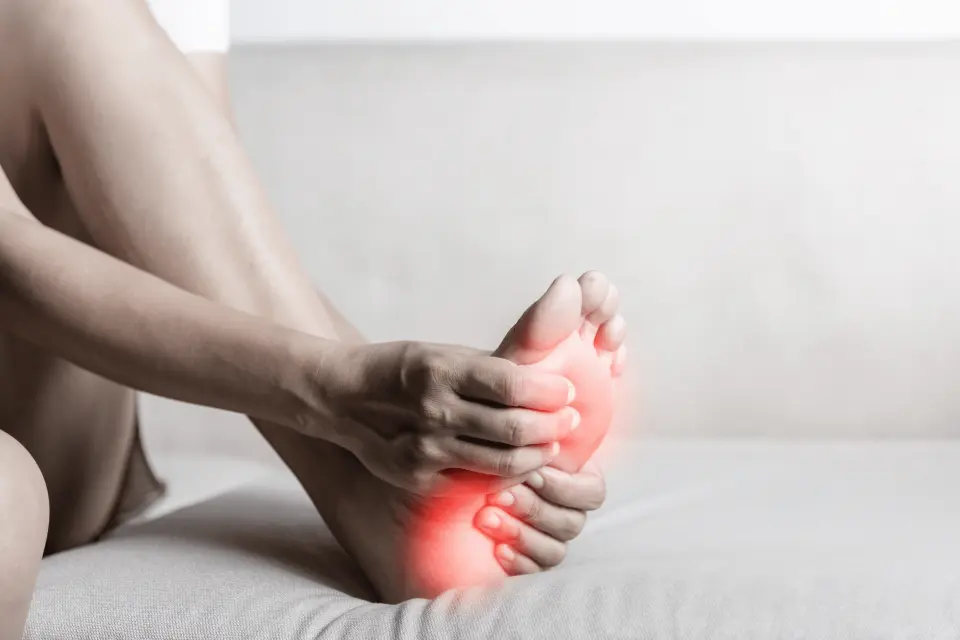
Plantar fasciitis is inflammation of the thick band of tissue connecting your heel to your toes, most often felt as sharp pain with your first morning steps.
Rest, stretching, and ice are the foundation of effective home treatment, not OTC creams or generic cushion insoles.
Night splints and quality arch supports address root mechanical causes rather than just masking symptoms.
Weight and footwear choices have a direct impact on how quickly your plantar fascia heals.
Most cases resolve with consistent at-home care, but pain persisting beyond 8 to 12 weeks warrants a professional evaluation.
When you want to understand your options before or after seeing a provider, Doctronic.ai gives you on-demand medical guidance from licensed clinicians.
The plantar fascia is a thick band of connective tissue that runs along the bottom of your foot, linking your heel bone to your toes. Its job is to absorb shock and support your arch every single time your foot hits the ground. When that band is overloaded by excessive standing, sudden changes in activity, or unsupportive footwear, tiny tears form in the tissue. Your body responds with inflammation, which produces the stabbing heel pain that plantar fasciitis is known for.
The pain tends to be worse with those first few steps after waking up or after sitting for a long stretch. That is because the fascia tightens when it is not bearing weight, and then gets pulled abruptly when you stand. As you walk around and the tissue warms up, discomfort usually decreases, though it often returns after long periods on your feet.
Plantar fasciitis is the most common cause of heel pain, most often affecting people between 40 and 60, though runners and anyone who spends long hours on hard floors can develop it at any age.
Applying ice for 15 to 20 minutes several times daily reduces inflammation and numbs acute pain. A frozen water bottle rolled slowly under your arch is particularly effective because it combines cold therapy with gentle tissue massage. Do not apply ice directly to bare skin.
Rest does not mean total inactivity. It means removing the specific stresses that are aggravating the fascia: cutting out barefoot walking on hard floors, scaling back high-impact exercise, and avoiding prolonged standing on concrete surfaces.
Tight calf muscles and a tight Achilles tendon place extra tension on the plantar fascia. Loosening these structures is one of the most evidence-supported home interventions available.
Before getting out of bed, sit up and use a towel looped around your foot to pull your toes back toward your shin and hold for 30 seconds. Repeat three times per foot. Then do the same stretch standing against a wall with the affected leg straight behind you, heel flat on the floor.
Performing these stretches before your first steps in the morning matters more than almost any other timing. The fascia is at its tightest after sleep, and stretching it before loading it reduces micro-tearing.
Night splints hold your foot in a slightly dorsiflexed position while you sleep, keeping the plantar fascia gently stretched rather than allowing it to contract overnight. Users often report dramatically less morning pain within a few weeks of consistent use. They take some adjustment to sleep in, but most people tolerate them well after several nights.
Generic gel cushions that sit in the heel of a shoe provide temporary padding but do not address the mechanical alignment problem driving the inflammation. A firm arch support, either over-the-counter or custom-made, distributes pressure across the full foot and prevents the arch from collapsing excessively on each step.
Replace shoes that are visibly worn, particularly any that have lost firmness in the midsole. Walking or standing in shoes that have broken down structurally is one of the most common reasons plantar fasciitis lingers.
Every pound of body weight adds roughly three to four pounds of force on your feet with each step. Even modest weight reduction noticeably decreases the load on the plantar fascia. If weight loss is part of your plan, choose low-impact activities like swimming, cycling, or water aerobics that maintain cardiovascular fitness without hammering the heel.
Get plantar fasciitis treatment online today
A licensed doctor can review your symptoms and send a prescription to your pharmacy, often the same day.
Related medications we prescribe
OTC creams containing menthol or capsaicin create a surface-level sensation that temporarily distracts from pain. They cannot penetrate deep enough to reach the plantar fascia, which sits well below the skin and fat layers. They are not harmful, but they are not a meaningful treatment.
Walking barefoot on hardwood or tile is often suggested as a way to strengthen foot muscles. For most people with active plantar fasciitis, it does the opposite: without arch support, each step pulls harder on already irritated tissue and slows healing.
These are widely sold and feel comfortable initially. They cushion the heel pad but do not provide arch support and do nothing to correct the biomechanical pattern that caused the inflammation. They often give people a false sense of progress while the condition quietly continues.
The key distinction between people who recover quickly and those who struggle for months is consistency, not the specific treatment. Doing your stretches once or twice is not the same as doing them every morning and evening for six consecutive weeks.
A practical daily protocol:
Stretch before getting out of bed (towel stretch, three reps per foot)
Put on supportive shoes or arch supports before stepping onto any hard floor
Ice for 15 to 20 minutes after any prolonged activity
Do a standing calf stretch twice throughout the day
Wear night splints while sleeping
If you use Doctronic.ai for symptom guidance, you can describe your pain pattern and get clinical insight on whether your home approach is on track before committing to weeks of effort.
Home treatment works for the vast majority of cases. However, certain signs suggest you need a professional evaluation:
Pain persists beyond 8 to 12 weeks of consistent, daily home care
Pain worsens rather than plateaus or improves
Numbness, tingling, or burning spreads beyond the heel
You notice significant swelling or bruising
A physician can confirm the diagnosis, rule out stress fractures or nerve entrapment, and discuss next steps like physical therapy, corticosteroid injections, or custom orthotics. Plantar fasciitis causes and medical treatment options like physical therapy, corticosteroid injections, and custom orthotics are considered when home care fails to resolve symptoms.
For runners specifically, check out this detailed look at plantar fasciitis recovery timelines for runners on the Doctronic.ai blog, which covers realistic timelines for getting back to training.
Doctronic.ai connects you with licensed clinicians available around the clock for under $40, so if you are unsure whether your symptoms warrant more than home care, you do not have to wait for a scheduled appointment to find out.
Most cases improve meaningfully within 6 to 8 weeks of consistent home care. Full resolution typically takes 3 to 6 months. Cases that have been present for more than a year before treatment begins tend to take longer.
Light, supportive walking is generally fine and often beneficial. The key is wearing arch-supportive footwear and avoiding long stretches on hard surfaces or barefoot walking, which increases strain on the fascia.
Ice is more effective during active inflammation, which is most of the time with plantar fasciitis. Heat can loosen the tissue before stretching, but should not be used when the area is acutely inflamed or painful.
Yes, with modification. Swimming and cycling are well tolerated. Running and high-impact activities should be scaled back or paused until pain is consistently low. Strengthening exercises for the foot and calf are specifically beneficial.
The plantar fascia tightens during sleep when the foot is in a relaxed, plantarflexed position. The sharp first-step pain comes from suddenly loading contracted, inflamed tissue. Stretching before standing and sleeping in a night splint significantly reduces this effect.
For many people, quality OTC arch supports work well. Custom orthotics are worth considering if OTC options have not helped after 6 to 8 weeks, or if you have a biomechanical issue, such as flat feet or very high arches, that generic supports do not address.
Plantar fasciitis responds to strategic home care: ice consistently, stretch before your first steps each morning, wear supportive footwear, and use a night splint to reduce morning pain. Skip creams and gel inserts that only feel helpful.
If pain persists past 8 to 12 weeks, Doctronic.ai offers same-day telehealth with licensed clinicians in all 50 states.
Explore treatment options
Chat Now