Bone & Joint Health
What Is a Dangerously High Calcium Level and What Does It Mean?
July 21, 2026
6 min read

Medically reviewed by Lauren Okafor | MD, The Frank H Netter MD School of Medicine, Loyola University Medical Center on April 23rd, 2026.
Published on April 17th, 2026. Updated on July 23rd, 2026.
Pain on the outside of the knee is most often caused by iliotibial band syndrome, lateral meniscus tears, or lateral collateral ligament injuries
IT band syndrome produces a sharp, burning sensation at the outer knee that intensifies during and after repetitive activity like running or cycling
The location and quality of lateral knee pain offer important diagnostic clues about which structure is involved
Most lateral knee conditions respond well to conservative treatment, but a lateral meniscus tear or LCL injury may need imaging to confirm the diagnosis
Returning to sport too quickly without addressing the root cause leads to recurrence and prolonged recovery
If pain on the outside of your knee is keeping you sidelined, connect with a doctor through Doctronic.ai to get a telehealth assessment and a clear plan.
Lateral knee pain is one of the most common complaints among runners, cyclists, and hikers, but it also affects people with no athletic background. The outer side of the knee is a complex area where the end of the femur, the top of the tibia, and several soft tissue structures all meet. When any of them becomes irritated or damaged, the result is pain on the outside of your knee that can range from a mild ache to a sharp sensation that stops you mid-run.
Pinpointing the cause matters because IT band syndrome, a lateral meniscus tear, and a ligament injury all look similar on the outside but require very different treatment approaches.
IT band syndrome is the most frequent cause of pain on the outside of the knee in active people. The iliotibial band is a thick strip of connective tissue running from the hip to the outer shinbone. During repetitive knee flexion and extension in activities like running, cycling, and hiking, the IT band repeatedly rubs over the lateral femoral epicondyle (the bony prominence on the outside of the knee), creating friction and inflammation.
Both athletes and non-athletes can develop iliotibial band syndrome, which produces an aching, burning sensation at the outer knee that worsens the longer the activity continues. Pain typically starts after exercise and eventually occurs throughout the workout, and in more advanced cases, at rest.
Common contributors include hip abductor weakness, excessive foot pronation, running on banked surfaces or downhill, and dramatically increasing training volume or intensity.
The lateral meniscus is a C-shaped cartilage pad that cushions the outside of the knee joint. It can tear during twisting movements under load, such as pivoting in sport, or degenerate over time in older adults. A torn lateral meniscus causes pain along the outer joint line, swelling, and often a catching or clicking sensation when the knee moves. Some tears cause the knee to lock temporarily.
Unlike IT band syndrome, which is an overuse condition, a lateral meniscus tear is usually a structural injury that may require MRI to fully characterize and does not always respond to rest alone.
The lateral collateral ligament runs along the outer side of the knee and stabilizes against inward (varus) stress. LCL sprains occur during contact sports when a force is applied to the inside of the knee, stretching or tearing the ligament on the outside. Symptoms include tenderness along the outer knee, instability, swelling, and pain with side-to-side movements. Grade I and II sprains typically heal with conservative care, while complete Grade III tears may require surgical consultation.
The biceps femoris is the lateral hamstring, and its tendon attaches to the outer side of the knee at the fibular head. Overuse or biomechanical stress can inflame this tendon, producing pain at the lower outer knee that worsens with resisted knee flexion and during activity. This condition is less common than IT band syndrome but can be mistaken for it because the pain location overlaps.
In some people, the kneecap tracks toward the outside of the groove in which it sits, creating friction and lateral knee discomfort. This is more common in people with hip weakness, flat feet, or a wider pelvis. The pain tends to occur during stairs, squatting, or prolonged sitting, and is often described as a diffuse ache rather than a sharp point of tenderness.
Get knee pain treatment online today
A licensed doctor can review your symptoms and send a prescription to your pharmacy, often the same day.
Related medications we prescribe
The exact location of tenderness offers the best initial clue:
IT band syndrome: pain directly over the lateral femoral epicondyle, approximately 2 to 3 centimeters above the joint line
Lateral meniscus: pain at the joint line itself, often with swelling
LCL injury: tenderness along the ligament running from the outer femur to the fibular head
Biceps femoris tendinopathy: tenderness at the fibular head insertion
Activity pattern also helps. IT band pain classically starts after a set distance or duration and improves after stopping. Meniscus pain often includes mechanical symptoms like clicking or locking and may be worse with twisting. LCL pain correlates with lateral instability.
X-rays are useful when bone injury, significant arthritis, or calcification is suspected. MRI provides the clearest picture of the meniscus, ligaments, and cartilage when the diagnosis is uncertain after a physical exam. A helpful overview of knee pain evaluation explains when different imaging studies become appropriate based on symptom severity and duration.
Physical examination tests like Ober's test (for IT band tightness), McMurray's test (for meniscus tears), and varus stress testing (for LCL integrity) can narrow the diagnosis significantly before imaging is ordered.
If your symptoms include instability, locking, a pop at the time of injury, or persistent swelling, imaging is warranted earlier rather than later. Using a knee pain symptom checker can be a useful first step in narrowing down the likely cause before your appointment. A telehealth evaluation through Doctronic.ai can then help you determine whether your symptoms suggest an injury that needs urgent imaging or one that warrants a trial of conservative care first.
The primary treatment for IT band syndrome is reducing the volume of the activity causing friction while the tissue heals. Complete rest is not necessary and often not helpful, but high-intensity running, especially downhill, should be paused until pain resolves.
Physical therapy addresses the underlying contributors: hip abductor and gluteus medius strengthening reduces the mechanical stress on the IT band during gait, while foam rolling the lateral thigh helps with tissue extensibility. NSAIDs reduce acute inflammation and can make rehabilitation exercises more tolerable. Corticosteroid injections into the site of irritation are an option for cases that do not respond to 4 to 6 weeks of conservative management.
Most people with IT band syndrome recover fully with 4 to 8 weeks of modified training and targeted physical therapy.
Treatment depends on the type and location of the tear and the patient's age, activity level, and symptoms. Stable tears in the outer vascular zone of the meniscus, which has better blood supply, often heal with relative rest and a structured rehabilitation program. Unstable tears that cause locking or persistent mechanical symptoms usually require arthroscopic surgery.
Strengthening the muscles around the knee, particularly the quadriceps and hamstrings, reduces load on the meniscus and speeds recovery regardless of whether surgery is involved.
Grade I and II LCL sprains respond well to the P.R.I.C.E. approach in the acute phase (Protection, Rest, Ice, Compression, Elevation), followed by progressive strengthening and proprioception training. Return to sport requires restoring full range of motion, normal strength, and functional stability. Grade III tears with significant instability may need surgical reconstruction or repair, particularly in athletes.
Several general principles apply across causes:
Do not return to full activity until you can perform functional movements pain-free
Address hip and core weakness, which contributes to abnormal knee mechanics in most lateral knee conditions
Replace worn-out footwear, particularly running shoes that exceed 300 to 400 miles of use
Increase training load gradually using the 10% rule (no more than a 10% increase per week)
The most common reason lateral knee pain returns after treatment is returning to activity before the underlying biomechanical cause has been corrected. IT band syndrome frequently recurs in runners who resume their previous training volume too quickly. LCL injuries recur in contact athletes who return to sport before proprioception and strength have been fully restored.
Hip strengthening is the most consistently evidence-supported prevention strategy for lateral knee problems in runners and cyclists. Exercises targeting the gluteus medius, hip abductors, and external rotators change the mechanics of every step and pedal stroke, reducing the friction and stress that lead to lateral knee pain in the first place.
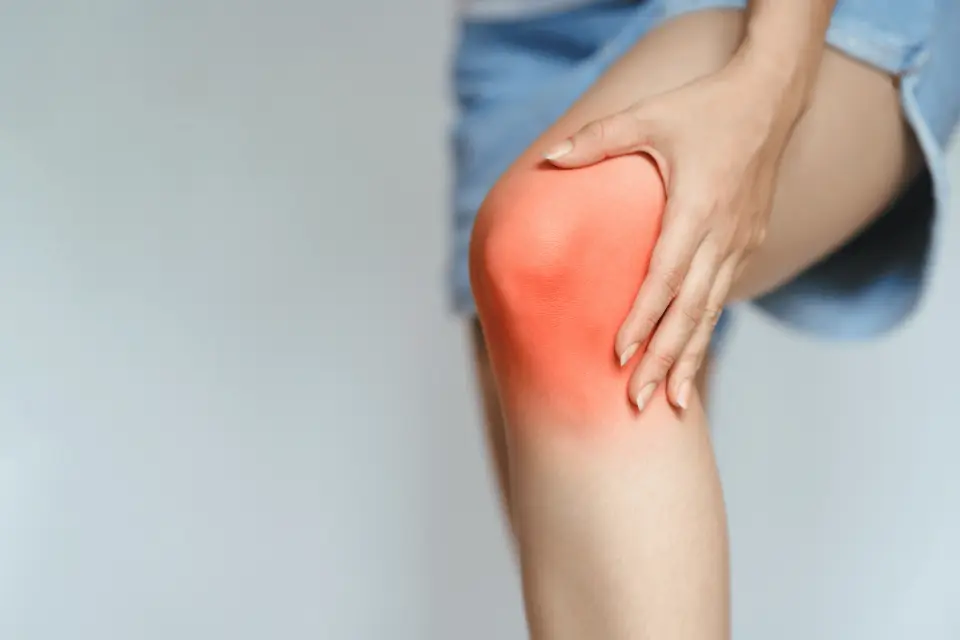
IT band pain is typically located just above the joint line on the outer femoral condyle, worsens during prolonged activity, and improves with rest. Meniscus pain is typically at the joint line and often includes mechanical symptoms such as clicking, catching, or locking. Meniscus tears also tend to cause more swelling. A physical exam can usually distinguish between the two, but an MRI confirms when uncertainty remains.
Mild cases sometimes improve with activity reduction and time. However, without addressing contributing factors such as hip weakness, training errors, or footwear issues, it often recurs. Targeted rehabilitation is faster and produces more durable results than rest alone.
Running through IT band syndrome typically delays recovery and can convert a mild case into a chronic problem. A brief activity modification while the tissue heals, combined with physical therapy, allows most runners to return to full training faster than pushing through the pain.
Most cases do not. IT band syndrome and LCL Grade I and II sprains almost always resolve with conservative care. Surgery is considered for complete LCL tears with instability, meniscus tears that cause locking or fail to respond to rehabilitation, and, rarely, chronic IT band cases after conservative treatment has been exhausted.
Outer knee pain is common and treatable once the cause is correctly identified. IT band syndrome responds to load management and hip strengthening, while meniscus and LCL injuries need a more individualized approach. Early, accurate diagnosis shortens recovery and reduces the risk of long-term problems.
For a quick evaluation without leaving home, Doctronic.ai connects you with licensed physicians who can help you understand your injury and build a treatment plan.
Explore treatment options
Chat Now