Symptoms and Diagnosis
Pain in the Back of Your Knee: What's Causing It and What to Do
April 17, 2026
7 min read

Medically reviewed by Lauren Okafor | MD, The Frank H Netter MD School of Medicine, Loyola University Medical Center on April 20th, 2026.
Published on April 17th, 2026. Updated on July 23rd, 2026.
Runner's knee and IT band syndrome are among the most common causes of knee pain after running, affecting roughly 20–30% of runners each year
Structural issues like meniscus tears and bursitis require different treatment approaches than overuse injuries
Red flags that demand medical attention include sudden swelling, knee locking, and instability during weight-bearing
The R.I.C.E. method works for acute injuries but has limitations for chronic conditions
Long-term prevention depends on hip and glute strengthening, proper training volume, and appropriate footwear
For personalized symptom guidance, visit Doctronic.ai
Questions about knee pain?
Free. Anonymous. Built by doctors.
Talk to our AI doctor for a clear, personalized read on your situation.
Running puts tremendous stress on the knee joint. The kneecap acts as a fulcrum that sees significant force with every stride, making it vulnerable to injury when training volume, biomechanics, or recovery are off. Research shows that between 20% and 50% of runners experience an injury each year, with knee problems ranking among the most frequent complaints. Understanding the common causes of knee pain after running helps runners identify problems early and know when to worry about their symptoms.
The good news: running itself isn't inherently bad for knees. Studies suggest that running may actually offer protection against generalized knee pain when done properly. The key lies in recognizing warning signs and addressing issues before they become serious.
Overuse injuries account for most running-related knee pain. These develop gradually from repetitive stress rather than a single traumatic event.
Patellofemoral pain syndrome, commonly called runner's knee, causes pain around or behind the kneecap. The discomfort typically worsens when running downhill, climbing stairs, or sitting for extended periods. Poor tracking of the kneecap through its groove creates friction and irritation. Weak quadriceps, tight hamstrings, and hip muscle imbalances all contribute to this condition.
The IT band runs from the hip to just below the knee on the outer thigh. When this thick tissue becomes tight, it rubs against the bony prominence on the outside of the knee, causing sharp pain. Runners often notice symptoms around mile two or three, with pain disappearing after rest only to return during the next run.
This condition affects the tendon connecting the kneecap to the shinbone. Pain concentrates just below the kneecap and intensifies during running, jumping, or kneeling. Patellar tendonitis develops from repeated stress that exceeds the tendon's ability to repair itself between workouts.
Not all knee pain stems from overuse. Structural problems and mechanical issues require different treatment approaches.
The meniscus is a C-shaped piece of cartilage that cushions the knee joint. Torn meniscus injuries can happen suddenly from twisting movements or develop gradually from wear over time. Symptoms include clicking, catching, or a sensation that the knee might give way. Knee injuries account for approximately 25% of all sports-related injuries, with meniscus damage being particularly common among runners over 40.
Bursae are small fluid-filled sacs that reduce friction between bones, tendons, and muscles. When these become inflamed, they cause localized swelling and tenderness. Knee bursitis often results from repetitive kneeling, direct trauma, or prolonged pressure on the knee.
How feet strike the ground affects the entire kinetic chain. Overpronation, where the foot rolls inward excessively, places additional stress on the inner knee. Underpronation creates its own problems by failing to absorb shock adequately. Both patterns can lead to knee pain when combined with high training volumes.
Most running-related knee pain responds to rest and conservative treatment. Some symptoms, though, demand professional evaluation.
Acute pain appears suddenly and often follows a specific incident. This type of pain may indicate a tear, fracture, or other structural damage. Chronic pain develops gradually and persists for weeks or months. While chronic pain usually signals overuse, it can mask underlying conditions that worsen without treatment.
Runners should track pain patterns carefully. Pain that improves with warming up but returns afterward differs significantly from pain that worsens throughout a run. Doctronic offers AI-powered consultations that can help runners understand their symptoms and determine whether professional evaluation is necessary.
Seek medical attention immediately for sudden significant swelling within hours of injury, inability to bear weight, visible deformity, knee locking in a bent or straight position, or a feeling that the knee might buckle during normal activities. These symptoms suggest ligament tears, fractures, or other serious conditions requiring imaging and specialized care.
When knee pain strikes, proper initial management prevents further damage and speeds recovery.
Rest, Ice, Compression, and Elevation (R.I.C.E.) are still commonly used for acute injuries, though recent guidelines emphasize the P.E.A.C.E. and L.O.V.E. approach (Protect, Elevate, Avoid anti-inflammatories, Compress, Educate; Load, Optimism, Vascularisation, Exercise) for optimal tissue recovery. Ice reduces inflammation when applied for 15-20 minutes several times daily. Compression wraps limit swelling, while elevation helps fluid drain from the injured area.
R.I.C.E. works well for acute injuries but shows limitations for chronic conditions. Prolonged rest can actually weaken supporting muscles, making the underlying problem worse. Active recovery, which involves gentle movement within pain-free ranges, often produces better outcomes for overuse injuries.
Over-the-counter NSAIDs like ibuprofen reduce pain and inflammation effectively. These medications work best for short-term use during acute flare-ups. Long-term reliance on anti-inflammatories masks symptoms without addressing root causes and carries risks including stomach irritation and cardiovascular effects.
Doctronic can provide guidance on medication interactions and help runners understand when anti-inflammatories are appropriate versus when they might delay proper healing.
Preventing knee pain requires addressing the muscular imbalances and training errors that cause most problems.
Weak hip abductors and glutes allow the knee to collapse inward during running, creating stress on the joint. Exercises like clamshells, lateral band walks, and single-leg deadlifts build the stability needed to maintain proper knee alignment. Most runners need hip strengthening work two to three times weekly for lasting results.
The 10% rule, which limits weekly mileage increases to 10%, exists for good reason. Ramping up too quickly overwhelms the body's ability to adapt. Scheduled recovery weeks every four to six weeks allow tissues to repair and strengthen.
Sleep quality matters enormously for tissue repair. Runners who chronically underslept show higher injury rates regardless of training load. Aim for seven to nine hours nightly, especially during heavy training blocks.
Running shoes should match individual biomechanics. Stability shoes help overpronators, while neutral shoes suit runners with normal foot mechanics. Replace shoes every 300–500 miles (480–800 km), as cushioning and support degrade before visible wear appears. Professional gait analysis identifies specific needs and prevents mismatches between shoe type and running style. For recovery support during rehab, see our guide to the best knee braces for runner's knee.
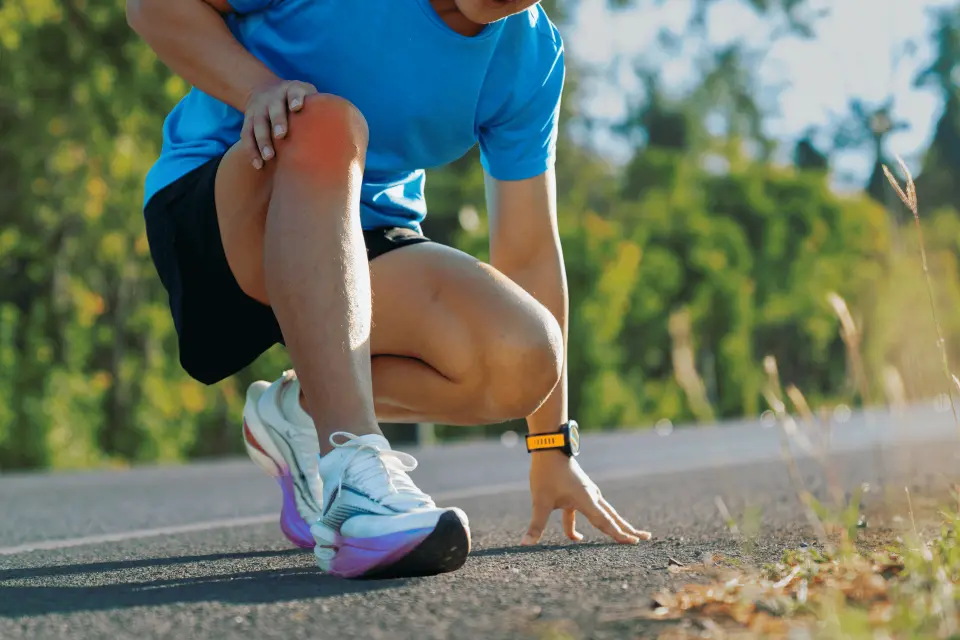
Minor discomfort may require several days to a week of modified activity, not complete rest. Pain that persists beyond a week despite rest warrants professional evaluation. Complete rest isn't always necessary; cross-training activities like swimming or cycling often maintain fitness while allowing the knee to heal.
Research suggests that recreational running doesn't increase osteoarthritis risk in healthy knees. Problems arise from training errors, biomechanical issues, or pre-existing conditions rather than running itself.
Braces provide temporary support during recovery but shouldn't become permanent solutions. They can mask underlying weakness that needs strengthening. Use braces as a bridge while addressing root causes through proper rehabilitation.
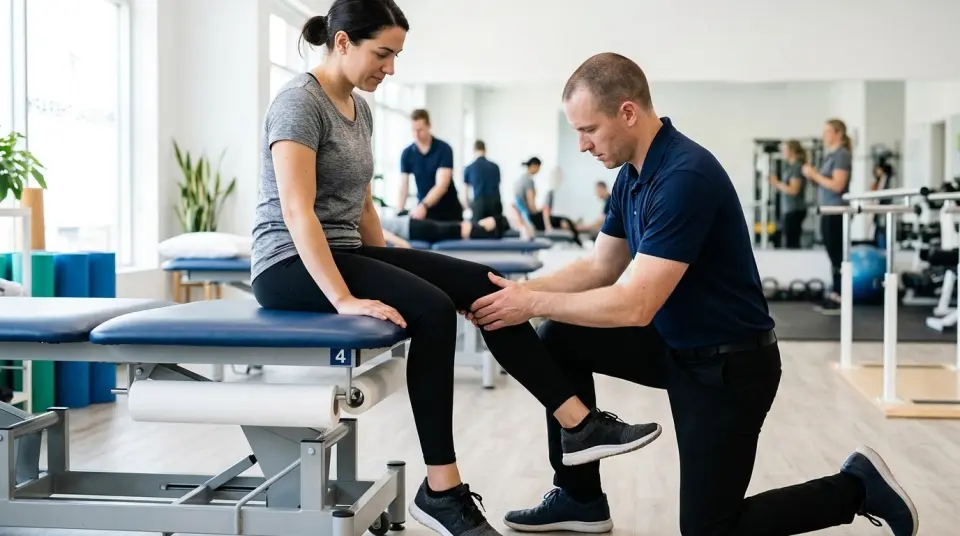
Physical therapy benefits runners whose pain doesn't resolve within two to three weeks of home treatment, those with recurring injuries, and anyone with biomechanical issues contributing to their symptoms.
Knee pain after running usually stems from treatable overuse injuries or correctable biomechanical issues. Early recognition and proper management prevent minor problems from becoming chronic conditions. For personalized guidance on knee pain symptoms and treatment options, Doctronic.ai provides AI-powered medical consultations available 24/7.
Get advice about knee pain after running
Chat Now