
Melasma and Sun Protection: The SPF Strategy That Actually Works

Medically reviewed by Alan Lucks | MD, Alan Lucks MDPC Private Practice - New York on May 24th, 2026.
Published on April 17th, 2026. Updated on July 24th, 2026.
Key takeaways
Sun protection is the single most important step in managing melasma, and skipping it can reverse months of treatment progress in a matter of days.
Standard sunscreens often fall short for melasma because visible light, not just UV rays, triggers melanocyte activity and drives new pigmentation.
Tinted mineral sunscreens with iron oxides are the most effective daily shield for melasma because they block both UV and visible light.
SPF 50 or higher is the recommended target, reapplied every two hours, including time spent indoors near windows.
Common melasma treatments like tretinoin, hydroquinone, and azelaic acid increase photosensitivity, making consistent sun protection non-negotiable.
Doctronic.ai connects you with clinicians who can build a personalized melasma treatment plan that pairs the right topicals with an evidence-based sun protection strategy.
Why Sun Is the Root Problem With Melasma
Melasma is a chronic pigmentation condition driven primarily by triggers that activate melanocytes, the pigment-producing cells in the skin. Of all those triggers, ultraviolet radiation from the sun is the most powerful and the hardest to avoid.
When UV rays hit the skin, they stimulate melanocytes to produce more melanin. In skin affected by melasma, that response is amplified. A single unprotected afternoon outdoors can darken patches that took months of treatment to fade. This is not an exaggeration, and it is one of the main reasons melasma is so frustrating to treat. Progress is fragile.
Understanding this mechanism reframes how to think about melasma care. Topical treatments like tretinoin, hydroquinone, and azelaic acid work by suppressing or slowing melanin production. But if UV exposure continues to stimulate those same cells, any gains from treatment are erased. Sun protection is not an add-on to a melasma treatment plan. It is the foundation.
Why Standard Sunscreen Is Not Enough
Here is where many melasma protocols fall short: most people apply a regular SPF 30 sunscreen and assume they are protected. Conventional sunscreens primarily block UVB rays, the type that cause sunburn, and some UVA rays, the type associated with aging and deeper skin damage.
But melasma responds to more than UV light. Research has confirmed that visible light, particularly high-energy visible (HEV) light in the blue and violet spectrum, also triggers melanogenesis in melasma-prone skin. This includes light from indoor sources: windows, overhead lighting, and screens. For someone with melasma, a day spent inside near a bright window can still cause new pigment to form.
Standard chemical and mineral sunscreens do not block visible light. Iron oxides, the pigmented minerals found in tinted sunscreens, are one of the few topical agents that do. This is not a cosmetic bonus. For melasma specifically, the tint is a functional barrier.
The Melasma-Specific SPF Strategy
Use a Tinted Mineral Sunscreen With Iron Oxides
The most important upgrade most melasma patients can make is switching from an untinted sunscreen to a tinted mineral formula containing iron oxides. Zinc oxide and titanium dioxide provide broad UV coverage. The iron oxide pigments extend that protection into the visible light spectrum.
The tint comes in universal shades ranging from light to deep, and most blend to match the wearer's skin tone once applied. Beyond visible light protection, mineral formulas are less likely to irritate sensitive skin or trigger post-inflammatory hyperpigmentation, which can compound existing melasma.
Choose SPF 50 or Higher
SPF 30 blocks approximately 97% of UVB rays. SPF 50 blocks around 98%. That gap may sound small in percentage terms, but in practical terms, SPF 50 allows less UV radiation through to the skin, which matters for a condition as UV-reactive as melasma. Most dermatologists treating melasma recommend SPF 50 as the daily standard, not a premium option.
Reapply Every Two Hours, Including Indoors
Sunscreen breaks down with UV exposure, heat, and sweat. A morning application does not last the full day. The standard recommendation is to reapply every two hours when outdoors, or immediately after swimming or sweating.
What surprises many people is that reapplication matters indoors too, particularly near windows. Standard residential and car glass blocks most UVB but allows significant UVA transmission. Sitting by a window for several hours without reapplying exposes melasma-prone skin to enough UVA to maintain or worsen pigmentation.
Add Physical Barriers
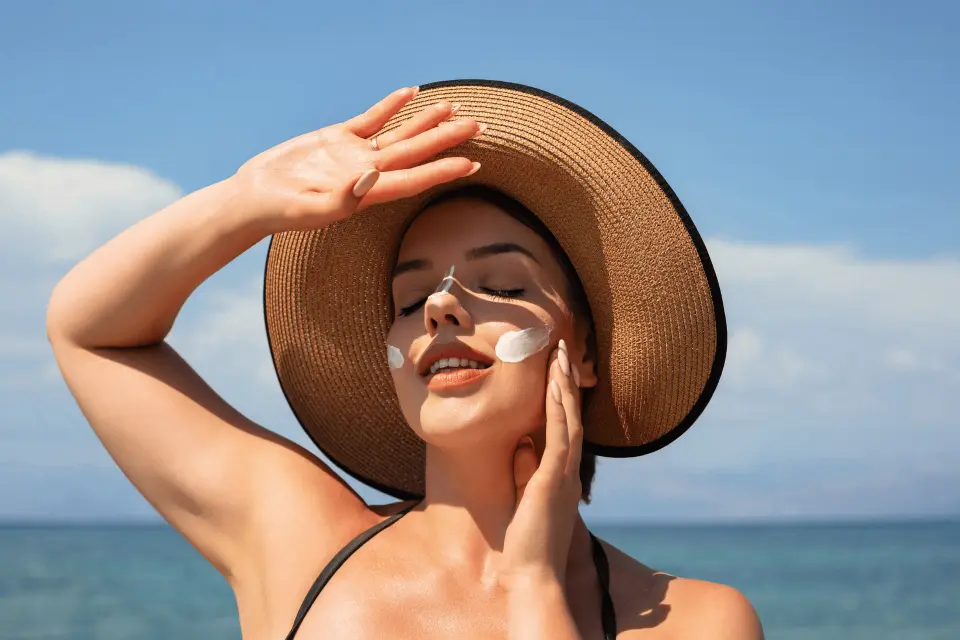
Sunscreen alone, even applied correctly, does not block all relevant light. Wide-brim hats (at least three inches) provide meaningful shade for the forehead and cheeks, where melasma commonly appears. UV-blocking car window films or sun shades address the often-overlooked exposure that comes from driving.
Sunglasses also protect periorbital skin and reduce squinting that keeps the face in direct glare.
The Photosensitivity Problem With Melasma Treatments
If you are using topical treatments for melasma, sun protection becomes even more urgent. Tretinoin, hydroquinone, and azelaic acid, three of the most prescribed melasma treatments, all increase the skin's sensitivity to UV and visible light.
Tretinoin accelerates cell turnover, thinning the outermost skin layer and reducing its natural capacity to scatter light. Hydroquinone works by inhibiting tyrosinase, the enzyme central to melanin production. Both make the skin more reactive to sun exposure. Azelaic acid carries similar photosensitizing properties at higher concentrations.
Using these treatments without rigorous sun protection is counterproductive. The result is a cycle where topicals reduce pigmentation while UV exposure creates new pigmentation, and treatment appears to fail.
The correct approach is to apply sunscreen as the final morning skincare step and reapply throughout the day. Nighttime application of tretinoin or hydroquinone, which is standard practice, helps minimize the overlap between photosensitizing ingredients and daytime light.
What Happens When You Skip SPF While Treating
Melasma rebound is a well-documented pattern. Patients who achieve significant fading with a combination treatment protocol and then reduce sun protection (often in summer or on vacation) frequently see rapid re-darkening of patches. In some cases, the rebound can be more pronounced than the original presentation, because the skin's melanocyte network has been sensitized by repeated UV insults.
This is why dermatologists emphasize that sun protection is not a phase of melasma treatment. It is a permanent commitment. Many patients prefer to frame it as part of a daily skincare routine rather than a medical requirement, which makes consistent adherence more realistic.
For those who have tried treatments without adequate sun protection and experienced frustrating results, rebuilding around a proper SPF protocol often changes outcomes. Treatment works better when the skin is not being continuously re-stimulated by light exposure.
Seasonal and Situational Considerations
Melasma predictably worsens in spring and summer when UV index climbs and outdoor time increases. Some patients find their skin clears in winter only to return the following spring, confirming UV exposure as the primary driver.
A few situations that warrant extra attention:
High-altitude environments expose the skin to more UV per unit of time. Skiing, hiking, and mountain travel require more frequent reapplication than typical outdoor settings.
Water and snow reflect UV, amplifying exposure. Beach and ski days require more diligence than a standard afternoon outdoors.
Cloud cover does not meaningfully block UV. UVB and UVA penetrate light cloud, so overcast days still require sunscreen for melasma patients.
Screen exposure from phones and monitors emits blue light. The contribution is minor compared to sun exposure but additive over a long workday.
Choosing the Right Sunscreen for Melasma
When selecting a sunscreen for melasma management, look for these criteria on the label:
Broad-spectrum coverage means the formula protects against both UVA and UVB radiation. This is required on all US sunscreen labels but worth confirming.
Mineral active ingredients (zinc oxide, titanium dioxide) indicate a physical blocker formula. These are generally better tolerated in melasma-prone skin and pair with iron oxides in tinted versions.
Iron oxides in the ingredient list indicate visible light protection. The tint level does not need to be dramatic. Even light coverage delivers the visible light blocking benefit.
SPF 50 or higher sets the minimum protection level for melasma.
Texture matters for consistency. A formula that feels comfortable, non-greasy, and wears well under makeup increases the likelihood of actual daily use and reapplication. Many tinted mineral sunscreens double as a light coverage cosmetic, which removes a barrier to compliance.
If you are using photosensitizing topicals, a formula with a moisturizing base can reduce the dryness those medications sometimes cause.
Getting a Melasma Plan That Actually Works
Melasma is most effectively managed as a system. Sun protection alone slows progression and prevents rebound but may not fade existing patches quickly enough. Topical treatments work faster when paired with consistent UV and visible light blocking. Professional treatments also deliver better results in patients with rigorous daily sun protection habits.
What tends to go wrong is focusing exclusively on topicals while underestimating the sun protection side. Or using sunscreen diligently outdoors but skipping reapplication indoors and near windows, leaving a gap that keeps pigmentation cycling.
The most effective starting point is reviewing your sun protection routine with a clinician who can assess whether the formula, SPF level, and application habits match what melasma actually requires.
For more on specific sunscreen choices for melasma, the guide on best sunblock for melasma covers product selection in detail.
Frequently Asked Questions
Yes. Sunscreen is the most evidence-based intervention for preventing melasma from worsening. It does not fade existing patches on its own, but it prevents UV and visible light from driving new pigmentation and counteracting topical treatments.
SPF 50 or higher is the standard recommendation for melasma. The additional protection above SPF 30 is meaningful for a condition this sensitive to UV exposure. Tinted mineral sunscreen with iron oxides is preferred over standard formulas.
Yes, particularly if the sunscreen does not contain iron oxides to block visible light, or if application and reapplication habits leave gaps in coverage. Melasma responds to visible light as well as UV, so standard sunscreens may not be fully protective.
Melasma recurs primarily because the underlying trigger, UV and visible light exposure, has not been addressed. Once topical treatment is reduced or sun protection lapses, melanocytes that were suppressed become active again. Sustained sun protection is essential to maintaining treatment results.
It can. High-energy visible (HEV) light from windows, overhead lighting, and screens stimulates melanogenesis in melasma-prone skin. The contribution from screens is small, but sunlight through glass windows is a meaningful source of exposure for people who spend long periods indoors near them.
For melasma specifically, tinted sunscreen with iron oxides is a clinically meaningful upgrade over untinted options. The iron oxides block visible light, which untinted formulas do not, and that gap in coverage is significant for a condition driven by the full light spectrum.
The Bottom Line
Sun protection is the cornerstone of any effective melasma strategy, and tinted mineral sunscreen with iron oxides is the most complete daily shield available. SPF 50 applied every morning and reapplied throughout the day, combined with physical barriers like hats and UV-blocking car windows, creates the stable foundation that topical treatments need to work. Without it, even the most effective topicals are fighting an uphill battle against daily light exposure. If you have been treating melasma without seeing lasting results, revisiting your sun protection routine is the most productive place to start. Doctronic.ai connects you with clinicians who can review your current protocol and help you build one that combines the right topicals with a sun protection strategy matched to your skin.
Related articles
Get skin care advice
Chat Now