Bone & Joint Health
What Is a Dangerously High Calcium Level and What Does It Mean?
July 21, 2026
6 min read

Medically reviewed by Lauren Okafor | MD, The Frank H Netter MD School of Medicine, Loyola University Medical Center on April 22nd, 2026.
Published on April 17th, 2026. Updated on July 23rd, 2026.
Medial knee pain in athletes most often stems from MCL sprains, medial meniscus tears, pes anserine bursitis, or medial plica syndrome, each with a distinct injury mechanism
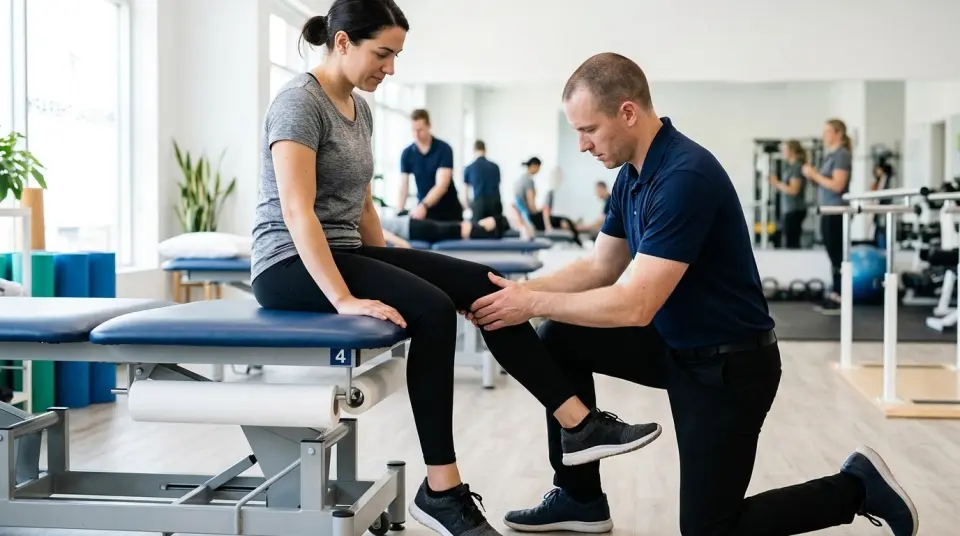
Physical exam tests, including the valgus stress test, McMurray's test, and point palpation, can identify the likely cause before imaging is ordered
Active recovery through cross-training and physical therapy produces better outcomes than total rest for most medial knee conditions
Return-to-sport requires pain-free range of motion, quad and hamstring strength within 10% of the uninjured side, and the ability to complete sport-specific movements without pain
Hip and glute strengthening reduces valgus loading at the knee, the most common mechanical driver of medial knee injuries in runners and cutting athletes
If medial knee pain is keeping you sidelined, Doctronic.ai can connect you with a licensed clinician for a telehealth sports medicine evaluation to guide your return-to-activity plan
The medial (inner) side of the knee is under constant mechanical stress during sport and exercise. Running places roughly three times body weight through the knee with each stride, and cutting, pivoting, or changing direction multiplies that load while adding a lateral shear component.
Two mechanical patterns account for most medial knee injuries in athletes. The first is valgus stress, where a force drives the knee inward, stretching or tearing the inner structures. This happens during contact sports from a blow to the outer leg, and in non-contact sports when hip abductors fatigue and allow the femur to cave inward during landing or cutting. The second is rotational load combined with axial compression, the mechanism behind medial meniscus tears: a planted foot with the torso rotating over it pinches and twists the cartilage wedge.
Overuse injuries like pes anserine bursitis accumulate from repetitive training load without adequate recovery, tight hamstrings, or a sudden jump in mileage.
The medial collateral ligament is the most commonly sprained ligament in the knee. Collateral ligament injuries occur when a blow to the outer knee drives the joint into valgus. Non-contact injuries follow a bad landing, a quick direction change, or a deceleration that loads the knee asymmetrically.
Symptoms are immediate: pain along the inner joint line, tenderness directly over the ligament, and localized swelling. Grade 1 sprains allow return to sport within one to two weeks with bracing. Grade 2 sprains (partial tear) take four to six weeks. Grade 3 sprains (complete rupture) require several months but heal without surgery in most athletes; repair is reserved for combined injuries involving the ACL.
The medial meniscus is anchored to the MCL, making it less mobile and more vulnerable to twisting forces. Acute tears typically happen when the foot is planted and the body rotates over it, a common mechanism in soccer, basketball, and tennis.
Pain sits at the joint line rather than over the ligament. Swelling peaks 24 to 48 hours after injury. The hallmark signs are joint-line pain that worsens with twisting and squatting, and mechanical symptoms such as catching, clicking, or locking mid-bend. Any true locking of the knee requires clinical evaluation.
The pes anserine bursa sits two to three inches below the medial joint line, where three tendons converge on the shinbone. In runners, it becomes inflamed from repetitive stress, especially when hamstrings are tight or mileage increases quickly.
Pain sits below and behind the inner joint line, not on it, separating bursitis from MCL or meniscus problems. It worsens going downstairs, after prolonged sitting, and sometimes at night.
The plica is a remnant fold of synovial tissue. In most people it causes no symptoms, but in runners who ramp up training volume rapidly, it can thicken and snap over the medial femoral condyle during knee flexion. The result is a reproducible popping or snapping sensation on the inner side of the knee with pain that worsens on stairs and after long training sessions.
Plica syndrome is frequently mistaken for a meniscus problem. The key distinction is that plica pain is more anterior-medial and the snapping is very consistent, whereas meniscus catching is more variable. Rest and load reduction typically resolve it without surgery.
Older athletes sometimes develop early medial compartment osteoarthritis from years of high-impact loading. It presents as gradual aching pain that worsens with activity, morning stiffness that loosens after 15 to 20 minutes of movement, and occasional crepitus. Low-impact cross-training and targeted strengthening can preserve function and delay progression.
The examiner stabilizes the thigh and applies an inward force to the lower leg with the knee in slight flexion. Pain or gapping at the medial joint line indicates MCL involvement. The degree of gapping indicates sprain grade.
With the patient lying on their back, the examiner brings the knee from full flexion into extension while applying a rotating force on the foot. A palpable or audible click at the joint line during this movement is a positive result, pointing toward a medial meniscus tear. The test has moderate sensitivity but remains a standard starting point in any athletic knee exam.
A systematic approach locating tenderness by region clarifies the diagnosis before imaging. Tenderness directly over the MCL (running along the inner edge of the knee) suggests ligament involvement. Tenderness at the joint line suggests meniscus. Tenderness two to three inches below the joint line toward the back points to the pes anserine bursa.
For knee pain that does not respond to four to six weeks of structured conservative care, or when mechanical symptoms like locking or severe giving way suggest a structural lesion, MRI is the appropriate next step. Routine MRI for every medial knee complaint is not indicated; physical exam guides most initial treatment decisions. X-rays are useful when bony injury, joint space narrowing from OA, or a loose body is suspected.
Get knee pain treatment online today
A licensed doctor can review your symptoms and send a prescription to your pharmacy, often the same day.
Related medications we prescribe
The goal is active recovery, not immobilization. Complete rest weakens the surrounding musculature and delays healing; relative rest means removing the aggravating load (no running or cutting) while maintaining cardiovascular fitness through lower-impact alternatives.
Good cross-training options include pool running, cycling on a stationary bike (with saddle height adjusted to minimize knee flexion stress), and elliptical training at a pain-free pace. These maintain aerobic base while the medial structures recover.
A structured PT program moves through three phases: reducing pain and swelling with ice, compression, and isometric quad sets; progressive strengthening of the VMO, hip abductors, and glutes; and functional movements such as step-downs, single-leg squats, and lateral band walks that simulate sport demands without full exposure.
For runners in particular, understanding why knees hurt after running and the muscle imbalances behind that pattern reinforces why progressive hip and quad work is central to any medial knee recovery program.
Functional hinged knee braces reduce valgus stress at the medial compartment during return-to-sport activities for Grade 2 and 3 MCL sprains. They are not a substitute for strength training but provide external support while tissue heals and muscle control is restored. Grade 1 sprains typically need only a compression sleeve.
NSAIDs (ibuprofen, naproxen) are appropriate for short-term use during acute flares. For pes anserine bursitis that has not resolved with rest and PT, a corticosteroid injection into the bursa can provide sustained relief and allow rehabilitation to progress.
Returning to full sport too early is the primary driver of re-injury. Before resuming full training or competition, an athlete should meet all of the following:
Full pain-free range of motion equal to the uninjured side
Quad and hamstring strength measured at 90% or more of the uninjured leg (assessed by a PT or trainer with a hand-held dynamometer or equivalent testing)
Single-leg squat, single-leg landing, and lateral hop performed without pain or compensatory knee collapse
Sport-specific movements: cutting, pivoting, jumping, and deceleration completed without pain at training intensity
For MCL injuries, protected return with a functional brace during the first weeks of full contact practice is standard. Medial meniscus repairs (when surgery is required) extend the timeline to four to six months.
Weak hip abductors allow the femur to drift inward under load, increasing valgus stress with every step. Clamshells, lateral band walks, and single-leg deadlifts correct this pattern. Including them in warm-up routines before running or court sports is more effective than treating the knee in isolation.
Most overuse medial knee injuries occur during periods of rapid volume increase. Increasing running mileage by more than 10 to 15% per week, adding high-intensity work and high volume at the same time, or returning to full training after a layoff too quickly all carry elevated injury risk.
Motion-control or stability running shoes reduce pronation-driven valgus loading at the medial knee in runners with moderate to severe overpronation. A gait analysis by a PT can confirm whether footwear correction applies to your mechanics.
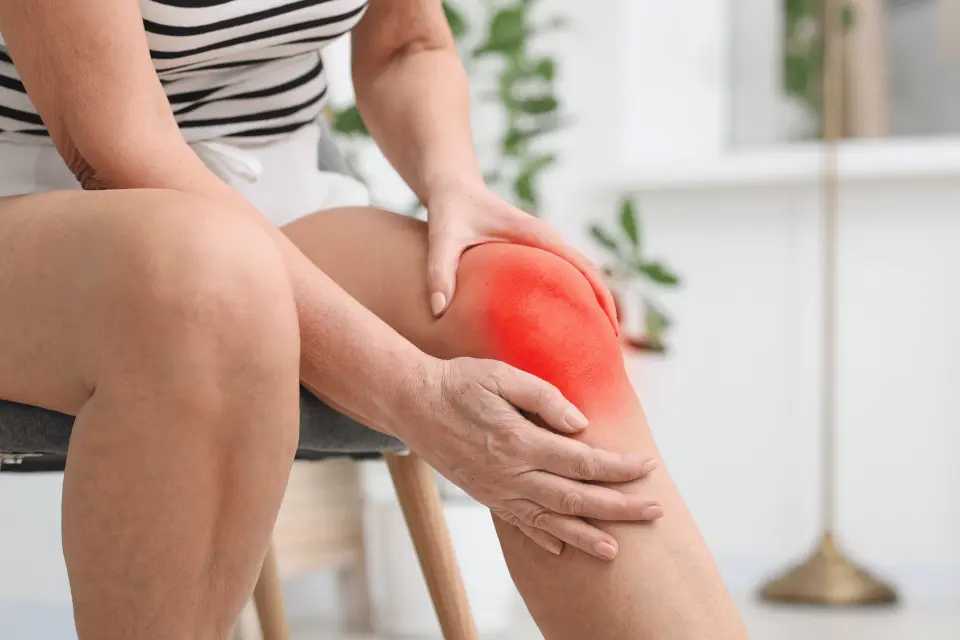
They refer to the same location. Medial is the anatomical term for the inner side of the knee. Both describe pain on the side of the knee that faces the opposite leg.
Grade 1 MCL sprains typically heal in one to two weeks. Grade 2 sprains take four to six weeks. Medial meniscus tears managed conservatively take six to twelve weeks; surgical repairs require four to six months. Pes anserine bursitis often resolves in two to four weeks with rest and targeted PT.
Running through sharp or worsening pain risks converting a manageable injury into a more serious one. Mild discomfort that does not increase during or after a run may be tolerable, but pain that builds, spikes afterward, or is accompanied by swelling is a signal to stop and reassess.
Not necessarily. Most initial diagnoses are made by physical exam. MRI is appropriate when symptoms persist beyond four to six weeks of conservative care, when the knee locks, or when surgical decision-making depends on confirming the extent of structural damage.
A clinician applies an inward force to the lower leg while stabilizing the thigh. Pain or gapping at the medial side indicates MCL damage. It is a primary test for assessing collateral ligament injuries.
Seek evaluation if the knee locks or buckles, swelling developed rapidly after injury, you cannot bear weight, a loud pop occurred at impact, or pain has not improved after two to three weeks of relative rest.
Medial knee pain in active people has distinct causes rooted in the valgus and rotational loads of sport. Accurate diagnosis through physical exam guides efficient treatment, and return to sport requires meeting objective strength and functional criteria, not just the absence of pain. Cross-training, structured PT, and hip strengthening produce better outcomes than rest alone. If medial knee pain is keeping you out of your sport, Doctronic.ai connects you with licensed clinicians for a telehealth sports medicine evaluation so you can understand your injury and plan your return.
Explore treatment options
Chat Now