
Leukemia Rash: What It Looks Like and Other Skin Signs of Blood Cancer

Medically reviewed by Alan Lucks | MD, Alan Lucks MDPC Private Practice - New York on May 24th, 2026.
Published on April 17th, 2026. Updated on July 23rd, 2026.
Key takeaways
The most common "rash" linked to leukemia is petechiae: tiny red or purple pinpoint dots caused by bleeding under the skin, not inflammation.
Petechiae do not turn white when you press on them, which is the key visual test that separates them from most ordinary rashes.
Other skin signs include easy or unexplained bruising, pale skin from anemia, slow-healing wounds, and, in some cases, raised lesions from leukemia cells infiltrating the skin.
Many conditions besides leukemia cause petechiae, including viral infections and certain medications, so spotting them does not mean cancer.
Petechiae paired with persistent fatigue, unexplained bruising, or frequent infections is the combination that warrants an urgent blood test.
If you are unsure whether your skin changes need same-day evaluation, Doctronic.ai offers telehealth consultations to help you decide the right next step.
Questions about leukemia rash?
Free. Anonymous. Built by doctors.
This article covers general information. Ask Doctronic about your symptoms, medications, side effects, or treatment options.
What People Call a "Leukemia Rash"
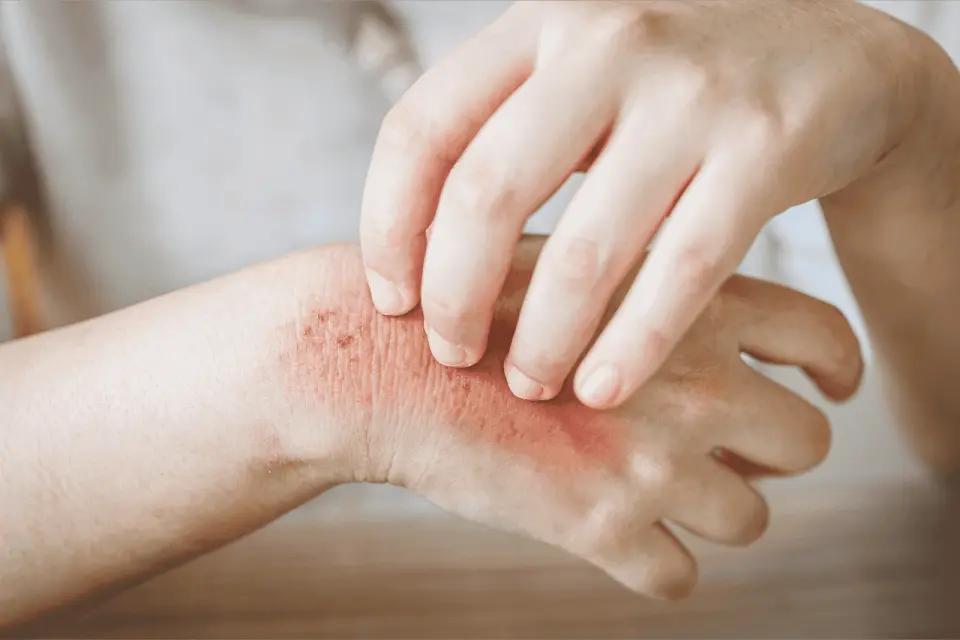
The phrase "leukemia rash" is widely used online, but it is a loose term covering several different skin changes. None of them are rashes in the traditional sense of inflamed, itchy skin driven by an allergic or immune reaction. They are signs that the blood itself is not working properly.
The most talked-about is petechiae. These are flat, pinpoint-sized dots, typically 1 to 3 millimeters across, that appear red, purple, or brown depending on skin tone. They form when small blood vessels leak under the skin surface. Unlike a bruise, they do not fade over a few days on their own, and unlike most rashes, pressing a glass or your fingertip firmly against them does not cause them to blanch (turn pale). That non-blanching response is the single most useful visual clue.
Petechiae tend to cluster on the lower legs, ankles, and feet, where blood pressure in the small vessels is highest. They can also appear on the torso or inside the mouth.
Why Leukemia Affects the Skin
To understand the skin signs, it helps to know what leukemia does to blood cell production. Leukemia is a blood cancer in which abnormal white blood cells multiply rapidly and crowd out healthy cells in the bone marrow. That crowding disrupts the production of all three major cell lines:
Platelets are the fragments responsible for clotting. When platelet counts fall (thrombocytopenia), even minor pressure can cause bleeding under the skin. This produces petechiae and easy bruising.
Red blood cells carry oxygen to every tissue. When their numbers drop (anemia), the skin loses color, appearing pale, waxy, or slightly yellowish. Pallor is often most visible in the gums, the inside of the lower eyelids, and the nail beds.
White blood cells defend the body against infection. Leukemia cells do not function properly even though their numbers may be high. A compromised immune response means minor cuts heal slowly, and infections recur more often than they should.
The Full Range of Skin Signs
Beyond petechiae, several other changes can appear on the skin during leukemia, each with its own mechanism.
Easy bruising is among the most noticeable. When platelets are low, blood escapes from vessels with almost no provocation. Bruises may appear after mild bumps, after wearing tight clothing, or for no apparent reason at all. They tend to be larger than typical bruises and take longer to fade.
Pale or sallow skin develops from anemia. It is not a rash or lesion, but it is often one of the first things that prompts a visit to a doctor, especially when it appears alongside tiredness and breathlessness.
Leukemia cutis refers to a distinct condition in which the leukemia cells themselves migrate out of the blood and infiltrate the skin, forming visible lesions. These are firm, raised bumps or nodules that can be red, purple, or skin-colored. They are more common in certain types of leukemia (acute myeloid leukemia and chronic lymphocytic leukemia in particular) and signal that the cancer has spread beyond the bone marrow and blood.
Sweet syndrome is an inflammatory condition associated with some leukemias. It produces tender, raised red or purple plaques, often on the arms, face, and neck, accompanied by fever and a high white blood cell count. It is not caused by leukemia cells in the skin directly, but by the immune system's dysregulated response to them.
Frequent skin infections, slow healing, and unusual bruising at minor injury sites are all subtle signs worth noting, especially in combination. Just as skin can reveal early signs of other malignancies (as explored in articles on skin cancer warning signs), these visible changes can be an entry point for catching a serious internal condition.
Talk to a doctor about leukemia
Connect with a licensed doctor online to talk through your symptoms, understand your treatment options, and find out which medications may be available through telehealth.
- $39 video visit
- Insurance accepted
- 4.8 on Trustpilot
Petechiae Are Not Always Cancer
This point deserves emphasis because petechiae can be alarming to see. Most of the time, they are not caused by leukemia.
Viral infections, particularly those caused by influenza, mono, or enteroviruses, can temporarily suppress platelet counts and cause petechiae. The spots typically resolve once the infection clears.
Intense physical strain can also cause petechiae. Heavy lifting, prolonged coughing, vomiting, or even prolonged crying can rupture tiny capillaries in the face or eyes.
Certain medications, including blood thinners, aspirin, and some antibiotics, reduce the blood's ability to clot and can lead to petechiae with minor trauma.
Autoimmune conditions such as immune thrombocytopenic purpura (ITP) destroy platelets for reasons unrelated to cancer.
What makes leukemia-related petechiae concerning is not the spots themselves but what accompanies them. If they appear alongside significant fatigue, pallor, recurring infections, unexplained weight loss, or swollen lymph nodes, the cause is less likely to be a passing virus.
When to See a Doctor
A single cluster of petechiae after a bad coughing fit, in an otherwise healthy person, is worth monitoring but not necessarily an emergency.
Seek prompt medical attention if:
Petechiae appear with no clear cause such as straining or recent illness
You notice unexplained bruising that seems disproportionate to any injury
Fatigue is severe or has persisted for weeks without explanation
You have had multiple infections in a short period, or a minor wound is not healing
You have petechiae along with pallor, night sweats, or unintended weight loss
These combinations are precisely what a complete blood count (CBC) is designed to detect.
How Leukemia Is Diagnosed
A skin observation is never diagnostic on its own, but it can be the first signal that prompts the right tests.
The first step is a CBC. This measures the levels of red blood cells, white blood cells, and platelets. Abnormal counts, particularly low platelets, low red blood cells, or an extremely high or low white blood cell count, indicate that further evaluation is needed.
A peripheral blood smear follows. A sample of blood is spread on a slide and examined under a microscope, allowing a clinician to look directly at the shape and behavior of the cells. Abnormal or immature cells visible on the smear are a strong indicator of leukemia.
If these tests suggest leukemia, a bone marrow biopsy is performed. A small sample of bone marrow is taken, usually from the back of the hip bone, and analyzed to confirm the diagnosis, identify the specific type of leukemia, and guide treatment decisions.

Frequently Asked Questions
The most common skin sign is petechiae: tiny flat red or purple dots, 1 to 3 millimeters wide, that do not fade when pressed. They are not raised, not itchy, and tend to appear on the lower legs, feet, or torso. Some people also develop larger areas of bruising or, in advanced cases, raised lesions called leukemia cutis.
The appearance of petechiae alone is not enough to determine the cause. What matters is the context. Petechiae paired with unusual fatigue, pale skin, frequent infections, or unexplained weight loss suggest the need for urgent blood work. Petechiae that appear briefly after a viral illness or physical strain in someone who otherwise feels well are generally less concerning.
No. Many people with leukemia have no skin symptoms at all, especially early in the course of the disease. Fatigue, frequent infections, and swollen lymph nodes are often the more prominent early signs. Skin changes tend to become more visible as platelet counts drop or, in some cases, when cancer cells directly involve the skin.
The non-blanching test is the most reliable home observation. Press a clear glass firmly against the spots. If they remain visible through the glass rather than fading under pressure, they are more likely to be petechiae than an ordinary rash. This is not a diagnosis, but it is a useful signal that the spots should be evaluated by a clinician.
Leukemia cutis occurs when leukemia cells leave the blood and accumulate in the skin. It produces firm, raised bumps or plaques that can be red, purple, or skin-toned. It is more common in certain subtypes of leukemia and generally indicates advanced or rapidly progressing disease. It requires evaluation and treatment by a hematologist-oncologist.
The Bottom Line
Skin changes are not the most commonly recognized symptom of leukemia, but they are often among the earliest and most visible. Petechiae, unexplained bruising, pallor, and slow-healing wounds are not dramatic in isolation, but together they can be the body's way of flagging a disruption in the blood-making system that needs immediate evaluation.
If you notice these signs and are uncertain whether they need same-day care or can wait for a routine appointment, Doctronic.ai can help you assess your symptoms and determine the next steps.
Related articles
Explore treatment options
Chat Now