
Laser Mole Removal: Is It Right for You?

Medically reviewed by Alan Lucks | MD, Alan Lucks MDPC Private Practice - New York on May 24th, 2026.
Published on April 17th, 2026. Updated on July 23rd, 2026.
Key takeaways
Laser mole removal uses concentrated light pulses to break down melanin in benign moles; it is primarily suited for flat, superficial, non-suspicious moles and is not appropriate for moles that require pathological examination
Dermatologists do not typically use laser for moles that appear abnormal or have any features of concern, because laser does not yield tissue for biopsy and destroys the lesion rather than excising it
Surgical excision (cutting out the mole with a scalpel) remains the standard for any mole that shows atypical features, has changed, or needs to be evaluated for melanoma
Laser mole removal works best on small, flat, cosmetically bothersome benign moles in accessible locations; raised or deeply pigmented moles may require multiple sessions or may not respond fully
Results are generally good for appropriate candidates, with low scarring rates and quick healing, but recurrence is possible if melanocytes remain in the skin after treatment
To connect with a licensed physician who can evaluate whether a mole is appropriate for laser removal, Doctronic.ai offers free AI consultations and affordable telehealth visits available any time
How Laser Mole Removal Works
Laser mole removal uses high-energy light pulses to target and break down the melanin pigment concentrated in mole cells. The laser energy is absorbed selectively by pigmented cells, generating heat that destroys them while leaving surrounding tissue largely intact. Over the following weeks, the body processes and removes the damaged cells, and the treated area fades.
The most commonly used lasers for mole removal are the Q-switched laser (including Nd:YAG and ruby variants) and the ablative CO2 laser. Q-switched lasers use short, intense pulses that target pigment specifically. CO2 lasers vaporize the tissue layer by layer. The choice depends on mole characteristics, skin type, and the provider's equipment and preference, as outlined in a mole overview that covers which lesion types are appropriate candidates for each method.
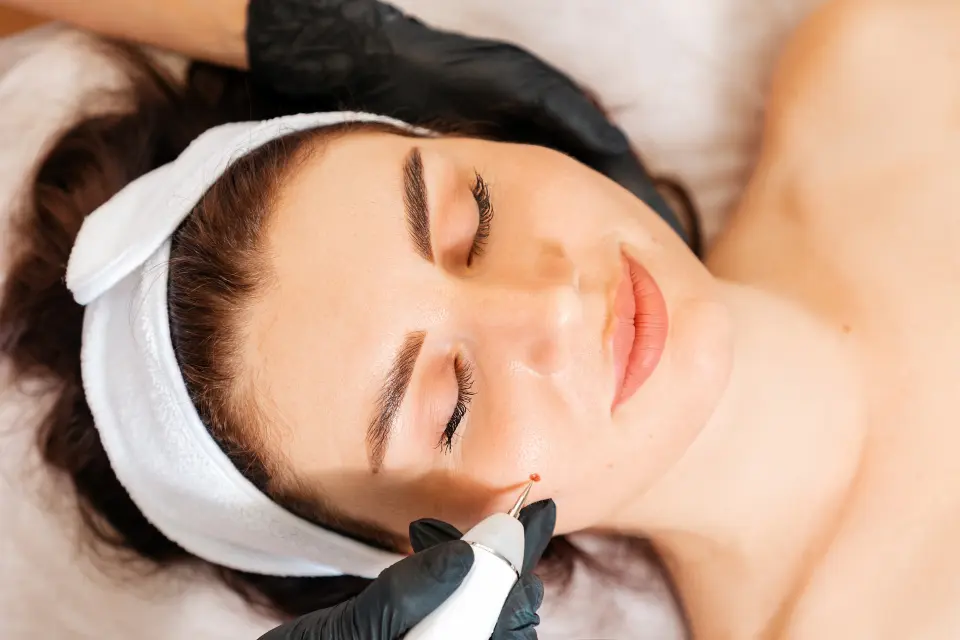
The procedure is typically brief. The skin is cleaned, a topical or local anesthetic is applied, and the laser is applied over the mole. Treated areas are covered with a bandage and heal over one to two weeks. Most people describe the sensation as a series of snapping or stinging pulses, well tolerated with topical numbing.
When Laser Is Appropriate for Mole Removal
Laser mole removal is well-suited to a specific subset of moles: small, flat, superficial, cosmetically bothersome moles that have been evaluated and confirmed as benign. The procedure is effective for these lesions because the pigmented cells are accessible to the laser energy and the cosmetic outcome is typically clean.
Common appropriate candidates include congenital moles that are flat and lightly pigmented, junctional nevi (moles where melanocytes are concentrated at the skin surface), and smaller café-au-lait spots or superficial pigmentation that resembles a mole.
Cosmetically inconvenient moles on the face, neck, or other visible areas are among the most common reasons people seek laser removal, particularly when the mole is flat and easy to access.
When Laser Is Not Appropriate
The most important limitation of laser mole removal is that it does not produce tissue for pathological examination. When a mole is removed by excision, the tissue is sent to a pathologist who can confirm whether it is benign and ensure clear margins. Laser destroys the lesion entirely, leaving nothing to examine.
For this reason, dermatologists will not perform laser removal on any mole that has suspicious features, has changed in size, shape, or color, or has not been recently evaluated. Any mole with features suggesting possible malignancy requires biopsy or full excision, not laser treatment.
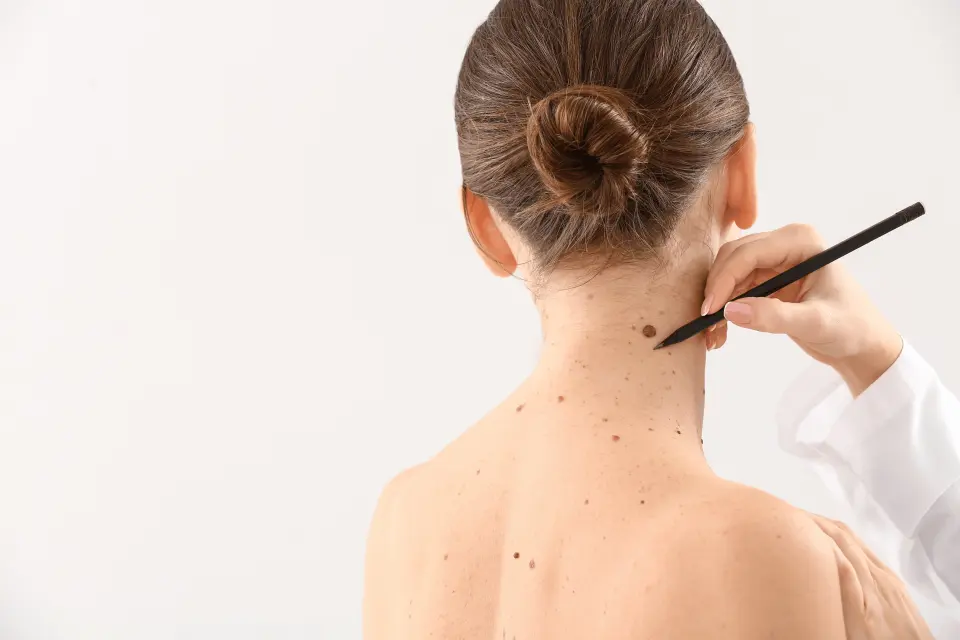
Suspicious features that disqualify a mole from laser removal include asymmetry, irregular borders, uneven pigmentation, diameter greater than six millimeters, or any evolution in appearance. The ABCDEs of moles and melanoma provide a standard framework for identifying which lesions require evaluation before any removal procedure is considered.
Intradermal nevi, which are raised, dome-shaped moles where melanocyte cells are deeper in the dermis, respond less reliably to laser because the energy may not penetrate deeply enough to destroy all the cells. Raised moles may require shave excision or surgical removal for complete removal.
Darker skin tones require more careful laser selection and settings. Some lasers carry higher risk of post-inflammatory hyperpigmentation in people with higher Fitzpatrick skin types, making consultation with a dermatologist experienced in treating diverse skin tones important.
See a doctor online today
A licensed doctor can review your symptoms online, talk through next steps, and send a prescription to your pharmacy if appropriate.
- $39 video visit
- Insurance accepted
- 4.8 on Trustpilot
Laser vs. Surgical Excision
Surgical excision involves cutting out the mole using a scalpel, with the option to close the wound with sutures or allow it to heal by secondary intention. It provides tissue for biopsy, ensures complete removal in one session, and is the standard for any mole with suspicious features.
The tradeoff is a slightly higher risk of visible scarring compared to laser, particularly for larger lesions or those on areas prone to scarring. The procedure also takes slightly longer per lesion and requires a local injection rather than topical anesthetic alone.
For patients whose main concern is cosmetic removal of a confirmed benign mole, laser may produce a cosmetically cleaner result with less visible scarring than excision. For patients who have any uncertainty about a mole's nature, or who have not recently had it evaluated, excision with biopsy is the appropriate choice.
The Evaluation Step
Before any mole removal procedure, a dermatologist should evaluate the mole to confirm it is appropriate for the intended method. This typically involves a visual examination with dermoscopy (a handheld magnifying instrument that provides a detailed view of pigment structure) to assess the lesion.
During this evaluation, dermatologists may identify atypical mole features that change the clinical recommendation, either toward biopsy or toward watchful monitoring rather than removal. Even moles that appear benign to the non-clinical eye may have dermoscopic features that indicate closer evaluation is warranted.
People who have a personal or family history of melanoma, or who have dysplastic nevus syndrome (a condition involving many atypical moles), should approach mole removal with extra caution and require thorough dermatological evaluation before any procedure.
What to Expect After Laser Mole Removal
After laser treatment, the area appears darker or crusted initially as the melanin oxidizes and the damaged cells are shed. This is normal and resolves within one to two weeks. The area should be kept clean, protected from sun exposure, and covered with a thin layer of petroleum-based ointment during healing.
Sun protection for the treated area is important after laser removal because the healing skin is more susceptible to hyperpigmentation. Avoiding direct sun exposure and using SPF 30 or higher on treated areas reduces the risk of uneven pigmentation during healing.
Recurrence is possible. If some melanocytes remain below the treatment depth, the mole may partially regrow over months. A follow-up assessment at four to six weeks can identify whether additional treatment is needed.
Frequently Asked Questions
Most small, superficial benign moles can be addressed in one to two sessions. Larger, more deeply pigmented, or incompletely responding moles may require three to four sessions spaced four to six weeks apart to allow healing between treatments. The provider can give a realistic estimate after evaluating the specific mole.
Laser mole removal generally produces less visible scarring than surgical excision for appropriate candidates. A flat hypopigmented area (lighter skin patch) may remain temporarily or permanently where the mole was. The risk of visible raised scarring (hypertrophic scar or keloid) is lower with laser than with surgical approaches but is not zero, particularly in people with a history of scarring.
With topical numbing cream applied 30 to 60 minutes beforehand, most people describe the sensation as mild to moderate snapping or stinging that is well-tolerated. Without adequate numbing, the sensation is more intense. Local injectable anesthetic is occasionally used for larger lesions or sensitive areas.
Laser mole removal should be performed by a board-certified dermatologist or a physician with training in laser procedures and skin lesion evaluation. The most important part of the process is not the laser application itself but the prior evaluation of the mole to confirm it is appropriate for laser rather than requiring excision or biopsy. Mole evaluation requires clinical expertise that a general aesthetic provider without dermatological training may not have.
Laser mole removal is typically considered a cosmetic procedure and is not covered by insurance. Costs vary by location, provider, and the size and number of moles treated, generally ranging from $150 to $1000 per mole per session. Mole removal for medical reasons, such as a biopsy of a suspicious lesion, may be covered by insurance when medically necessary.
The Bottom Line
Laser mole removal is an effective option for confirmed benign moles that are flat, superficial, and cosmetically bothersome. It is not appropriate for moles with any suspicious features, moles that have changed, or moles that require pathological examination. The essential first step is a dermatological evaluation that confirms the mole is benign and appropriate for laser. Surgical excision provides tissue for biopsy and remains the standard when there is any clinical uncertainty. Laser produces good cosmetic outcomes with low scarring risk for appropriate candidates, though recurrence is possible if melanocytes are not fully treated. For evaluation of a mole by a licensed physician, Doctronic.ai offers affordable telehealth visits available any time.
Related articles
Get skin care advice
Chat Now