
Skin Health
Calamine Lotion for Poison Ivy: How to Use It for Maximum Relief
March 30, 2026
5 min read

Medically reviewed by Alan Lucks | MD, Alan Lucks MDPC Private Practice - New York on May 23rd, 2026.
Published on April 9th, 2026. Updated on July 23rd, 2026.
Poison ivy rash is not contagious. You cannot catch it from another person's rash or blisters.
The culprit is urushiol, an oily resin in the plant. Only urushiol (not the rash itself) can cause new reactions.
Urushiol can linger on clothing, tools, and pet fur for up to five years if not properly cleaned.
Rash appearing in new areas days after initial exposure is a delayed immune reaction, not spreading from existing blisters.
Burning poison ivy releases urushiol into the air as fine particles, which can cause severe lung and airway reactions.
If your rash is severe, covers your face or genitals, or you've inhaled smoke from burning plants, contact Doctronic.ai for a same-day telehealth assessment with a licensed physician.
Questions about poison ivy?
Free. Anonymous. Built by doctors.
This article covers general information. Ask Doctronic about your symptoms, medications, side effects, or treatment options.
Poison ivy rash is not contagious. You cannot give it to a family member by touching them, and no one in your household will break out simply by being near you. The rash itself poses no transmission risk.
What does spread is the substance that causes the rash: urushiol (pronounced yoo-ROO-shee-ol), the colorless, odorless oil produced by poison ivy, poison oak, and poison sumac. Urushiol is not created by your immune reaction. It comes from the plant and must make direct or indirect contact with skin to trigger a response.
Understanding this distinction clears up most of the confusion people have about poison ivy.
Fact: Scratching cannot spread the rash. By the time blisters form, all the urushiol has already been absorbed into the skin or washed away. The fluid inside blisters is serum produced by your immune system, not urushiol. Breaking blisters does not release anything that causes new reactions.
Fact: It appears to spread because the immune reaction unfolds at different rates in different areas of skin. Thicker skin, such as on the palms and soles, absorbs urushiol more slowly than thin skin on the inner wrists or face. Areas that absorbed less urushiol develop symptoms later, sometimes a full day or two after the first patches appeared. The rash is not moving or growing. Different areas of skin react at different rates, which is why the stages of a poison ivy rash unfold over days rather than all at once.
Fact: Contact with another person's rash, blisters, or weeping skin will not cause you to react. The only way to develop a reaction is to come into contact with urushiol directly.
If the rash cannot spread, why do so many people develop new patches days after their original exposure? The answer is indirect transfer of urushiol from surfaces.
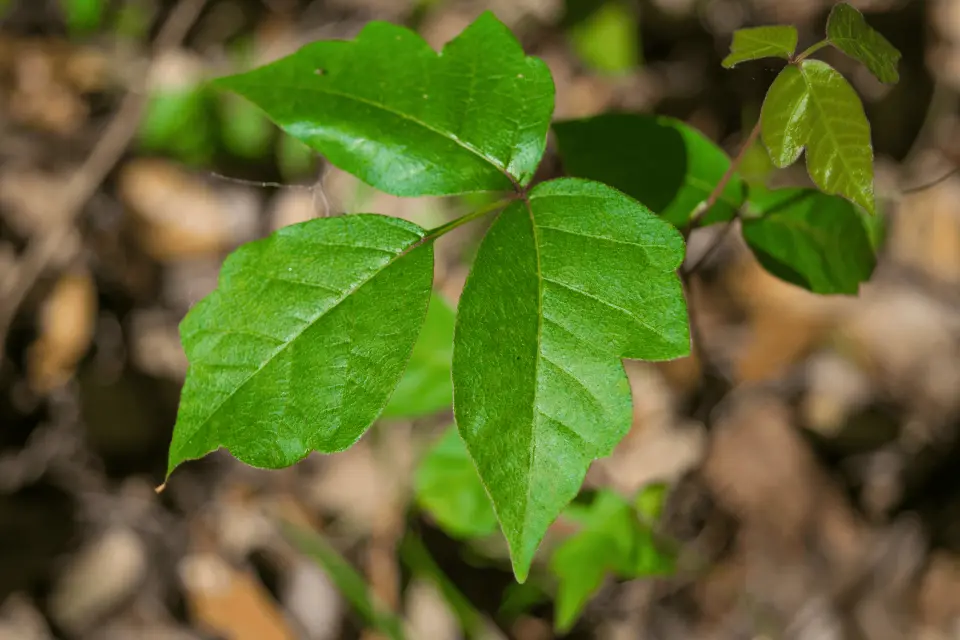
The most obvious route is touching any part of a poison ivy plant: leaves, stems, roots, or berries. All parts of the plant contain urushiol year-round, including bare winter stems when leaves are absent.
Urushiol binds tightly to surfaces and remains active for a surprisingly long time. Gardening gloves, pruning shears, hiking boots, or a tent can retain active urushiol for 1 to 5 years if not decontaminated. A tool that touched poison ivy during a yard cleanup two summers ago can still cause a reaction today.
Common contaminated objects include:
Clothing and shoelaces
Garden tools and loppers
Dog and cat fur (pets do not react to urushiol but carry it on their coats)
Trekking poles and backpacks
Door handles and car steering wheels touched with contaminated hands
This is the most dangerous route of exposure. When poison ivy is burned (during brush clearing, campfires, or yard waste burning), urushiol particles become airborne. Inhaling smoke from burning poison ivy can cause severe inflammation in the airways and lungs. This is a medical emergency. Symptoms include difficulty breathing, chest tightness, and throat swelling.
Never burn vegetation suspected to contain poison ivy. Call 911 or go to an emergency room immediately if you inhale smoke from burning plants.
Removing urushiol promptly and thoroughly is the most effective way to limit a reaction and prevent indirect spread.
Wash exposed skin with lukewarm water and soap as soon as possible. Cool water helps prevent pores from opening, which can draw urushiol deeper. Products such as Tecnu or Zanfel are formulated specifically to remove urushiol and can reduce the severity of the reaction when used within a few hours of exposure. Rubbing alcohol applied to skin before a soap wash can also help break down the oily resin.
Wash separately from other laundry using hot water and a full detergent cycle. Wear gloves when handling contaminated clothing to avoid transferring urushiol to your hands. Wash the laundry machine drum afterward if it has handled heavily contaminated items.
Wipe down with rubbing alcohol (isopropyl alcohol at 70% or higher), then wash with soap and water. Disposable gloves and paper towels are preferable for cleanup so you can discard them without further spreading contamination.
Rinse pets with water while wearing rubber gloves, then wash with pet shampoo. Most pets do not have a visible reaction to urushiol, but can transfer it to anyone who pets them.
Get poison ivy treatment online today
A licensed doctor can review your symptoms and send a prescription to your pharmacy, often the same day.
Related medications we prescribe
Most people first develop symptoms 12 to 72 hours after exposure. However, the timing depends heavily on how much urushiol comes into contact with each area and how thick the skin is at that location.
An area of thin skin on the inner arm may react within 12 hours. A callused area on the heel from the same exposure might not show visible inflammation for three or four days. This staggered appearance is one of the primary reasons people believe the rash is spreading or contagious.
First-time exposures can take longer, up to a week, because the immune system is encountering urushiol for the first time and needs to mount an initial sensitization response. Repeated exposures typically produce faster and more intense reactions.
For mild to moderate reactions, these approaches help control symptoms while the rash resolves on its own:
Calamine lotion applied to weeping blisters dries them out and reduces itching. Treating a poison ivy rash early with calamine and cool compresses shortens the worst of the discomfort.
Over-the-counter hydrocortisone cream (1%) reduces inflammation in localized patches.
Cool, wet compresses relieve the burning sensation for short periods.
Oral antihistamines such as diphenhydramine can help with sleep if nighttime itching is disruptive, though they do not directly reduce the rash.
Avoid hot showers, which can worsen itching by dilating blood vessels.
Most mild reactions resolve within one to three weeks without prescription treatment.
Some reactions require more than home management. Contact a physician if:
The rash covers a large area of the body (more than one-third of the skin surface)
The face, eyes, or genitals are involved with significant swelling
Blisters are large, oozing heavily, or show signs of infection (increasing warmth, red streaking, pus)
Swallowing is difficult (rare, from accidental ingestion of plant material)
You have inhaled smoke from burning poison ivy. This is an emergency requiring immediate evaluation.
For mild to moderate cases, a telehealth provider can evaluate photos and prescribe oral steroids when needed. Understanding the full range of poison ivy reactions helps you gauge when home treatment is sufficient and when professional care is the better call.
Yes, indirectly. Your dog does not develop a rash from urushiol, but the oil clings to fur and can transfer to your skin when you pet them. Wearing gloves when bathing your dog after possible exposure, then washing your hands thoroughly, helps prevent this.
Usually yes. After your immune system has been sensitized to urushiol, subsequent exposures tend to produce faster and more severe reactions. A first exposure may cause little or no reaction; a second can produce an intense rash within 12 to 24 hours.
Not recommended. Blisters are a protective barrier against infection. The fluid inside is not contagious and does not cause the rash to spread, but breaking the skin creates an entry point for bacteria. If large blisters are unavoidable, clean the area carefully and keep it covered.
Urushiol can remain active on hard surfaces, tools, and fabric for one to five years under normal conditions. Studies have found reactive urushiol on herbarium specimens decades old. Proper decontamination with soap and alcohol is essential for any item that comes into contact with the plant.
No reliable method exists to achieve lasting immunity. Some people naturally do not react to urushiol (an estimated 15 to 30% of people), but sensitivity can develop at any point in life. People who spent years in the woods without reacting sometimes develop a reaction later. Repeated or heavy exposures can increase sensitivity rather than reduce it.
Poison ivy rash is not contagious and cannot spread from person to person or from one part of the body to another through scratching or contact with blisters. Urushiol, the plant's oily resin, is the only thing capable of triggering new reactions, and it can linger on surfaces and objects for years. Washing skin, clothing, tools, and pets promptly after any suspected exposure is the most effective prevention. When a rash is extensive, affects sensitive areas, or follows inhalation of plant smoke, prompt medical evaluation is important. Doctronic.ai connects you with licensed physicians around the clock for same-day telehealth visits when you need a fast, expert assessment.
Compare your treatment options
Chat Now