
How Long Does Poison Ivy Last? Timeline, Stages, and Recovery Tips

Medically reviewed by Alan Lucks | MD, Alan Lucks MDPC Private Practice - New York on May 22nd, 2026.
Published on April 6th, 2026. Updated on July 23rd, 2026.
Key takeaways
Most mild poison ivy rashes clear up within one to three weeks; severe reactions can linger four weeks or longer.
Symptoms don't appear instantly: the rash typically develops 12 to 72 hours after contact with urushiol, the plant's oily resin.
The rash does not spread by itself. New patches appearing days later are delayed reactions from areas that absorbed less urushiol during the original exposure.
Washing skin thoroughly within 10 to 15 minutes of contact is the single most effective way to shorten the reaction.
Prescription oral steroids are often necessary for rashes covering a large area, affecting the face or genitals, or causing significant swelling.
When the rash is severe, affecting your eyes, or showing signs of infection, Doctronic.ai connects you with licensed physicians 24/7 for same-day telehealth visits from home.
Why Poison Ivy Takes Weeks to Fully Clear
Poison ivy is not an infection. It is a delayed hypersensitivity reaction, meaning your immune system drives the symptoms. After urushiol binds to skin proteins, immune cells mount a response that plays out over days and weeks. How long does poison ivy last depends on exposure level, body location, individual sensitivity, and how quickly treatment begins.
The Stages of a Poison Ivy Reaction
Stage 1: Contact and Urushiol Absorption (Day 0)
The reaction begins the moment urushiol touches your skin, though you won't feel anything yet. Urushiol is the oily, sticky resin found in the leaves, stems, and roots of poison ivy, poison oak, and poison sumac. Just 50 micrograms (an amount invisible to the naked eye) is enough to trigger a reaction in sensitive individuals.
Urushiol penetrates the outer skin layer within minutes. Washing skin with soap and cool water within 10 to 15 minutes can remove most of the resin before it binds. After about 30 minutes, absorption is largely complete, and washing reduces but cannot fully prevent the reaction.
Stage 2: Delayed Onset (Hours 12 to 72)
For first-time exposures, the immune system must first learn to recognize urushiol, which is why some people don't react at all the first time. After sensitization, subsequent exposures trigger a response within 12 to 72 hours. During this window, skin may feel slightly warm or tight, but visible symptoms haven't appeared yet, leading many people to mistakenly believe they avoided a reaction.
Stage 3: Rash Development (Days 1 to 5)
The classic poison ivy rash appears as red, streaky patches with intense itching. The streaks reflect where the plant's leaves dragged across the skin. Small raised bumps (papules) appear first, followed by fluid-filled blisters (vesicles) as the immune response intensifies.
At this stage, itching is often severe. The rash itself is not contagious, and the fluid inside the blisters does not contain urushiol and cannot spread the reaction to others.
Stage 4: Blistering and Weeping (Days 3 to 7)
As the reaction peaks, blisters enlarge and may rupture, releasing clear fluid. This weeping phase is often the most uncomfortable and tends to alarm people into thinking the rash is spreading or infected. In most cases, this is a normal progression.
Areas with thicker skin (palms, soles) react more slowly than thin-skinned areas (eyelids, inner wrists, genitals). This is why new patches keep appearing for several days even after the original exposure, not because the rash is spreading, but because different skin areas are reaching their reaction peak at different times.
Stage 5: Crusting and Healing (Days 7 to 21)
Blisters gradually dry out, crust over, and flatten. Itching begins to diminish. Skin may remain pink, slightly thickened, or hyperpigmented for several weeks after the rash resolves.
For mild reactions, most people reach this stage and achieve full resolution within two to three weeks. Severe reactions involving large body surface areas can take four to six weeks to fully heal.
What Affects How Long the Rash Lasts
Amount of Urushiol Exposure
Higher urushiol contact (brushing through a patch of plants, burning poison ivy) generally produces a more intense reaction with more blistering and a longer recovery. Lower-level exposure from secondary contact (touching clothing or pet fur that brushed the plant) tends to cause milder, shorter reactions.
Body Location
Eyelids, face, and genitals react more severely and stay inflamed longer due to thinner, more permeable skin. Palms and soles are more resistant and tend to show milder symptoms.
Individual Sensitivity
About 85% of people will develop a reaction if exposed to enough urushiol. Sensitivity also tends to increase with repeated exposures over a lifetime, so adults who never reacted as children may find themselves more reactive now.
Treatment Timing and Quality
Starting treatment early, particularly washing skin immediately after exposure and using a quality topical treatment, consistently shortens the duration and reduces peak severity. Waiting to start treatment after the rash is fully developed offers less benefit.
Home Treatment Options
For mild to moderate poison ivy reactions, several home treatments effectively reduce symptoms and support healing. A step-by-step approach to treating a poison ivy rash covers the essentials from initial washing through blister care.
Wash Immediately After Exposure
If you know or suspect you've touched poison ivy, wash the exposed area with soap and cool water as soon as possible. Cool water is preferable because hot water can open pores and facilitate deeper urushiol penetration. Wash under fingernails and clean any tools or clothing that may have contacted the plant.
Cool Compresses
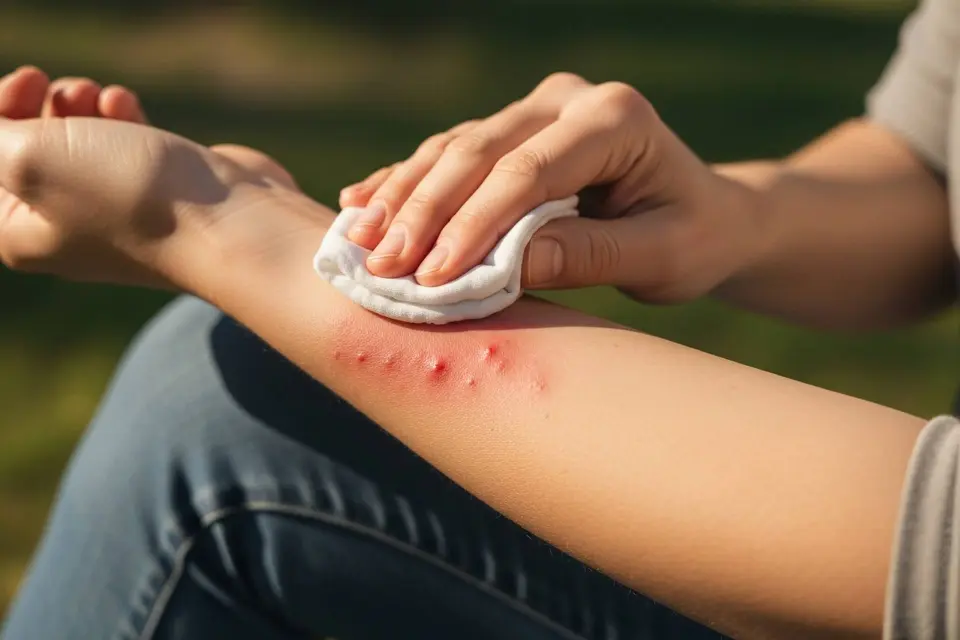
Applying a clean cloth soaked in cool water to the affected area for 15 to 30 minutes several times per day reduces inflammation and soothes itching. Cool compresses also help dry weeping blisters without the drying effect of topical medications, making them useful for sensitive facial skin.
Calamine Lotion
Calamine lotion is a classic topical remedy for poison ivy rash. The zinc oxide in calamine dries weeping blisters and creates a mild cooling effect that temporarily interrupts the itch cycle. Apply a thin layer with a cotton ball up to four times daily and let it dry completely.
If you are uncertain whether your skin reaction is from poison ivy or another source, an overview of identifying what's causing your rash can help narrow down the trigger before committing to a treatment plan.
Over-the-Counter Hydrocortisone Cream
Low-strength hydrocortisone (0.5% to 1%) reduces inflammation and itching and is most effective early in the reaction, before blisters fully develop. Use sparingly on facial skin and avoid near the eyes without medical guidance.
Oral Antihistamines
Diphenhydramine (Benadryl) or cetirizine (Zyrtec) reduces itching, particularly at night. Sedating formulas can help with sleep but cause daytime drowsiness; non-sedating options are better for daytime use.
Oatmeal Baths
Colloidal oatmeal baths soothe widespread inflammation and are useful when the rash covers a large area. Soak for 15 to 20 minutes in lukewarm water.
Get poison ivy treatment online today
A licensed doctor can review your symptoms and send a prescription to your pharmacy, often the same day.
- $39 video visit
- Insurance accepted
- 4.8 on Trustpilot
Related medications we prescribe
- Deltasone prednisone
- Atarax hydroxyzine pamoate
- Westcort hydrocortisone valerate
- Benadryl diphenhydramine
When Prescription Treatment Is Needed
Home treatment is sufficient for many poison ivy reactions, but some situations require prescription medications, typically oral corticosteroids such as prednisone.
Widespread Rash
When the rash covers a significant portion of the body, topical treatments cannot adequately control the immune response. Oral steroids provide systemic anti-inflammatory effects that topical options cannot match.
Rash on the Face, Eyes, or Genitals
These areas require prompt medical attention. Eyelid and eye involvement (ocular contact dermatitis) carries a risk of corneal damage if left untreated. Genital involvement causes severe discomfort and swelling that oral steroids address more effectively than topical treatments.
Severe Swelling
Significant swelling of the face, throat, or limbs warrants same-day evaluation. Swelling that restricts breathing or swallowing requires emergency care.
Signs of Infection
Scratching damaged skin is vulnerable to bacterial infection. Warning signs include increasing redness spreading outward from the rash, warmth and swelling beyond the original borders, pus or cloudy discharge from blisters, fever, and pain that worsens rather than improves. These signs indicate the need for antibiotic treatment, not just steroid therapy.
The Myth That Poison Ivy Spreads
Many people believe scratching the rash or touching weeping blisters spreads the reaction to new areas. This is not accurate. The fluid inside blisters contains no urushiol and cannot spread the reaction. New patches appearing over the first three to five days reflect delayed reactions from areas with less urushiol contact, not active spreading. Scratching increases infection risk and delays healing, but does not cause new patches on untouched skin.
When to See a Doctor
Seek medical evaluation if:
The rash involves your eyes, eyelids, or area around your mouth
Fever above 100 degrees Fahrenheit develops
Blisters are producing pus or cloudy discharge
Redness is expanding rapidly beyond the original rash borders
Swelling is significant, particularly on the face or limbs
The rash covers a large portion of your body
Home treatment after one week has produced no improvement
You inhaled smoke from burning poison ivy (requires emergency evaluation)
Doctronic.ai offers telehealth consultations for rash assessment and can prescribe oral steroids when clinically appropriate.
Frequently Asked Questions
Without treatment, a mild rash typically lasts two to three weeks; moderate to severe reactions can persist four to six weeks. Washing after exposure and applying topical treatments shortens the course compared to no intervention.
No. Poison ivy is not contagious. The rash does not spread through contact, blister fluid, or scratching. Another person can only develop a reaction by directly contacting urushiol, from the plant itself or from objects like clothing or pet fur that retain the resin.
Scratching doesn’t cause the rash to spread, but it delays healing. Breaking blisters open and repeatedly irritating inflamed skin extends the inflammatory phase and increases the risk of bacterial infection. Cool compresses and short fingernails help reduce the urge to scratch.
New patches appear because different areas of skin absorb and process urushiol at different rates. Thicker skin areas like palms develop visible rashes days after thin-skinned areas like inner wrists show the first symptoms. This is a single reaction unfolding at different speeds, not active spreading.
By the time the rash is visible, urushiol has either been absorbed or is no longer on the skin surface. The rash is an immune response that continues even after the original trigger is gone, which is also why blister fluid is not contagious.
Oral steroids are generally indicated when the rash is widespread, affects sensitive areas such as the face, eyes, or genitals, causes significant swelling, or does not improve after a full week of home treatment.
Washing immediately after exposure remains the most effective intervention. Once the rash is established, keeping the area clean and dry, applying cool compresses and topical treatments consistently, avoiding scratching, and seeking prescription steroids for severe reactions all support faster resolution.
The Bottom Line
For most people, poison ivy runs its course in one to three weeks. Knowing the stages helps you recognize what's happening at each point and make better treatment decisions. Washing quickly after exposure remains the best prevention, and oral steroids are the most effective treatment for severe reactions.
If your rash is severe, spreading to your face or eyes, or showing signs of infection, Doctronic.ai can connect you with a licensed physician for same-day telehealth assessment and prescription treatment from home.
Related articles

Outdoor Injury First Aid: Essential Emergency Care for Wilderness Adventures
Best Tick Repellents for Hiking, Gardening, and Outdoor Activities
Can Dehydration Cause Chest Pain? Signs, Symptoms & When to Seek Help
Get urgent medical guidance today
Chat Now