COVID-19
New Treatments for Long COVID in 2026: Latest Medical Breakthroughs
May 17, 2026
7 min read

Medically reviewed by Lauren Okafor | MD, The Frank H Netter MD School of Medicine, Loyola University Medical Center on April 8th, 2026.
Published on April 6th, 2026. Updated on July 23rd, 2026.
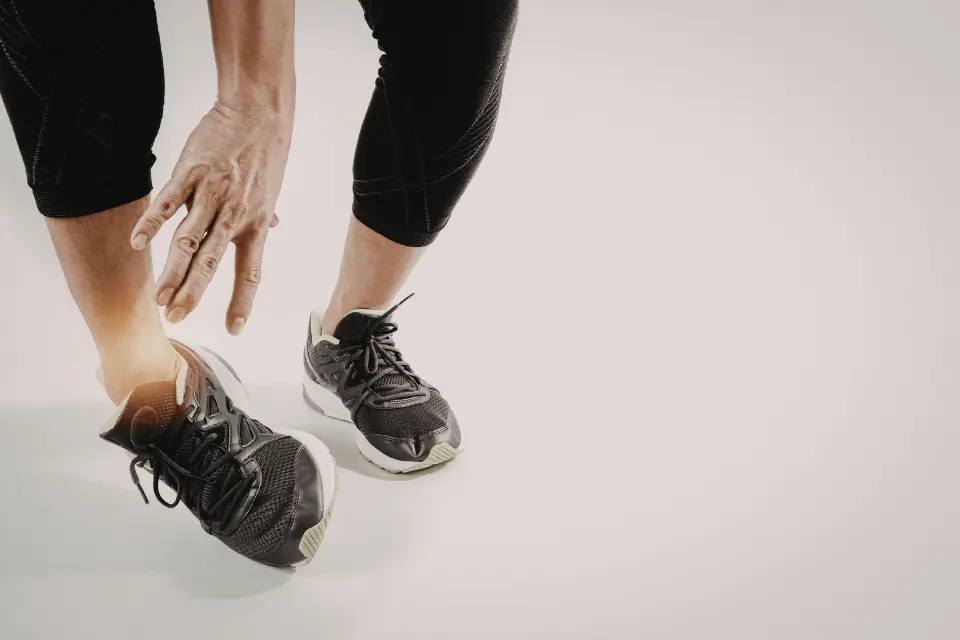
Eversion ankle sprains damage the deltoid ligament on the inner ankle and account for 3% to 5% of all ankle sprain injuries, making them less common but often more serious than inversion sprains.
The deltoid ligament is stronger than lateral ligaments, so eversion injuries frequently involve fractures or other structural damage requiring thorough evaluation.
Current treatment follows the P.E.A.C.E. & L.O.V.E. protocol, emphasizing early guided movement rather than prolonged rest.
Rehabilitation focuses on restoring range of motion, strengthening supporting muscles, and rebuilding proprioception.
Returning to sports after an eversion sprain can take 4 to 8 weeks for non-contact activities and 3 to 5 months for cutting or contact sports.
Doctronic.ai offers AI-powered consultations to help patients understand their injuries and recovery options.
Most people think of ankle sprains as the foot rolling inward, but eversion injuries tell a different story. When the ankle rolls outward and the foot turns inward, the strong deltoid ligament on the inner side takes the hit.
These injuries deserve serious attention because the deltoid ligament's strength means significant force was involved. Understanding the causes, treatment options, and recovery timeline helps patients make informed decisions about their care.
The deltoid ligament sits on the inside of the ankle and connects the tibia (shin bone) to several bones in the foot. This triangular-shaped ligament consists of both superficial and deep layers, creating a remarkably strong structure.
Unlike the lateral ligaments on the outside of the ankle, the deltoid ligament rarely tears in isolation. Its strength means that eversion forces often cause fractures of the fibula or other bones before the ligament completely ruptures.
Inversion sprains occur when the foot rolls inward, damaging the outer ankle ligaments. These account for the vast majority of ankle sprains. Eversion sprains work in the opposite direction, stressing the inner ankle structures.
The deltoid ligament's superior strength makes pure eversion sprains relatively uncommon, at only 3% to 5% of all ankle sprains. When they do occur, patients often experience more prolonged recovery times and higher rates of associated injuries like syndesmotic sprains or fractures.
Basketball, soccer, and football create conditions for eversion injuries through sudden cutting movements, awkward landings after jumps, and collisions. Athletes who play on uneven surfaces face increased risk.
Even recreational activities like hiking on rocky terrain can produce the forces needed to damage the deltoid ligament.
Some people carry a higher risk due to their natural foot structure:
Flat feet or overpronation place additional stress on the medial ankle.
Previous ankle injuries that healed improperly can alter biomechanics.
Worn-out athletic shoes or footwear lacking proper support contribute to instability.
Addressing these factors reduces the chance of eversion injuries during physical activity.
Pain on the inner side of the ankle is the hallmark symptom. Swelling develops rapidly, often within minutes. Bruising may appear along the medial ankle and can spread to the foot over several days.
Some patients report a popping or tearing sensation at the moment of injury. Tenderness directly over the deltoid ligament helps distinguish this injury from other ankle problems. Doctronic.ai can help patients assess their symptoms and determine whether immediate medical attention is necessary.
Grade I: Microscopic tears with mild pain and minimal swelling. Walking is possible with discomfort.
Grade II: Partial tearing, moderate swelling, and noticeable instability. Walking becomes significantly painful.
Grade III: Complete rupture with severe swelling, substantial bruising, and inability to bear weight.
Distinguishing between an acute sprain and chronic ankle instability is important because it can alter both outcomes and treatment approach.
While R.I.C.E. was traditionally recommended, current guidelines emphasize the P.E.A.C.E. & L.O.V.E. approach: Protection, Elevation, Avoid prolonged anti-inflammatory use, Compression, Education, then Load, Optimism, Vascularization, Exercise.
This modern protocol encourages early, guided movement to optimize tissue healing and reduce ankle sprain recovery time rather than prolonged immobilization.
A healthcare provider will assess stability through specific physical examination maneuvers:
The eversion stress test checks the deltoid ligament integrity.
X-rays rule out fractures, which commonly accompany eversion sprains.
MRI provides detailed images of soft tissue damage.
Ultrasound offers a less expensive option that can visualize tears in real-time.
Early gentle movement prevents stiffness and promotes healing. Ankle circles, alphabet exercises, and towel stretches begin once acute pain subsides. Gradual progression prevents re-injury while restoring normal joint mechanics.
The tibialis posterior muscle supports the arch and stabilizes the medial ankle. The peroneal muscles on the outer ankle work together with the medial structures for balanced stability.
Resistance band exercises, heel raises, toe walks, and single-leg stance exercises challenge these muscles progressively. Strength imbalances between muscle groups increase re-injury risk. Patients recovering from related Achilles tendon injuries often follow similar strengthening protocols.
Ankle injuries disrupt the body's awareness of joint position, increasing the likelihood of future sprains. Balance board exercises, single-leg stance progressions, and dynamic movement drills retrain the nervous system.
This training component often determines long-term outcomes more than strength alone.
Premature return causes re-injury and can lead to chronic problems:
Grade I: Return to activity within 2 to 4 weeks.
Grade II: Typically requires 6 to 8 weeks of rehabilitation.
Grade III and fractures: Longer recovery periods, often 3 to 5 months.
Functional testing should demonstrate adequate strength, balance, and sport-specific movements before clearance.
Ankle braces provide external support during the vulnerable post-injury period. Lace-up braces offer moderate support for most activities, while rigid braces provide maximum stability for high-risk sports. Proper warm-up routines and ankle-strengthening exercises reduce future injury risk.
Mild sprains generally heal within 2 to 6 weeks with guided rehabilitation. Moderate injuries often require 8 to 10 weeks, while severe tears or those involving fractures may take 4 to 6 months for full recovery.
Walking ability depends on injury severity. Grade I sprains allow limited walking with discomfort. Grade II and III injuries typically require crutches or a walking boot initially.
Most eversion sprains heal with conservative treatment. Surgery becomes necessary when fractures require fixation or when the deltoid ligament fails to heal properly after several months of rehabilitation.
Eversion sprains damage the stronger medial ligaments and frequently involve additional injuries like fractures. They require more careful evaluation and often longer recovery times than common lateral sprains.
Eversion ankle sprain injuries need careful evaluation and the right treatment plan to heal properly. Because the inner ankle ligament is very strong, these injuries often happen with greater force and may involve more than just a simple sprain.
In some cases, there may also be other injuries, such as ligament damage higher up in the ankle or even a small fracture. This is why an accurate diagnosis is important before starting treatment.
Recovery usually includes rest, support (like a brace), physical therapy, and a gradual return to activity. Following a structured plan can help you heal fully and lower your risk of reinjury.
Doctronic’s AI platform can help you understand your injury, guide your recovery, and connect you with medical care when needed.
Explore treatment options
Chat Now
Join 50,000+ readers using Doctronic to understand symptoms, medications,
and next steps.
Add your phone number below to get health updates and exclusive VIP offers.
By providing your phone number, you agree to receive SMS updates from Company. Message and data rates may apply. Reply “STOP” to opt-out anytime. Read our Privacy Policy and Terms of Service for more details.
Save your consults. Talk with licensed doctors and manage your health history.