Bone & Joint Health
What Is a Dangerously High Calcium Level and What Does It Mean?
July 21, 2026
6 min read

Medically reviewed by Lauren Okafor | MD, The Frank H Netter MD School of Medicine, Loyola University Medical Center on April 20th, 2026.
Published on April 17th, 2026. Updated on July 23rd, 2026.
Pain in the back of the knee has many potential causes, from Baker's cysts and hamstring injuries to deep vein thrombosis, and each one requires a different approach
A Baker's cyst is one of the most common sources of posterior knee discomfort and is usually a sign of an underlying joint problem, such as arthritis or a meniscus tear
Sharp pain that worsens with specific movements differs from dull, constant aching, and this distinction helps identify whether the injury is acute or chronic
Deep vein thrombosis is a serious cause of posterior knee swelling that requires same-day medical evaluation
Most cases of pain in the back of the knee improve with conservative treatment within a few weeks when the correct cause is identified
Not sure whether your knee pain needs medical attention? Describe your symptoms to Doctronic.ai and get a doctor's assessment from home.
That tightness or ache behind the knee can stop you mid-stride, interrupt your sleep, or make it painful to climb stairs. Pain in the back of the knee is more common than most people realize, and the cause is not always obvious. The popliteal space (the hollow behind the knee joint) contains a dense network of tendons, ligaments, nerves, blood vessels, and fluid-filled bursae. Any of these structures can become inflamed or injured.
Understanding what is involved changes everything about how you treat it. This guide walks through the most common causes, warning signs that need prompt attention, and practical steps you can take at home and with a provider.
A popliteal cyst forms when excess joint fluid drains backward through a natural opening in the knee capsule and collects in a small sac behind the joint. It develops as a secondary response to something irritating the knee, most often osteoarthritis, a meniscus tear, or inflammatory arthritis. The cyst creates a visible or palpable bulge and causes tightness that worsens when you fully extend or fully bend the knee.
When a Baker's cyst ruptures, the fluid disperses into the calf and the resulting swelling and tenderness can closely mimic deep vein thrombosis. Sudden calf swelling after a cyst ruptures warrants a medical evaluation to rule out a clot.
The hamstring tendons attach near the back of the knee at the proximal tibia and fibula. Overuse from running, cycling, or jumping, especially after a sudden increase in training load, can strain these tendons or produce chronic tendinopathy. The pain typically worsens with resisted knee flexion, going up stairs, and during the push-off phase of running. Tenderness is usually concentrated at the hamstring insertion points rather than inside the joint.
The gastrocnemius muscle originates at the back of the femoral condyles, right behind the knee. It is commonly injured during explosive push-off movements like sprinting, jumping, or cutting. A partial tear causes sudden sharp pain that feels like a blow to the calf. Walking becomes uncomfortable, and bruising may appear within a day or two. Most cases heal with conservative management over 4 to 6 weeks.
The posterior horns of the medial and lateral menisci are the most frequently torn portions of these C-shaped cartilage pads. Twisting movements during sport or degenerative changes over time can create tears that cause catching, locking, and pain concentrated at the back of the knee. Posterior horn tears are often underestimated because the pain is less immediately dramatic than a tear involving the front of the joint.
Not all pain behind the knee originates in the knee itself. The sciatic nerve runs from the lower back through the buttock and down the back of the leg. When this nerve is compressed in the spine or buttock, it can refer pain directly to the area behind the knee. If your discomfort travels from the lower back or buttock into the knee and calf, and is accompanied by numbness or tingling, sciatic nerve pain may be the cause rather than a local knee injury.
DVT is a blood clot forming in a deep leg vein. It causes swelling, warmth, and pain that concentrate behind the knee and in the calf. Risk factors include prolonged immobility such as long flights or bed rest, recent surgery, pregnancy, and certain medications. DVT requires same-day evaluation because clots can travel to the lungs.
If your knee pain appeared suddenly with swelling, warmth, and redness after a period of inactivity, do not wait for a scheduled appointment.
Get knee pain treatment online today
A licensed doctor can review your symptoms and send a prescription to your pharmacy, often the same day.
Related medications we prescribe
Sharp, stabbing pain that worsens with specific movements usually points to a mechanical problem such as a meniscus tear, tendon injury, or ruptured cyst. Dull, constant aching that builds gradually is more characteristic of chronic conditions like tendinopathy, osteoarthritis, or an intact Baker's cyst.
Some symptoms cannot wait. Seek evaluation the same day if you notice any of the following:
Sudden swelling behind the knee with warmth and redness
Calf swelling that appears together with posterior knee pain (DVT concern)
Numbness or tingling spreading down the leg
Inability to bear weight without significant pain
Fever alongside joint swelling (possible infection)
When you are unsure what is causing your pain, a telehealth provider like Doctronic.ai can help you evaluate your symptoms and determine whether you need imaging, in-person care, or a watchful waiting approach. This is particularly useful for ruling out DVT quickly or understanding whether a palpable lump behind the knee is likely a cyst.
The first step for most injuries is reducing the movement that aggravates the pain without stopping activity entirely. Complete rest weakens surrounding muscles and slows healing. Low-impact alternatives like swimming, walking on flat ground, or stationary cycling maintain circulation and support tissue recovery while the primary injury calms down.
For the first 48 to 72 hours after an acute strain or injury:
Protect the area from further injury
Rest from the specific activities that cause pain
Ice for 15 to 20 minutes several times daily
Compress with an elastic bandage to reduce swelling
Elevate the leg above heart level when possible
Ibuprofen and naproxen reduce both pain and inflammation. They work best when taken consistently for 3 to 5 days rather than only at the moments of peak pain. Topical NSAID gels provide localized relief with fewer gastrointestinal effects and are a reasonable first-line option for mild cases.
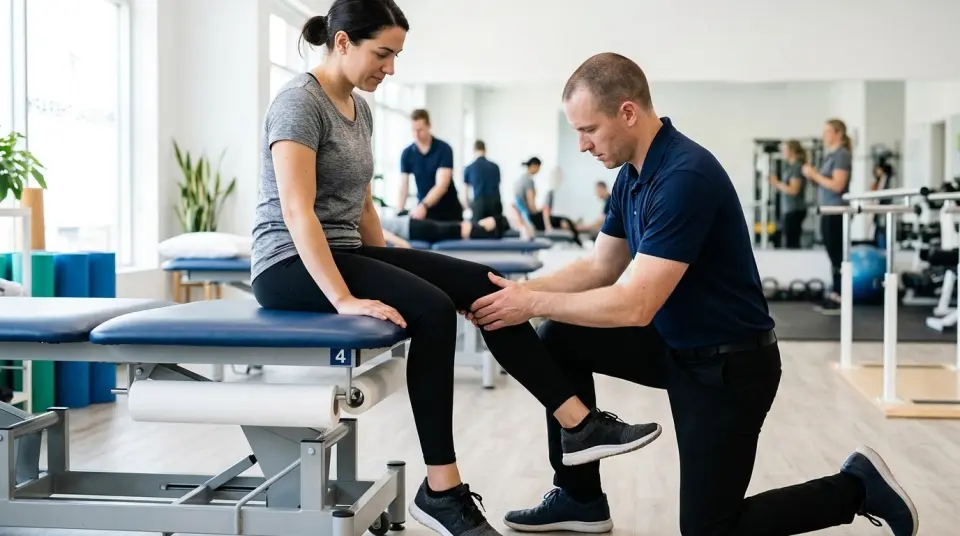
Once the acute phase settles, restoring flexibility and building strength around the knee prevents recurrence. Supine hamstring stretches using a strap, standing calf stretches, and gentle knee bends through a pain-free range all support recovery. A physical therapist can design a program matched to the specific structure that is injured, which matters because hamstring tendinopathy, meniscus irritation, and Baker's cyst each respond to different exercises.
Pain that does not improve within 2 to 3 weeks of consistent home care warrants professional evaluation. Imaging helps identify the underlying cause:
X-rays reveal bone changes and calcification
MRI provides the clearest picture of soft tissue damage including meniscus tears, ligament injuries, and cysts
Doppler ultrasound specifically evaluates blood flow and is the most reliable way to rule out DVT
For Baker's cysts that are large, painful, or repeatedly rupturing, aspiration (fluid removal) combined with a corticosteroid injection reduces the cyst and addresses inflammation. Treating the underlying cause is essential to prevent recurrence, however, since a cyst will refill if the source of excess fluid is not addressed.
Surgical options become relevant when structural damage is significant. Arthroscopic repair for meniscus tears and, rarely, cyst removal are the most common procedures for posterior knee conditions.
Treatment of knee injuries and disorders depends on the specific structure involved and the severity of the injury, which underscores why an accurate diagnosis matters before starting any rehabilitation program.
Recovery time depends on the cause. Mild hamstring and gastrocnemius strains often resolve in 2 to 4 weeks with rest and gentle exercise. Baker's cysts may take 4 to 8 weeks. Meniscus tears and tendinopathy can require 3 to 6 months of rehabilitation. DVT is treated with anticoagulant medication and typically requires several months of management.
Walking is generally fine unless the pain is severe or DVT is suspected. Avoid long distances if walking worsens symptoms. Use flat, predictable surfaces and limit stairs until you know the underlying cause.
Baker's cysts typically produce a visible or palpable bulge at the back of the knee, along with tightness that worsens when the knee is fully bent or fully straightened. However, only a physical exam or ultrasound can confirm the diagnosis. A ruptured cyst produces calf swelling that closely resembles DVT, so any sudden change in symptoms should be evaluated promptly.
Most cases do not require surgery. Baker's cysts, tendon injuries, and sciatica-related pain respond well to conservative treatment. Surgery is considered when meniscus damage is significant, when loose bodies cause mechanical symptoms such as locking, or when conservative treatment has not produced improvement after several months.
Pain in the back of the knee ranges from a minor strain that resolves in days to conditions like DVT that need same-day care. Identifying the likely cause gives you a clear path for treatment. If home care is not producing improvement within 2 to 3 weeks, or if any red-flag symptoms develop, get evaluated promptly. For an affordable, fast assessment of your symptoms from home, visit Doctronic.ai.
Get pain relief advice
Chat Now