Mental Health
How to Calm an Anxiety Attack: Techniques That Work in the Moment
April 17, 2026
6 min read

Medically reviewed by Veronica Hackethal | MD, MSc, Harvard University | University of Oxford | Columbia Vagelos College of Physicians and Surgeons on May 25th, 2026.
Published on March 27th, 2026. Updated on July 23rd, 2026.
Children's skin is thinner and more sensitive than adult skin, making specialized sun protection essential from an early age
Mineral sunscreens with zinc oxide and titanium dioxide are the safest choice for babies and young children
Infants under six months should generally avoid sunscreen and rely primarily on shade and protective clothing, but limited use of a small amount of mineral sunscreen on exposed areas is acceptable if shade is unavailable
SPF 30 blocks about 97% of UVB rays, making it sufficient for most children's daily activities
Reapplication every two hours, or immediately after swimming, is critical for effective protection
Parents can access Doctronic.ai for free AI doctor consultations to help make informed decisions about their child's skin health
Parents searching for the best sunscreen for kids face an overwhelming number of choices. Store shelves overflow with products claiming to be gentle, safe, and perfect for every age. The reality is that children's skin requires different protection than adult skin, and not all sunscreens deliver what they promise. Understanding which ingredients work best, which to avoid, and how to apply sunscreen properly can prevent painful burns now and reduce skin cancer risk later in life. This guide breaks down everything parents need to know about choosing safe, gentle sun protection options for children of every age.
Children's skin is fundamentally different from adult skin. It's thinner, more permeable, and produces less melanin, the pigment that provides some natural UV protection. This means harmful rays penetrate more deeply and cause more damage. A child's skin also has a higher surface-area-to-body-weight ratio, which increases chemical absorption from topical products. What seems like a mild sunburn on an adult can cause significant cellular damage in a child. These biological differences explain why pediatric dermatologists recommend extra caution and specific product formulations for young skin.
Sunburns during childhood dramatically increase lifetime skin cancer risk. Research shows that even one blistering sunburn before age 20 significantly increases the chance of developing melanoma later. UV damage is cumulative, meaning every unprotected exposure adds up over time. Children spend more time outdoors than most adults, making consistent protection even more critical. The habits established early (including proper sunscreen use, wearing hats, and seeking shade) shape a child's relationship with sun safety for life.
Dermatologists and experts consistently recommend mineral sunscreens containing zinc oxide and titanium dioxide for babies and young children because they are less likely to cause irritation. These ingredients sit on top of the skin and physically reflect UV rays rather than absorbing them. They start working immediately upon application, unlike chemical sunscreens that require 15 to 20 minutes to activate. Mineral formulas rarely cause allergic reactions or stinging, making them ideal for sensitive skin. Parents concerned about ingredient safety can feel confident that zinc oxide and titanium dioxide have been used safely for decades.
Several chemical sunscreen ingredients raise concerns for pediatric use. Oxybenzone and octinoxate are being phased out in many regions due to potential hormonal and environmental effects, while homosalate is under review for long-term safety but not banned. Fragrances and dyes can trigger allergic reactions and irritation in sensitive children. Alcohol-based formulas dry out delicate skin. Parents should read labels carefully and choose products specifically formulated for children. When in doubt, Doctronic.ai provides free AI consultations to help parents understand ingredient safety and make informed choices.
Babies younger than six months should primarily be kept out of direct sunlight. Limited use of a small amount of broad-spectrum mineral sunscreen on small exposed areas such as the face or hands is considered safe if shade and clothing are insufficient, according to current pediatric guidance from the American Academy of Pediatrics (2025). Stroller canopies and UV-protective covers provide additional protection. If brief sun exposure is unavoidable, a tiny amount of mineral sunscreen on small exposed areas like hands and face is acceptable, but shade remains the primary defense.
Children ages six months to five years need gentle, tear-free formulas that won't sting if they rub their eyes. Thick, creamy lotions provide better coverage than sprays for this age group. Look for products labeled "sensitive skin" or "hypoallergenic" with SPF 30 to 50. Application can be challenging with squirmy toddlers, so sunscreen sticks work well for faces. Make sunscreen part of the daily routine, applying it before getting dressed to ensure complete coverage.
Older children who swim, play sports, and spend hours outdoors need water-resistant formulas rated for 80 minutes. These products adhere better during sweating and swimming. SPF 30 blocks about 97% of UVB rays, while SPF 50 blocks about 98%, so anything above SPF 30 provides adequate protection when applied correctly. Sport formulas often come in convenient sizes that fit in backpacks and sports bags. Teach children to reapply independently so protection continues even when parents aren't present.
Traditional lotions and creams remain the gold standard for thorough coverage. They allow parents to see exactly where product has been applied and ensure no spots are missed. Creams work particularly well for dry skin, providing moisture along with sun protection. The main drawback is application time, which can test patience with active children. Warming the sunscreen between your hands before applying makes it spread more easily.
Stick sunscreens are perfect for faces, ears, and around eyes. They're less likely to drip or run, making application quick and mess-free. Children who resist lotion often tolerate sticks better. The solid formula also travels well without leaking in bags. Apply several passes to ensure adequate coverage, as sticks deposit less product per swipe than lotions.
Sprays offer convenience but come with significant caveats. Inhalation risks mean sprays should never be applied directly to faces. Wind can blow product away before it reaches the skin, resulting in uneven coverage. Parents who use sprays should spray into their hands first, then rub onto the child's skin. Despite the convenience factor, most dermatologists recommend lotions or sticks for children whenever possible.
Most people apply far too little sunscreen. Children need about one ounce (roughly a shot glass full) to cover their entire body. Faces alone require a nickel-sized amount. Thin application dramatically reduces protection, so err on the side of using more rather than less. Don't forget commonly missed areas: ears, back of neck, tops of feet, and backs of knees.
Sunscreen must be reapplied every two hours, regardless of SPF level. Swimming, sweating, and towel-drying remove product faster, requiring immediate reapplication after water activities. Set a timer on your phone as a reminder during long outdoor days. Even "all-day protection" claims don't eliminate the need for reapplication.
Sunscreen loses effectiveness over time. Always check expiration dates before each season and discard expired products. Heat degrades active ingredients, so never leave sunscreen in hot cars or direct sunlight. In December 2024, certain batches of Cancer Council Sunscreen Clear Zinc Kids SPF50 were recalled in Australia due to product separation and labeling issues, highlighting the importance of checking product quality before use. Store sunscreen in cool, dry places and replace any product that has changed color or consistency.
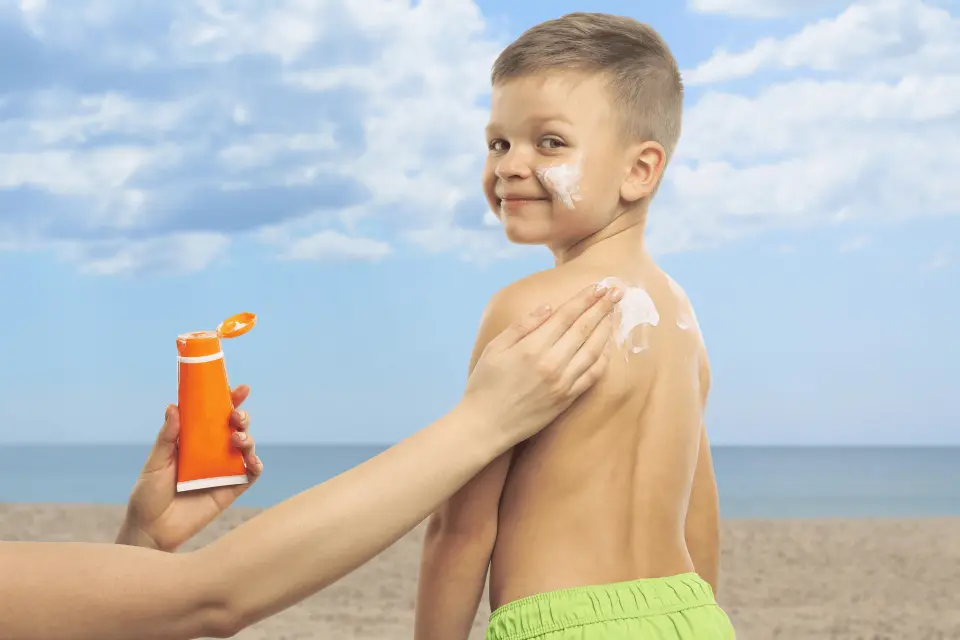
SPF 30 is sufficient for most children's daily activities, blocking 97% of UVB rays. Higher SPF numbers provide marginally more protection but require the same reapplication schedule.
In emergencies, a small amount of adult mineral sunscreen is safer than no protection. Avoid chemical sunscreens on infants entirely.
Make it fun by letting children apply their own sunscreen or using colored formulas. Stick sunscreens feel less intrusive than lotions for sensitive children.
No sunscreen is truly waterproof. "Water-resistant" products maintain protection for 40 to 80 minutes in water but still require reapplication after swimming.
Protecting children's skin requires choosing the right mineral sunscreen, applying it generously, and reapplying consistently throughout outdoor activities. For personalized guidance on your child's skin health and sun protection needs, visit Doctronic.ai for free AI doctor consultations available 24/7.
Get skin care advice
Chat Now
Join 50,000+ readers using Doctronic to understand symptoms, medications,
and next steps.
Add your phone number below to get health updates and exclusive VIP offers.
By providing your phone number, you agree to receive SMS updates from Company. Message and data rates may apply. Reply “STOP” to opt-out anytime. Read our Privacy Policy and Terms of Service for more details.
Save your consults. Talk with licensed doctors and manage your health history.