Symptoms and Diagnosis
Black Lines on Fingernails: When a Nail Streak Could Signal Melanoma
March 30, 2026
8 min read

Medically reviewed by Alan Lucks | MD, Alan Lucks MDPC Private Practice - New York on May 19th, 2026.
Published on March 23rd, 2026. Updated on July 23rd, 2026.
Melanoma cases are rising rapidly, with a projected 112,000 new diagnoses in the U.S. in 2026
The ABCDE rule helps identify warning signs: asymmetry, border irregularity, color variation, diameter changes, and evolution
Moles that look different from others on your body deserve immediate attention
Melanoma can appear in hidden locations like under fingernails or inside the mouth
Changes in texture, sensation, or bleeding in a mole require prompt medical evaluation
Early detection dramatically improves treatment outcomes
Not sure if a mole needs attention? Doctronic.ai's free AI doctor can help you evaluate symptoms around the clock before scheduling a dermatology appointment
Questions about melanoma?
Free. Anonymous. Built by doctors.
This article covers general information. Ask Doctronic about your symptoms, medications, side effects, or treatment options.
Telehealth may not be appropriate for every medication or condition. Doctronic can help you understand your options and determine the appropriate next step.
Melanoma is the most dangerous form of skin cancer, but catching it early changes everything. An estimated 112,000 new cases of invasive melanoma are projected in the U.S. in 2026, representing a 6.7% increase from 2025, according to the American Cancer Society's 2026 projections. These numbers make understanding melanoma symptoms more critical than ever.
The good news is that melanoma found in its earliest stage has a five-year survival rate above 99%. Doctronic.ai helps patients understand concerning skin changes before your dermatology appointment. Knowing what to look for gives you the power to act quickly when something seems wrong.
Doctors developed the ABCDE rule as a simple memory tool for spotting melanoma. Each letter represents a specific warning sign that warrants attention.
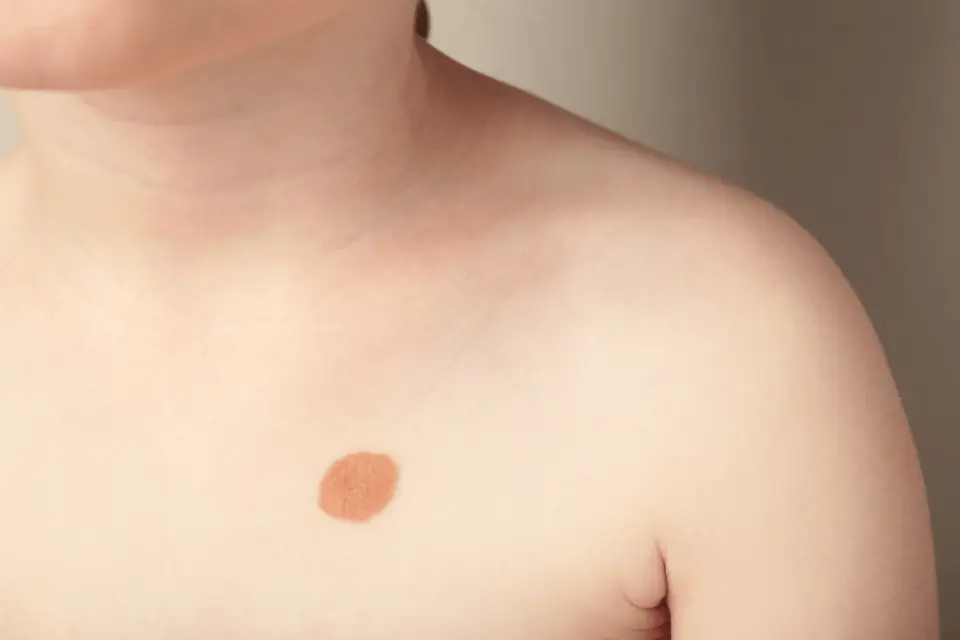
Normal moles are typically round or oval with even halves. If you drew a line through the center, both sides would match. Melanoma breaks this pattern. One half of the spot looks completely different from the other, creating an unbalanced appearance that stands out.
Border irregularity provides another critical clue. Healthy moles have smooth, well-defined edges. Melanoma often displays ragged, notched, or blurred borders that seem to fade into surrounding skin. These edges may appear scalloped or have projections extending outward. When a mole's outline looks like a coastline rather than a circle, it deserves professional evaluation.
Uniform color throughout a mole generally signals health. Melanoma tends to introduce multiple shades within the same spot. You might notice combinations of brown, tan, black, red, white, or even blue in a single lesion. These color variations often appear unevenly distributed rather than blending smoothly.
Size matters too, though not in the way most people assume. The traditional guideline suggests concern for spots larger than 6 millimeters, roughly the size of a pencil eraser. However, melanomas can certainly exist smaller than this threshold. Any mole that keeps expanding deserves evaluation, regardless of its current size.
Evolution represents perhaps the most important warning sign. Moles that change over weeks or months demand attention. This includes alterations in size, shape, color, elevation, or any other characteristic. A spot that looked one way last month and looks different today requires investigation.
New moles appearing after age 30 also warrant scrutiny. While not automatically dangerous, adults who develop new pigmented spots should monitor them closely.
Beyond the ABCDE criteria, dermatologists emphasize the ugly duckling concept. Most people have a personal pattern to their moles. Your spots likely share similar characteristics: comparable size, shape, and color.
"Be on the lookout for moles that are different from the rest" is advice every dermatologist shares. The mole that doesn't match its neighbors, whether it's darker, larger, or shaped differently, is the one that needs examination. This approach catches melanomas that might individually pass the ABCDE test but clearly stand apart from a person's normal mole pattern.
Dubtronica's AI doctor can help you evaluate whether a mole qualifies as an ugly duckling and determine next steps for professional assessment.
While visual changes get most of the attention, melanoma symptoms often include equally important warning signs.
Healthy moles don't typically produce sensations. When a mole starts itching persistently, feels tender to touch, or causes unexplained pain, your body may be signaling trouble. These symptoms suggest cellular changes occurring beneath the skin's surface.
Don't dismiss ongoing discomfort as dry skin or irritation from clothing. While many causes of itchy moles are benign, melanoma can trigger these sensations as it develops.
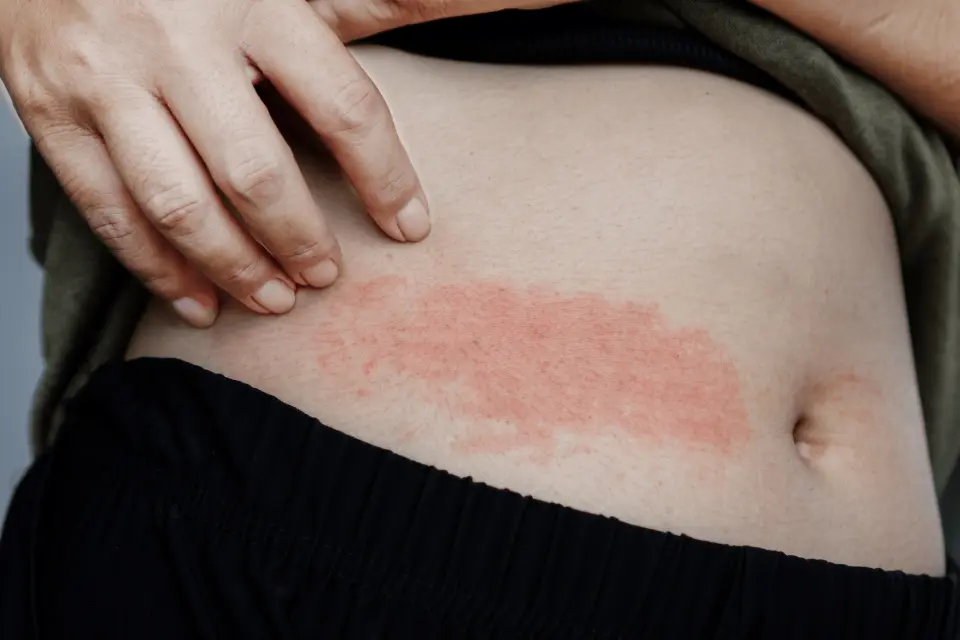
The surface of a mole tells its own story. Normal moles maintain smooth, consistent surfaces over time. Melanoma may cause scaling, crusting, or flaking that doesn't heal. The spot might ooze clear fluid or bleed without obvious injury.
A mole that bleeds from minor contact or spontaneously requires immediate evaluation. Bleeding indicates disruption of normal skin architecture and could signal melanoma growth.
Melanoma doesn't limit itself to sun-exposed areas. It can develop in surprising locations that people rarely check.
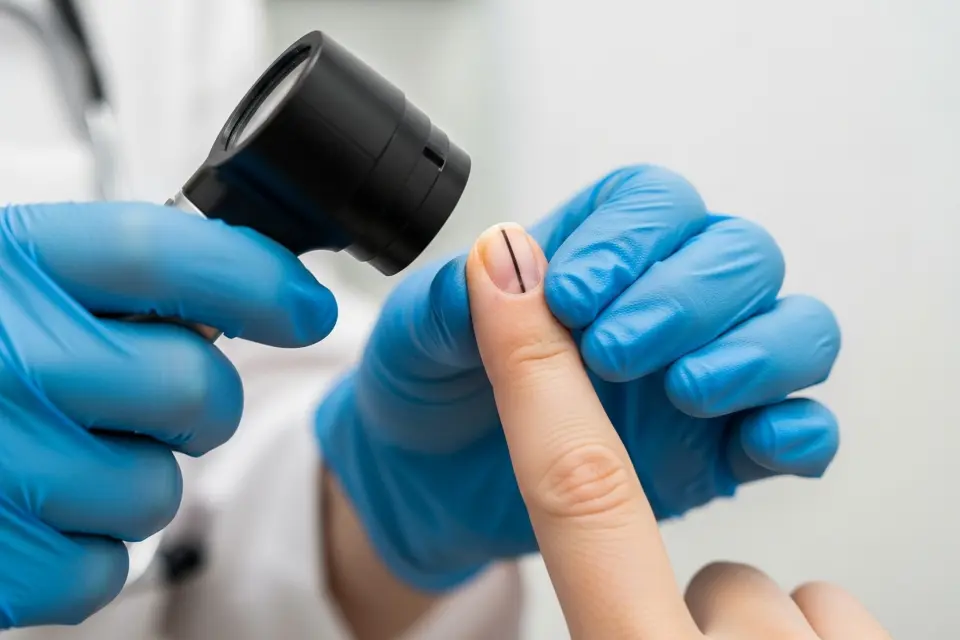
Dark vertical lines or streaks running through fingernails or toenails may indicate subungual melanoma. This type often appears as a brown or black band extending from the nail bed toward the tip. The pigmentation may spread to surrounding skin at the nail fold.
This form of melanoma occurs more frequently in people with darker skin tones. Any new dark streak under a nail that wasn't caused by injury warrants evaluation, especially if it widens over time.
Melanoma can develop on mucous membranes inside the mouth, nasal passages, or other internal surfaces. Dark spots on gums, the roof of the mouth, or inside the nose deserve attention. These locations make self-detection challenging, which is why comprehensive dermatology exams should include mucosal areas.
In the past decade, new invasive melanoma cases increased by 46.6 percent. This trend makes regular professional screening more important than ever.
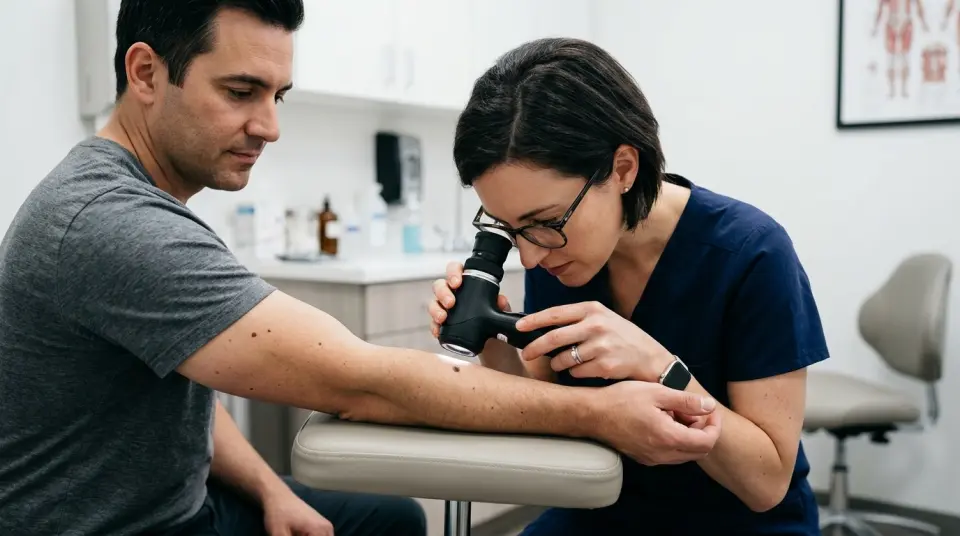
Schedule an appointment if you notice any of the melanoma symptoms described above. Don't wait for multiple warning signs to appear simultaneously. A single concerning change justifies professional evaluation. Annual full-body skin exams provide baseline monitoring, while people with risk factors may need more frequent checks.
Doctronic.ai connects you with healthcare providers who can evaluate suspicious spots through telehealth consultations, helping you determine whether an in-person dermatology visit is needed.
Melanoma growth rates vary significantly. Some melanomas can change noticeably within weeks, while others develop slowly over months. Nodular melanoma tends to grow rapidly and penetrate deeply. Any spot showing rapid changes deserves urgent evaluation rather than a wait-and-see approach.
Yes. While UV exposure increases risk, melanoma can develop on any skin, including areas rarely exposed to sunlight. Genetic factors, immune system function, and other variables contribute to melanoma development beyond sun damage alone.
Photographing moles provides an objective record for comparison over time. Take clear, well-lit images monthly and store them with dates. This documentation helps you notice subtle changes and provides valuable information for your dermatologist.
Most dark moles are completely benign. Color alone doesn't indicate melanoma. The combination of factors, including asymmetry, irregular borders, multiple colors, size, and evolution, determines concern level. A uniformly dark mole that hasn't changed over time is typically not worrisome, but any new changes warrant evaluation.
Recognizing melanoma symptoms early puts you in the strongest possible position for successful treatment. The seven warning signs covered here go beyond basic mole awareness to include texture changes, sensory symptoms, and hidden locations most people overlook. Making monthly self-exams a habit and scheduling annual professional screenings creates your best defense. For immediate guidance on suspicious skin changes, Doctronic.ai provides 24/7 access to medical professionals who can help you take the right next step.
Explore treatment options
Chat Now