
What Does Eczema Look Like? Identifying It Across Different Skin Tones

Medically reviewed by Veronica Hackethal | MD, MSc, Harvard University | University of Oxford | Columbia Vagelos College of Physicians and Surgeons on May 25th, 2026.
Published on April 17th, 2026. Updated on July 23rd, 2026.
Key takeaways
Eczema appears red on light skin but shows purple, brown, or grey tones on darker skin, making diagnosis more challenging for people of color
Black children are 1.6 times more likely to develop atopic dermatitis than white children
Follicular eczema, which presents as small bumps around hair follicles, occurs more frequently in medium to dark skin tones
Post-inflammatory hyperpigmentation is a common concern for people with darker skin after eczema flares heal
Knowing where eczema typically appears on the body helps distinguish it from psoriasis and fungal infections
For personalized guidance on skin symptoms, visit Doctronic.ai
Questions about eczema?
Free. Anonymous. Built by doctors.
This article covers general information. Ask Doctronic about your symptoms, medications, side effects, or treatment options.
Recognizing Eczema Across All Skin Types
Eczema affects approximately 30 million Americans, yet many people struggle to identify it on their own skin. The classic textbook images of eczema almost always show red, inflamed patches on light skin, leaving millions of people with darker complexions wondering if their symptoms even qualify as eczema. This gap in visual education leads to delayed diagnoses and prolonged suffering. Identifying eczema across different skin tones requires understanding that inflammation does not always look red. On darker skin, eczema can appear purple, ashen grey, or dark brown, and these color differences often cause healthcare providers to miss the diagnosis entirely. Without specific training in diverse skin presentations, even experienced clinicians may dismiss genuine eczema as dry skin or another condition. Doctronic.ai helps patients describe their symptoms accurately before seeking professional care, ensuring they receive appropriate attention regardless of their skin tone.
Understanding the Core Characteristics of Eczema
Common Physical Symptoms and Sensations
The hallmark of eczema is intense itching that often worsens at night. This itch-scratch cycle further damages the skin barrier, creating a frustrating loop that disrupts sleep and daily activities. Beyond itching, eczema can make the skin feel rough, leathery, or bumpy to the touch. Many people describe a burning or stinging sensation, especially when sweat or certain products come into contact with affected areas. The skin may feel tight and uncomfortable, particularly after bathing. These sensations remain consistent across all skin tones, even when the visual appearance differs dramatically.
The Role of the Skin Barrier in Atopic Dermatitis
Healthy skin acts as a protective wall, keeping moisture in and irritants out. In people with eczema, this barrier has gaps and weaknesses that allow moisture to escape and allergens to penetrate. Genetic mutations affecting a protein called filaggrin contribute to this barrier dysfunction in many patients with eczema. When the barrier fails, the immune system overreacts to substances that would not bother normal skin. This explains why eczema flares often follow exposure to fragrances, harsh soaps, or environmental allergens.
Eczema Presentation on Light Skin Tones
The Classic Red Appearance and Inflammation
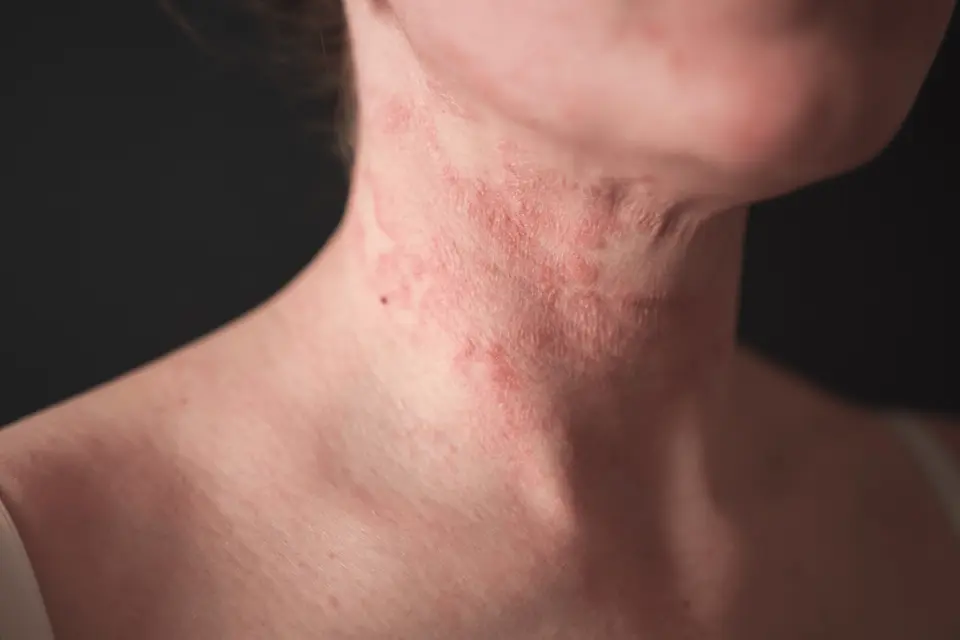
On light skin, active eczema flares present as bright red or pink patches that stand out clearly against the surrounding skin. The redness indicates increased blood flow to the area as the immune system responds to perceived threats. During severe flares, the affected skin may appear almost angry or raw. As flares subside, the redness fades, sometimes leaving behind slightly lighter patches that eventually return to normal.
Texture Changes: Weeping, Crusting, and Scaling
Acute eczema often produces clear fluid that oozes from the skin surface. This weeping creates a wet, shiny appearance and can lead to yellow crusting as the fluid dries. Chronic eczema causes the skin to thicken and develop pronounced lines, a process called lichenification. Dry, flaky scales cover affected areas between flares, and the skin may crack painfully, especially on hands and feet. For a closer look at managing facial flares, see our guide to eczema on the face: triggers, treatment, and sun exposure.
Identifying Eczema on Medium to Dark Skin Tones
Subtle Color Variations: Purple, Brown, and Grey Hues
On darker skin, the redness that defines eczema in textbooks becomes nearly invisible. Instead, inflammation appears as purple, violet, or dark brown patches. Some people notice their eczema looks ashen or grey rather than any shade of red. These color differences occur because melanin in darker skin masks the underlying redness of inflamed blood vessels. Without recognizing these variations, both patients and doctors may dismiss genuine eczema as dry skin or something else entirely. Black and Hispanic children are more likely to experience severe or persistent atopic dermatitis symptoms compared to white children and are more likely to miss school due to eczema.
Follicular Eczema: Small Bumps and Texture Shifts
Follicular eczema appears as small, raised bumps centered around hair follicles. This presentation is more common in people with darker skin tones and can easily be mistaken for keratosis pilaris or even acne. The bumps feel rough like sandpaper and may cover large areas of the arms, legs, or torso. Recognizing this pattern helps ensure an accurate diagnosis when the typical flat, scaly patches are absent.
Managing Post-Inflammatory Hyperpigmentation
After eczema flares heal, darker skin often develops patches of hyperpigmentation that can persist for months or even years. These dark spots result from melanin deposits left behind by the inflammatory process. Preventing flares through consistent moisturizing and avoiding triggers reduces the risk of hyperpigmentation. Dermatologist-supervised treatments such as topical retinoids, niacinamide, or laser therapy may help fade existing dark spots, though patience is essential.
Get eczema treatment online today
A licensed doctor can review your symptoms and send a prescription to your pharmacy, often the same day.
- $39 video visit
- Insurance accepted
- 4.8 on Trustpilot
Related medications we prescribe
- Eucrisa crisaborole
- Cutivate fluticasone topical
- Desowen desonide
- Aclovate alclometasone dipropionate
- Locoid hydrocortisone butyrate
- Alclometasone
- Desonide
Visual Differences by Body Location
Facial and Eyelid Eczema Patterns
Facial eczema commonly affects the cheeks in infants and toddlers, then shifts to the eyelids and around the mouth in older children and adults. Eyelid eczema causes puffiness, fine wrinkling, and darkening that some people mistake for allergies or lack of sleep. The thin skin of the face responds quickly to treatment but also reacts strongly to irritants in skincare products.
Flexural Eczema: Elbows, Knees, and Skin Folds
The inner elbows, the backs of the knees, and skin folds are classic sites of eczema. These areas trap sweat and heat, creating conditions that trigger flares. In children, eczema often appears in these flexural areas after outgrowing the infant pattern of cheek and scalp involvement. The creases may thicken and darken over time due to chronic scratching.
Hand and Foot Involvement
Hand eczema causes cracking, peeling, and intense itching that interferes with daily tasks. Frequent handwashing and exposure to cleaning products worsen this type. Foot eczema may cause blisters on the soles and sides of feet, a pattern called dyshidrotic eczema (pompholyx). Both hands and feet benefit from thick ointments applied at night under cotton gloves or socks.
Differentiating Eczema from Similar Skin Conditions
Eczema vs. Psoriasis: Key Visual Distinctions
Psoriasis produces thick, silvery scales over well-defined red plaques, while eczema scales appear thinner and less distinct. Psoriasis favors the outer surfaces of the elbows and knees, in contrast to eczema's flexural pattern. Psoriasis plaques feel raised and firm, whereas eczema patches tend to feel rougher and more variable in texture. Both conditions itch, but eczema itching is typically more intense.
Distinguishing Rashes from Fungal Infections
Fungal infections like ringworm create circular patches with clearing centers and raised, scaly edges. Eczema patches do not follow this ring pattern and lack the distinct border. Fungal infections often appear in warm, moist areas and can spread without treatment, while eczema flares and remits in response to triggers. When uncertain, Doctronic.ai can help patients evaluate their symptoms and determine whether professional testing is needed.
When to Seek Professional Diagnosis and Treatment
Signs of infection, including increased pain, warmth, pus, or fever, require immediate medical attention. An overview of atopic dermatitis indicates that eczema that does not respond to over-the-counter treatments after 2 weeks warrants professional evaluation. Widespread rashes, severe sleep disruption, or eczema affecting quality of life warrant prescription therapies. A dermatologist can confirm the diagnosis and rule out other conditions that mimic eczema. For quick guidance on symptoms and next steps, Doctronic.ai offers free AI doctor visits that help patients prepare for in-person appointments.
Frequently Asked Questions
Yes, eczema appearance changes based on flare severity, body location, and whether the condition is acute or chronic. The same person may have weeping patches in one area and dry, thickened skin in another.
Medical training historically used images of skin conditions on light skin only. Without exposure to how eczema presents on darker tones, providers may not recognize the purple or brown discoloration as inflammation.
Itching is the defining symptom of eczema, though intensity varies. Some people experience mild itching while others describe severe sensations that disrupt sleep and concentration.
Adult-onset eczema occurs, though it is less common than childhood eczema. Stress, hormonal changes, and new environmental exposures can trigger eczema in people who never had it as children.
The Bottom Line
Identifying eczema requires looking beyond the classic red patches shown in most medical resources, especially for people with medium to dark skin tones. Understanding the purple, brown, and grey presentations of eczema ensures faster diagnosis and better treatment outcomes. For personalized guidance on skin symptoms, visit Doctronic.ai for free AI doctor consultations or affordable telehealth visits with licensed physicians available 24/7.
Related articles
Get skin care advice
Chat Now