
Types of Skin Eruptions: A Visual Guide to Common Rashes

Medically reviewed by Veronica Hackethal | MD, MSc, Harvard University | University of Oxford | Columbia Vagelos College of Physicians and Surgeons on May 29th, 2026.
Published on April 17th, 2026. Updated on July 23rd, 2026.
Key takeaways
Skin eruptions fall into distinct categories based on their appearance, texture, and underlying cause, making visual identification a critical first step in understanding what's happening with your skin
Inflammatory and allergic rashes like eczema, contact dermatitis, and psoriasis share some features but require different treatment approaches
Infectious skin eruptions from viruses, bacteria, and fungi each present unique visual patterns that help distinguish one from another
Environmental factors and infestations cause specific rash patterns that often correlate with exposure history
Certain symptoms like rapid spreading, fever, or breathing difficulty signal the need for immediate medical attention
Doctronic.ai offers AI-assisted consultations that can help identify skin concerns and recommend next steps for care
Recognizing Skin Eruptions and What Your Rash Is Telling You
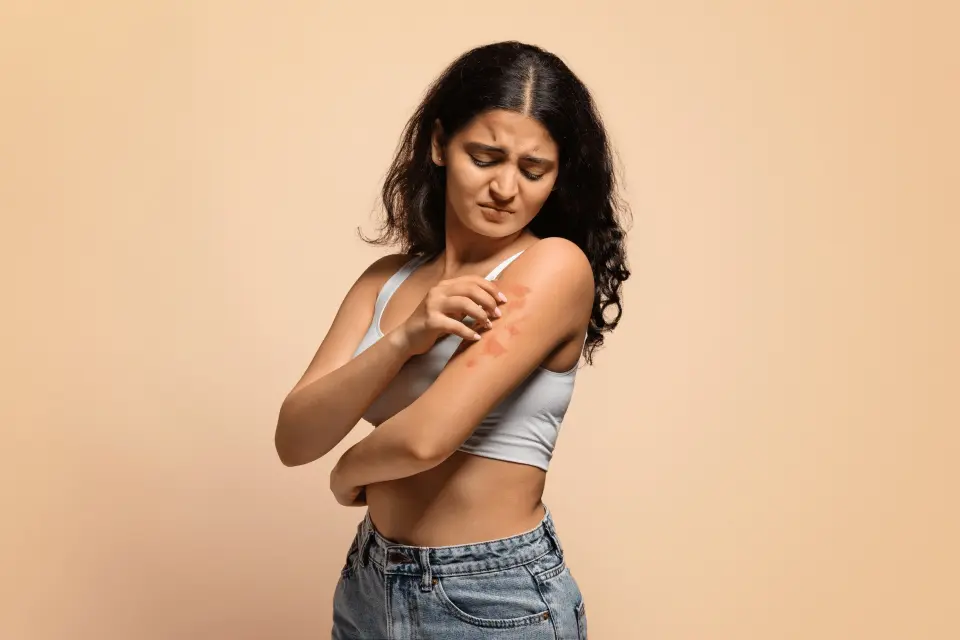
A rash appears on your arm, and suddenly you're searching for answers. Is it an allergy? An infection? Something that will spread to others? Understanding the different types of skin eruptions gives you the knowledge to respond appropriately. The visual characteristics of a rash, including its color, texture, and distribution pattern, provide essential clues about its cause.
The spectrum of common rashes ranges from contact dermatitis caused by irritants to infectious eruptions requiring treatment. Knowing the basics helps you communicate effectively with healthcare providers and determine when a situation requires urgent attention.
Understanding Skin Eruptions and Visual Indicators
Defining Macules, Papules, and Pustules
Macules are flat, discolored spots that you can see but not feel. Freckles and the spots of measles fall into this category. Papules rise above the skin surface as small, solid bumps less than one centimeter in diameter. Mosquito bites and some acne lesions are papules. Pustules contain visible pus and appear as white or yellow bumps surrounded by redness. Vesicles are small fluid-filled blisters, while bullae are larger versions of the same thing. Wheals are raised, itchy areas that change shape and location quickly, like hives.
Assessing Texture, Color, and Distribution
Texture tells you whether a rash is smooth, scaly, crusty, or weeping. Scaly patches often indicate conditions like psoriasis or fungal infections. Color ranges from pink and red to purple, brown, or even white. The distribution pattern matters enormously: is the rash symmetrical on both sides of the body, or does it follow a nerve pathway? Does it appear only where clothing touches skin, or is it concentrated in skin folds? These details narrow down the possibilities significantly.
Common Inflammatory and Allergic Rashes
Atopic Dermatitis (Eczema)
Eczema creates dry, itchy, inflamed patches that often appear in the creases of elbows and knees. The skin may crack, weep, or develop a leathery texture from repeated scratching. Children frequently develop eczema on their cheeks and scalp. The condition tends to flare during dry weather or after exposure to irritants.
The eczema umbrella includes several related conditions, from atopic dermatitis to contact dermatitis. Modern treatments may include topical corticosteroids, calcineurin inhibitors, or biologic medications for moderate to severe cases.
Contact Dermatitis and Hives
Contact dermatitis occurs when skin touches an irritant or allergen. Poison ivy creates the classic pattern: red, blistering streaks where the plant brushed against skin. Nickel allergies cause reactions where jewelry contacts the body. Hives appear as raised, itchy welts that can emerge anywhere and often shift location within hours. Hives frequently result from food allergies, medications, or infections. Chronic hives lasting over six weeks are often idiopathic or autoimmune rather than allergic.
Psoriasis and Scaling Eruptions
Psoriasis produces thick, silvery scales over red, raised patches. The elbows, knees, scalp, and lower back are common sites. Unlike eczema, psoriasis patches have well-defined borders. The condition results from accelerated skin cell turnover and involves immune system dysfunction. Psoriasis is not contagious, though many people mistakenly assume it is.
Get rash treatment online today
A licensed doctor can review your symptoms and send a prescription to your pharmacy, often the same day.
- $39 video visit
- Insurance accepted
- 4.8 on Trustpilot
Related medications we prescribe
Learn moreInfectious Skin Eruptions from Viral, Bacterial, and Fungal Sources
Viral Rashes Including Measles, Chickenpox, and Shingles
Measles begins with flat red spots on the face that spread downward and eventually merge together. Chickenpox creates crops of itchy blisters at various stages of development scattered across the body. Shingles follows a single nerve pathway, creating a painful band of blisters on one side of the body. Viral rashes often accompany fever and fatigue. Most resolve on their own, though antiviral medications can reduce severity when started early. Routine vaccination with MMR and varicella vaccines significantly reduces these infections.
Bacterial Infections Including Impetigo and Cellulitis
Impetigo starts as red sores that rupture, ooze, and develop honey-colored crusts. It spreads easily through direct contact and commonly affects children around the nose and mouth. Cellulitis causes spreading redness, warmth, and swelling, usually on the legs. The affected area feels tender and may develop red streaking. Bacterial skin infections require antibiotic treatment and can become serious if ignored. Culture-guided therapy is recommended when antibiotic resistance is a concern.
Fungal Eruptions Including Ringworm and Athlete's Foot
Ringworm creates circular, scaly patches with raised, red borders and clearer centers. Despite the name, no worm is involved. The fungus spreads through contact with infected people, animals, or contaminated surfaces. Athlete's foot causes itching, scaling, and cracking between the toes. Both conditions respond to antifungal treatments, though persistent cases may need prescription-strength medication. Rashes caused by allergic skin reactions may look similar but require a completely different treatment approach than fungal infections.
Environmental and Infestation-Related Rashes
Heat Rash and Sun Sensitivity
Heat rash develops when sweat ducts become blocked, creating small red bumps or blisters in areas where clothing traps moisture. Infants and people in hot, humid climates are most susceptible. Sun sensitivity reactions range from simple sunburn to photosensitive drug reactions that cause severe blistering. Some medications make skin dramatically more vulnerable to sun damage, including certain antibiotics, diuretics, and retinoids.
Scabies and Bed Bug Bites
Scabies mites burrow into skin, creating intensely itchy, thin, irregular lines often found between fingers, on wrists, and around the waistline. The itching worsens at night. Bed bug bites appear as red, itchy welts in lines or clusters, typically on exposed skin during sleep. Both conditions require specific treatment approaches: scabies needs prescription medication, while bed bug elimination focuses on environmental control.
When to Seek Medical Attention for a Rash
Identifying Red Flag Symptoms
Seek immediate medical care if a rash accompanies difficulty breathing, facial swelling, or rapid spreading with fever. Purple or blood-colored spots that do not fade when pressed could indicate a serious condition requiring emergency attention. Rashes involving the eyes or mouth need prompt evaluation. Any rash in an infant under three months old warrants a medical assessment.
Diagnostic Tools and Dermatological Exams
Doctors use several methods to diagnose skin conditions. Visual examination under good lighting reveals details about texture and distribution. Wood's lamp examination uses ultraviolet light to detect certain fungal infections. Skin scrapings examined under a microscope can identify fungal elements or scabies mites. Patch testing helps identify contact allergens. Skin biopsies provide definitive diagnosis for unclear cases. Digital dermoscopy and AI-assisted image analysis are increasingly used to support diagnostic accuracy in dermatology.
Frequently Asked Questions
Rashes from bacterial, viral, or fungal infections can spread to others through direct contact or shared items. Rashes from allergies, autoimmune conditions, or environmental irritants are not contagious. When uncertain, avoid sharing towels and maintain good hand hygiene until the cause is determined.
Eczema typically causes itchy, weeping patches in skin creases with poorly defined borders. Psoriasis creates thick, silvery scales over well-defined red patches, commonly on elbows, knees, and scalp. Eczema often improves with age, while psoriasis is a chronic condition.
Stress can trigger or worsen many skin conditions, including eczema, psoriasis, and hives. The body's stress response affects immune function and inflammation levels. Managing stress through relaxation techniques may help reduce flare-ups.
Any rash accompanied by fever, rapid spreading, difficulty breathing, or severe pain needs prompt medical evaluation. Rashes that do not improve after two weeks of home treatment, or that interfere significantly with daily activities, also warrant professional assessment. Doctronic.ai can help you evaluate whether your symptoms need urgent care.
A macule is a flat, discolored area of skin that you can see but not feel. A papule is a small, raised, solid bump. Distinguishing between these basic skin lesion types helps describe a rash accurately to a healthcare provider.
The Bottom Line
Understanding the visual characteristics of skin eruptions helps you recognize what you are dealing with and respond appropriately. For quick guidance on any skin concern, Doctronic.ai offers AI-assisted virtual consultations that provide personalized assessments and can direct you toward appropriate care.
Related articles
Get skin care advice
Chat Now