
Signs of Melanoma: The ABCDE Rule and Beyond

Medically reviewed by Oghenefejiro Okifo | MD, Harvard Medical School | Henry Ford Hospital - Detroit, MI on April 19th, 2026.
Published on April 17th, 2026. Updated on July 23rd, 2026.
Key takeaways
The ABCDE rule helps identify potential melanoma through five key characteristics: Asymmetry, Border irregularity, Color variation, Diameter changes, and Evolving appearance
Evolution (the "E" in ABCDE) is the most critical warning sign because any mole that changes over time warrants immediate evaluation
Some melanomas don't follow typical patterns: amelanotic, nodular, and hidden melanomas can appear colorless, grow rapidly as bumps, or develop in unexpected locations like nails and soles
The "ugly duckling" sign helps identify suspicious moles that look different from surrounding spots on the body
Regular self-exams combined with professional dermatologist screenings offer the best protection against late-stage diagnosis
Worried about a changing mole? Doctronic.ai provides free AI doctor visits and affordable telehealth consultations to evaluate skin concerns quickly
Questions about melanoma?
Free. Anonymous. Built by doctors.
Talk to our AI doctor for a clear, personalized read on your situation.
Telehealth may not be appropriate for every medication or condition. Doctronic can help you understand your options and determine the appropriate next step.
Understanding Melanoma and the Importance of Early Detection
A small mole that changes shape over a few months can signal something far more serious than a cosmetic concern. Melanoma, the most dangerous form of skin cancer, develops in the cells that give skin its color. When caught early, survival rates exceed 99 percent. When detected late, outcomes change dramatically, though the five-year survival rate for distant-stage melanoma has doubled from 18% in 2009 to 35% in the 2014-2020 period, largely due to advances in immunotherapy and targeted treatments.
The signs of melanoma extend beyond what most people learn from basic skin cancer awareness. While the ABCDE rule provides an excellent starting framework, certain melanoma types break these rules entirely. Melanoma diagnoses are projected to increase by 10.6% in 2026, with an estimated 234,680 total new U.S. cases. This makes understanding both typical and atypical warning signs essential for everyone.
The ABCDE Rule: A Guide for Skin Self-Exams
Dermatologists developed the ABCDE rule to help people remember what to look for during monthly skin checks. This simple framework catches the majority of melanomas when applied consistently. Each letter represents a specific characteristic that distinguishes potentially dangerous moles from harmless ones. The Skin Cancer Foundation provides detailed melanoma warning signs with reference images that complement these self-exam guidelines.
Asymmetry and Border Irregularity
Normal moles typically appear round or oval with matching halves. When one half of a mole doesn't mirror the other, that asymmetry raises concern. Drawing an imaginary line through the center should reveal roughly equal sides on a healthy mole.
Border irregularity refers to edges that appear ragged, blurred, or notched rather than smooth and well-defined. Melanoma cells often grow unevenly, pushing outward in irregular patterns. Some borders may fade gradually into surrounding skin rather than showing a clear boundary. A mole with scalloped or poorly defined edges deserves closer attention from a dermatologist.
Color Variation and Shifting Diameters
Healthy moles usually display one uniform color throughout. Melanomas often contain multiple shades of brown, tan, black, red, white, or blue within a single lesion. This uneven pigmentation occurs because melanoma cells produce varying amounts of melanin as they multiply abnormally.
Diameter traditionally focused on moles larger than 6 millimeters, roughly the size of a pencil eraser. Current understanding recognizes that melanomas can be smaller when first detected. The "D" now also emphasizes diameter changes: any mole that grows in size requires evaluation, regardless of its current measurement.
Evolving: Why Change is the Most Important Sign
Evolution represents the most significant warning sign in the ABCDE framework. Any mole that changes in size, shape, color, elevation, or texture over weeks to months needs professional assessment. New symptoms like itching, bleeding, or crusting also fall under this category.
A mole that looked stable for years but suddenly begins changing warrants immediate attention. This evolution can happen gradually or rapidly. Doctronic.ai offers free AI doctor consultations to help evaluate concerning skin changes before scheduling a dermatology appointment.
Beyond ABCDE: Identifying Atypical Melanoma Types
Not all melanomas follow the classic patterns described by the ABCDE rule. Several variants present differently, making them harder to recognize and often leading to delayed diagnosis.
Amelanotic Melanoma: The Danger of Colorless Lesions
Amelanotic melanomas lack the dark pigmentation most people associate with skin cancer. These lesions appear pink, red, skin-colored, or even white. Without obvious color changes, they often get mistaken for pimples, scars, or insect bites.
This variant accounts for roughly 2-8 percent of melanomas but carries higher mortality rates due to later detection. People with fair skin face higher risk for amelanotic types. Any persistent pink bump or sore that doesn't heal within three weeks deserves medical evaluation.
Nodular Melanoma: Rapidly Growing Bumps
Nodular melanoma grows vertically into the skin rather than spreading outward first. This makes it particularly dangerous because it can invade deeper tissues before becoming visually obvious. These lesions typically appear as firm, dome-shaped bumps that may be black, brown, red, or skin-colored.
The key distinguishing feature is rapid growth. A bump that appears and enlarges noticeably over weeks to a few months should raise immediate concern. Nodular melanomas don't follow the typical "spreading" pattern, so the border irregularity sign may not apply.
Hidden Melanomas: Nails, Palms, and Soles
Acral lentiginous melanoma develops in areas rarely exposed to sun: nail beds, palms, and soles of feet. This type occurs more frequently in people with darker skin tones and often goes unnoticed until advanced stages.
Warning signs include dark streaks under fingernails or toenails, darkening skin on palms or soles, and sores on these areas that don't heal. Regular inspection of these hidden areas should be part of every skin self-exam.
Talk to a doctor about melanoma
Connect with a licensed doctor online to talk through your symptoms, understand your treatment options, and find out which medications may be available through telehealth.
- $39 video visit
- Insurance accepted
- 4.8 on Trustpilot
The 'Ugly Duckling' Sign and Physical Symptoms
The ugly duckling sign offers a complementary approach to the ABCDE method. Most people have moles that share similar characteristics: similar color, size, and shape. An "ugly duckling" is any mole that looks distinctly different from the surrounding moles on the same body region.
This outlier mole may be darker, larger, smaller, or simply different in texture compared to its neighbors. The concept works because melanomas often stand out as the "odd one" among a person's normal mole pattern. Physical symptoms like persistent itching, tenderness, or spontaneous bleeding from a mole also warrant investigation.
Risk Factors and When to Consult a Dermatologist
Understanding personal risk factors helps determine how vigilant someone needs to be about skin monitoring.
Genetic Predisposition and UV Exposure
Family history of melanoma significantly increases individual risk. People with a first-degree relative who had melanoma face 2-3 times higher risk than the general population. Genetic mutations in certain genes like CDKN2A further elevate susceptibility.
Unprotected sun exposure and indoor tanning are the most important factors contributing to melanoma incidence. A history of severe sunburns, especially during childhood, increases lifetime risk substantially. Fair skin, light eyes, red or blonde hair, and freckling tendency all indicate higher vulnerability.
Professional Screening vs. At-Home Monitoring
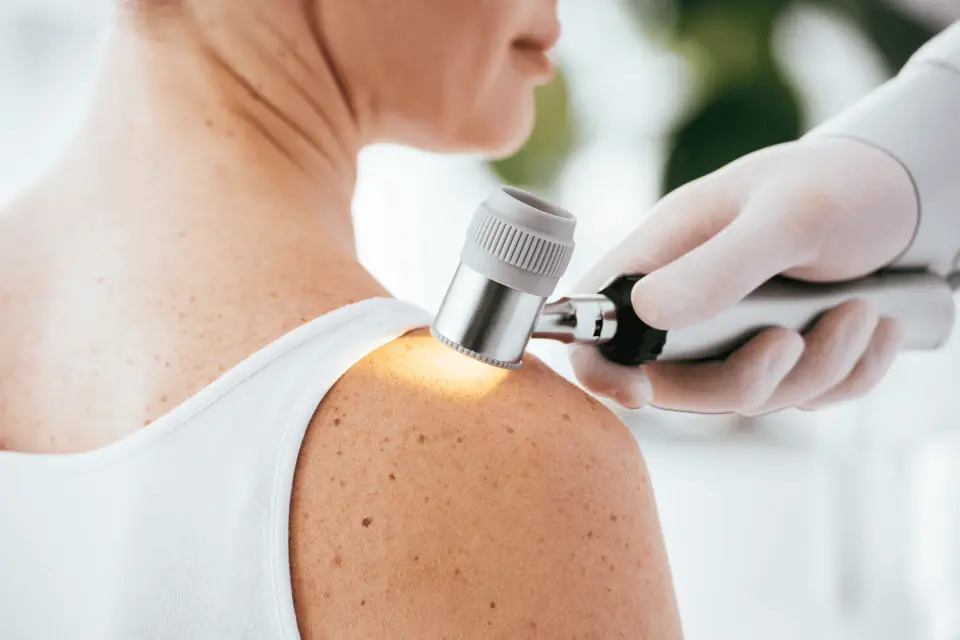
Monthly self-exams catch changes between professional visits. Using mirrors to check the back, scalp, and other hard-to-see areas ensures thorough coverage. Photographing moles creates a reference for tracking changes over time.
Professional dermatologist screenings should occur annually for average-risk individuals and more frequently for those with elevated risk factors. Doctronic.ai provides 24/7 telehealth video visits with licensed doctors for under $40, offering convenient access to professional opinions about concerning spots.
Prevention Strategies and Long-Term Skin Health
Daily sunscreen use with SPF 30 or higher reduces melanoma risk significantly. Reapplication every two hours during outdoor activities maintains protection. Seeking shade during peak UV hours between 10 AM and 4 PM limits cumulative sun damage.
Protective clothing, including wide-brimmed hats and UV-blocking sunglasses, provides additional defense. Avoiding indoor tanning beds eliminates a major controllable risk factor. Starting these habits early in life provides the greatest long-term benefit, though beginning at any age still reduces future risk.
Frequently Asked Questions
Monthly self-exams are recommended for most adults. People with higher risk factors, including many moles or family history, may benefit from more frequent checks.
Yes. Melanoma can appear on soles, palms, nail beds, and even mucosal surfaces such as the mouth or genitals, as well as internal organs. These hidden melanomas require attention to symptoms beyond visible skin changes.
Schedule a dermatologist appointment promptly. Taking photographs of the mole helps track any changes before the visit. Telehealth services can provide initial guidance.
People with more than 50 ordinary moles face higher melanoma risk. Atypical moles, called dysplastic nevi, further increase this risk and require regular monitoring.
The Bottom Line
Recognizing melanoma warning signs using the ABCDE rule and understanding atypical presentations can save lives by enabling early detection. For quick, personalized guidance on skin concerns, Doctronic.ai offers free AI consultations and affordable telehealth visits with licensed doctors available around the clock.
Related articles
Explore treatment options
Chat Now