
Rosacea vs. Eczema: How to Tell the Difference and Treat Each

Medically reviewed by Veronica Hackethal | MD, MSc, Harvard University | University of Oxford | Columbia Vagelos College of Physicians and Surgeons on May 25th, 2026.
Published on April 17th, 2026. Updated on July 24th, 2026.
Key takeaways
Rosacea primarily affects the central face with persistent redness, visible blood vessels, and sometimes acne-like bumps, while eczema causes dry, intensely itchy patches that can appear anywhere on the body
Rosacea triggers include heat, alcohol, spicy foods, and sun exposure; eczema flares from allergens, irritants, and environmental factors
Treatment approaches differ significantly: rosacea responds to anti-inflammatory medications and laser therapy, while eczema requires barrier repair and consistent moisturization
Both conditions benefit from fragrance-free, gentle skincare routines, but the specific ingredients that help or harm each condition vary
Neither condition is contagious: both stem from internal factors involving vascular dysfunction or immune-related skin barrier problems
For guidance on skin concerns, Doctronic.ai connects patients with licensed dermatology-experienced clinicians anytime.
What Is Rosacea?
Rosacea is a chronic condition affecting blood vessels in the face. The tiny vessels beneath the skin become overly reactive, dilating too easily and sometimes becoming permanently visible. This creates persistent redness, flushing, and, in some cases, acne-like bumps called papules and pustules.
The condition typically develops after age 30 and tends to worsen without treatment. Four subtypes exist: erythematotelangiectatic (redness and visible vessels), papulopustular (bumps and pimples), phymatous (skin thickening, most common around the nose), and ocular (eye involvement). Each subtype requires a slightly different management approach.
What Is Eczema?
Eczema, also called atopic dermatitis, results from a compromised skin barrier. The outermost layer of skin fails to retain moisture properly and cannot effectively block irritants and allergens. This triggers an inflammatory immune response that causes itching, dryness, and rashes.
The condition often appears in childhood but can persist into adulthood or develop later in life. Genetic factors play a significant role, and many people with eczema also have allergies or asthma. Atopic dermatitis symptoms vary by age and skin tone, with dryness, itching, and rash formation being the most consistent features across all populations.
Key Visual Differences
Where Redness Appears
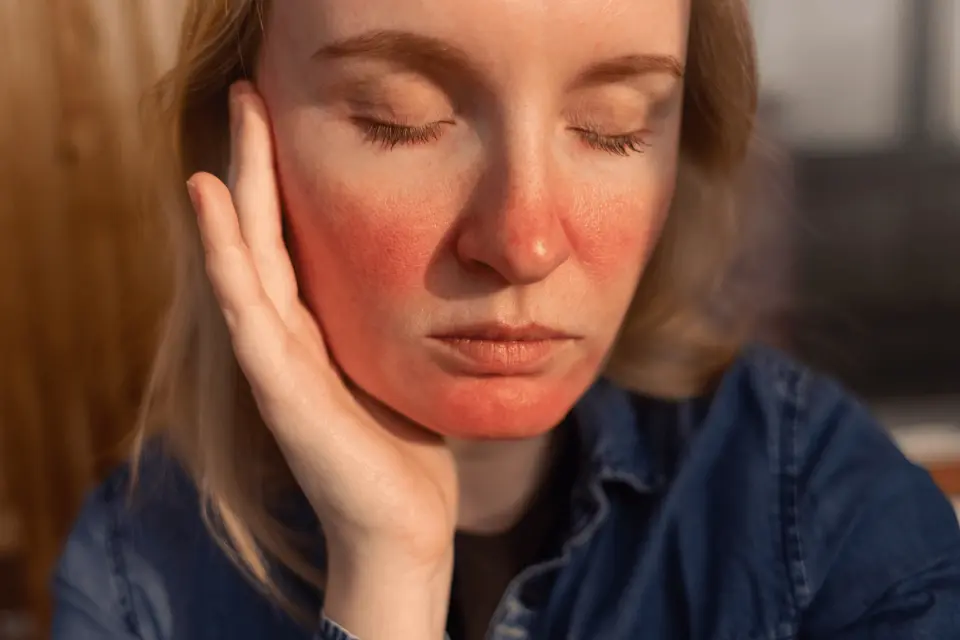
Rosacea concentrates on the central face: cheeks, nose, chin, and forehead. The redness often appears symmetrical, creating a butterfly-like pattern across both cheeks. Visible blood vessels, called telangiectasias, may become noticeable over time.
Eczema can appear anywhere on the body. In adults, it commonly affects the hands, inner elbows, backs of knees, and around the eyes. When eczema does appear on the face, it typically affects the eyelids and the skin around the mouth rather than the central cheek area.
Texture and Appearance
Rosacea skin often looks flushed and may develop small, pus-filled bumps resembling acne. The skin texture can appear somewhat swollen or thickened, particularly around the nose in advanced cases. The surface typically looks oily or normal rather than dry.
Eczema creates distinctly different textures. The skin becomes dry, rough, and scaly. Patches may appear darker or lighter than surrounding skin. During flares, affected areas can become cracked, weepy, or crusty. Skin in chronically irritated areas often looks leathery over time.
How Each Condition Feels
The sensations these conditions produce also differ. Rosacea causes burning, stinging, and a sensation of heat in the face. Many people describe feeling like their face is on fire during a flare. Skincare products may sting upon application even if they contain no known irritants.
Eczema's hallmark symptom is intense itching, often described as unbearable. The itch-scratch cycle worsens the condition, as scratching further damages the already compromised skin barrier. Eczema rarely causes the burning sensation characteristic of rosacea.
Identifying Triggers
Rosacea Triggers
Rosacea triggers tend to cause flushing by dilating blood vessels. Common culprits include hot beverages, spicy foods, alcohol (especially red wine), extreme temperatures, sun exposure, and emotional stress. Exercise and hot baths can also trigger flares.
Keeping a trigger diary helps identify personal patterns. Some people react strongly to certain foods while others notice weather-related flares. Avoiding known triggers reduces flare frequency and severity substantially.
Eczema Triggers
Eczema responds to different provocations. Allergens such as dust mites, pet dander, pollen, and certain foods can trigger flares. Irritants including harsh soaps, fragrances, wool fabrics, and household chemicals also worsen symptoms. Dry air, stress, and sweating contribute to flares as well.
Full-body skin exams, medical tests, rash patterns, and family history all provide important clues when differentiating these conditions. When triggers remain unclear, allergy testing can identify specific sensitivities.
Get rosacea treatment online today
A licensed doctor can review your symptoms and send a prescription to your pharmacy, often the same day.
- $39 video visit
- Insurance accepted
- 4.8 on Trustpilot
Related medications we prescribe
- Oracea doxycycline hyclate
- Metrogel metronidazole gel
- Finacea azelaic acid
- Doryx doxycycline hyclate
- Azelaic Acid
Treating Rosacea
Topical and Oral Medications
Prescription treatments for rosacea target inflammation and blood vessel reactivity. Topical options include metronidazole, azelaic acid, and ivermectin, which reduce redness and bumps when applied consistently. Brimonidine gel can temporarily constrict blood vessels to reduce visible redness.
Oral antibiotics like doxycycline work for moderate to severe cases, particularly when bumps are present. Low-dose formulations provide anti-inflammatory benefits without antibiotic effects. Isotretinoin may be prescribed for severe, treatment-resistant rosacea under dermatologic supervision.
Understanding rosacea across all four subtypes helps patients and providers identify the right treatment approach and set realistic expectations for long-term management.
Laser and Light Therapies
Laser treatments offer longer-lasting results for persistent redness and visible blood vessels. Pulsed dye lasers and intense pulsed light (IPL) target dilated vessels, causing them to shrink and fade. Multiple sessions are typically needed, and results can last months to years with maintenance treatments as new vessels develop.
Treating Eczema
Rebuilding the Skin Barrier
Moisturization forms the foundation of eczema management. Thick creams and ointments work better than lotions because they contain more oil and less water. Applying moisturizer immediately after bathing locks in hydration before the skin dries completely.
Look for products containing ceramides, which help rebuild the damaged skin barrier. Petroleum jelly remains one of the most effective and affordable options. Moisturize at least twice daily, and more often during flares or dry weather.
Prescription Options
Topical corticosteroids reduce inflammation during eczema flares. Different strengths exist for different body areas: mild formulations for the face, stronger ones for thick-skinned areas like palms and soles. Using steroids only during active flares prevents side effects from long-term use.
Non-steroid alternatives include tacrolimus and pimecrolimus, which are calcineurin inhibitors safe for sensitive areas. Newer options like crisaborole and topical JAK inhibitors such as ruxolitinib provide additional choices for people who cannot tolerate steroids. Doctronic can help connect patients with providers who can evaluate which prescription option fits their specific situation.
Skincare Adjustments for Both Conditions
Both rosacea and eczema benefit from fragrance-free, gentle products. Avoid alcohol-based formulas, witch hazel, and harsh exfoliants. For rosacea, skip products containing menthol, eucalyptus, and camphor. Eczema-prone skin benefits from avoiding sodium lauryl sulfate and other harsh surfactants.
Beneficial ingredients differ by condition. Rosacea skin responds well to niacinamide, green tea extract, and azelaic acid. Eczema benefits from colloidal oatmeal, ceramides, and hyaluronic acid. Mineral sunscreens suit both conditions better than chemical formulas, since chemical sunscreen ingredients can sting rosacea-affected skin and potentially irritate eczema.
If you are dealing with inflammatory skin reactions that extend beyond rosacea or eczema, the Doctronic post on heat-induced hives covers another common cause of facial and body flushing worth understanding.
Frequently Asked Questions
Yes, these conditions can coexist. Some people develop rosacea on their face while having eczema on their body or hands. Each condition requires its own treatment approach, so accurate diagnosis of both is important.
Rosacea primarily affects the face, though it can sometimes extend to the neck, chest, and scalp. Body-wide redness and rashes more likely indicate eczema or another condition rather than rosacea.
Dietary modifications help some rosacea patients by eliminating trigger foods like alcohol and spicy foods. Eczema may improve when food allergens are identified and avoided, though this varies significantly between individuals and should be guided by testing.
Neither condition is contagious. Both result from internal factors: vascular dysfunction in rosacea and immune-related barrier problems in eczema. Close contact with someone experiencing a flare poses no risk to others.
Rosacea can rarely occur in children, particularly the ocular subtype, though it remains uncommon before adolescence. Children with facial redness and rashes more likely have eczema, allergic reactions, or other pediatric skin conditions.
The Bottom Line
Distinguishing between rosacea and eczema requires attention to location, texture, and sensation differences. Proper identification leads to effective treatment and faster relief. For personalized skin assessments, Doctronic.ai offers telehealth consultations with licensed providers available 24/7.
Related articles
Compare your treatment options
Chat Now