Bone & Joint Health
What Is a Dangerously High Calcium Level and What Does It Mean?
July 21, 2026
6 min read

Medically reviewed by Oghenefejiro Okifo | MD, Harvard Medical School | Henry Ford Hospital - Detroit, MI on April 20th, 2026.
Published on April 17th, 2026. Updated on July 23rd, 2026.
Grade 1 ankle sprains typically resolve in 1 to 3 weeks with rest and conservative care
Grade 2 sprains involve partial ligament tearing and require 4 to 6 weeks before return to normal activity
Grade 3 sprains are complete ligament ruptures that may take 3 to 6 months to heal fully, and some require surgery
Physical therapy, proper nutrition, and age all influence how quickly the ankle recovers
Returning to activity before full healing significantly raises the risk of chronic instability and re-injury
For an accurate assessment of a rolled ankle from home, visit Doctronic.ai
A rolled ankle is one of the most common sports and everyday injuries, but the recovery timeline varies more than most people expect. The term "rolled ankle" almost always refers to a lateral ankle sprain, which occurs when the foot rolls inward, overstretching or tearing the ligaments on the outer side of the joint. Healing time depends directly on the extent of ligament damage, which clinicians classify using a three-grade system.
Understanding where your injury falls on that scale gives you a realistic picture of what to expect, and helps you avoid the most common mistake in ankle recovery: returning to full activity before the tissue has had time to repair.
Clinicians classify ankle sprain severity using a three-grade system based on how much ligament damage occurred. Each grade carries a distinct expected recovery window.
A Grade 1 sprain involves microscopic tearing and mild stretching of ligament fibers. The ankle remains structurally stable. Symptoms include tenderness, minor swelling, and mild discomfort when bearing weight, but most people can walk with some pain.
The RICE protocol (rest, ice, compression, elevation) applied during the first 48 to 72 hours is usually sufficient treatment. Anti-inflammatory medication can reduce swelling and discomfort. Most athletes can return to sport in 2 to 3 weeks with proper care; non-athletes benefit from allowing the full 3-week window to avoid incomplete healing.
A Grade 2 sprain involves a partial tear of one or more ligaments, producing moderate instability in the joint. Walking becomes difficult, and significant swelling and bruising typically appear within hours of the injury.
Recovery requires more structured rehabilitation than a Grade 1 sprain. Bracing or taping provides support while the ligament heals, and physical therapy helps restore strength and proprioception. Attempting to return to activity before the 4-week mark frequently results in incomplete healing and a higher risk of chronic ankle instability.
A Grade 3 sprain is a complete tear of the affected ligament. The ankle feels grossly unstable, and walking without support is generally not possible. Bruising and swelling are often severe.
Some Grade 3 sprains require surgical repair, particularly in competitive athletes or when multiple ligaments are involved. Even with optimal conservative treatment, full recovery takes 3 to 5 months. Some patients experience lasting instability that requires ongoing strengthening exercises or, in persistent cases, reconstructive surgery.
Get muscle strain treatment online today
A licensed doctor can review your symptoms and send a prescription to your pharmacy, often the same day.
Related medications we prescribe
Learn moreImmediately after the injury, the body initiates an inflammatory response. Blood flow increases to the damaged tissue, producing the characteristic swelling, warmth, and pain. This phase is necessary for healing but can be managed with ice, elevation, and compression to limit excessive swelling.
The body begins laying down new collagen fibers to bridge the damaged ligament. During this phase, pain typically decreases but the ankle remains vulnerable because the new tissue is not yet strong or well-organized. Gentle range-of-motion exercises and progressive weight-bearing, as tolerated, support healing without overstressing the tissue.
Collagen fibers gradually align along lines of stress and mature into stronger, more organized scar tissue. This phase is where most re-injuries occur because the ankle feels recovered before the ligament is fully strong. Understanding what sprains and strains are, helps clarify why ligament tissue specifically requires this extended remodeling window.
Grade is the single most important predictor of healing time. A Grade 1 sprain may recover in less than 2 weeks; a Grade 3 rupture of the same ligament may take more than 6 months.
Younger patients typically heal faster due to more robust cellular regeneration. Diabetes, peripheral vascular disease, and chronic inflammation all slow tissue repair. Older adults should expect to add time to standard recovery windows and prioritize fall prevention during healing.
Structured physical therapy reduces re-injury rates and accelerates functional recovery. Proprioceptive training, which restores the ankle's ability to sense position and react quickly, is particularly important for preventing future sprains. Patients who skip rehabilitation in favor of passive rest often recover more slowly and experience higher rates of recurrence.
Adequate protein supports tissue regeneration. Vitamin C and zinc are essential for collagen synthesis and wound repair, and deficiencies can measurably slow healing. Smoking impairs blood flow to injured tissues and should be avoided during recovery.
Not every rolled ankle requires a clinic visit, but several signs warrant prompt evaluation:
Inability to bear any weight after the injury
Visible deformity or the sense that the joint is completely unstable
Severe swelling that develops rapidly within the first hour
Numbness, tingling, or coldness in the foot
Pain directly over the ankle bones rather than the soft tissue on either side
These signs raise concern for a fracture rather than a soft-tissue sprain alone. The Ottawa Ankle Rules, used by clinicians to determine when X-rays are necessary, recommend imaging when tenderness is present over specific bony areas combined with an inability to bear weight.
Pain that does not improve within 2 to 3 weeks of consistent home care also warrants professional evaluation. Ankle ligament and bone injuries can involve cartilage damage or stress fractures that are invisible on plain X-ray and require MRI for definitive assessment.
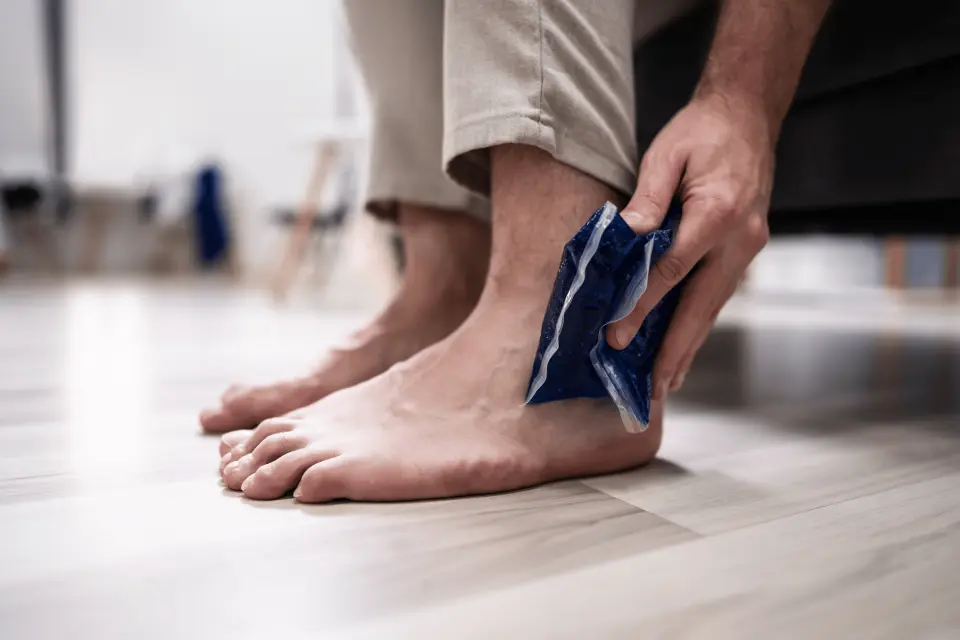
Grade 1 sprains typically resolve in 1 to 3 weeks with rest, ice, compression, and elevation. Minor discomfort during activity may persist for a few days beyond that, but most people return to full activity within 2 to 3 weeks.
Mild Grade 1 sprains often heal with minimal intervention beyond rest and ice. Grade 2 and Grade 3 sprains, however, benefit significantly from bracing, physical therapy, and structured rehabilitation. Without proper care, higher-grade sprains frequently lead to chronic instability.
Walking on a Grade 2 or Grade 3 sprain before adequate healing can stress the incompletely repaired ligament, cause further tearing, and increase the risk of chronic ankle instability. Walking with minimal pain modification is generally acceptable for Grade 1 sprains, but Grade 2 and 3 injuries typically require a period of protected weight-bearing.
Persistent weakness after a sprain often reflects incomplete proprioceptive recovery rather than ongoing structural damage. The ligament may have healed, but the ankle's neuromuscular control system still needs retraining. Balance exercises and targeted strengthening address this and reduce the risk of reinjury.
Grade 1 sprains typically allow a return to running at 2 to 3 weeks. Grade 2 sprains generally require 5 to 7 weeks before running resumes. Return to running should be gradual, starting with flat surfaces and short distances before progressing to uneven terrain or longer efforts.
Rolled ankle healing time ranges from 1 to 3 weeks for a mild Grade 1 sprain to 3 to 6 months for a complete Grade 3 rupture. The grade of the sprain is the most reliable predictor of recovery time, and respecting that timeline is the most effective way to prevent re-injury and long-term instability. For a fast, accurate assessment of your ankle symptoms from home, visit Doctronic.ai.
Get pain relief advice
Chat Now