
Poison Ivy Rash: Identification, Treatment, and When to See a Doctor

Medically reviewed by Oghenefejiro Okifo | MD, Harvard Medical School | Henry Ford Hospital - Detroit, MI on April 25th, 2026.
Published on April 17th, 2026. Updated on July 23rd, 2026.
Key takeaways
Poison ivy rash is caused by urushiol oil, a sticky resin found in every part of the plant, including roots, stems, and leaves
The rash typically appears within 12 to 72 hours after contact and is not contagious; blisters do not spread the oil to new skin
Washing the affected skin within 30 minutes of exposure significantly reduces the severity of a reaction
Most cases resolve on their own within two to three weeks with proper home care
Seek medical attention if the rash covers large areas of the body, affects the face or genitals, or if you develop fever, pus, or difficulty breathing
For a same-day evaluation of your rash, Doctronic.ai connects you with a licensed provider without a waiting room
What Poison Ivy Actually Looks Like
The phrase "leaves of three, let it be" has helped hikers and gardeners stay safe for generations, and it holds up well as a first-line identification guide. Poison ivy grows throughout most of the United States and southern Canada, appearing as a ground vine, a shrub, or a climbing vine that can wind high into trees. A poison ivy, oak, and sumac identification guide helps build recognition skills before heading into areas where these plants grow.
Each leaf cluster has three pointed leaflets. The middle leaflet has a slightly longer stem than the two side leaflets. Leaves are smooth or slightly toothed at the edges and range from shiny to matte depending on age and season. In spring, new growth often appears reddish before turning green. In the fall, leaves turn orange, red, and yellow, making the plant particularly easy to miss amid other colorful foliage.
The plant also produces small, off-white or yellowish berries in clusters, and the vine itself develops a distinctly hairy appearance when it climbs trees. That fibrous, rope-like texture is another identification clue during the winter months when leaves are gone.
How Urushiol Causes a Rash
The rash itself is an allergic reaction, not a direct toxic response. Urushiol, the oily resin responsible, is found in every part of the plant year-round. When it comes into contact with skin, it binds to skin proteins and triggers an immune response. This sensitization process means the first exposure may produce no reaction or only a mild one, while subsequent exposures tend to produce faster and more intense responses.
Roughly 85 percent of people will develop a reaction after sufficient exposure. The remaining 15 percent may still become sensitized over time with repeated contact. Sensitivity can also increase with age.
The oil can transfer from contaminated objects long after the initial contact. Gardening gloves, clothing, tools, and pet fur can all carry urushiol. This is why people sometimes develop rashes days after being outdoors without direct contact with plants.
Recognizing the Rash
Symptoms usually appear within 12 to 72 hours after exposure. The timeline varies based on the amount of urushiol involved, the thickness of the skin, and individual sensitivity.
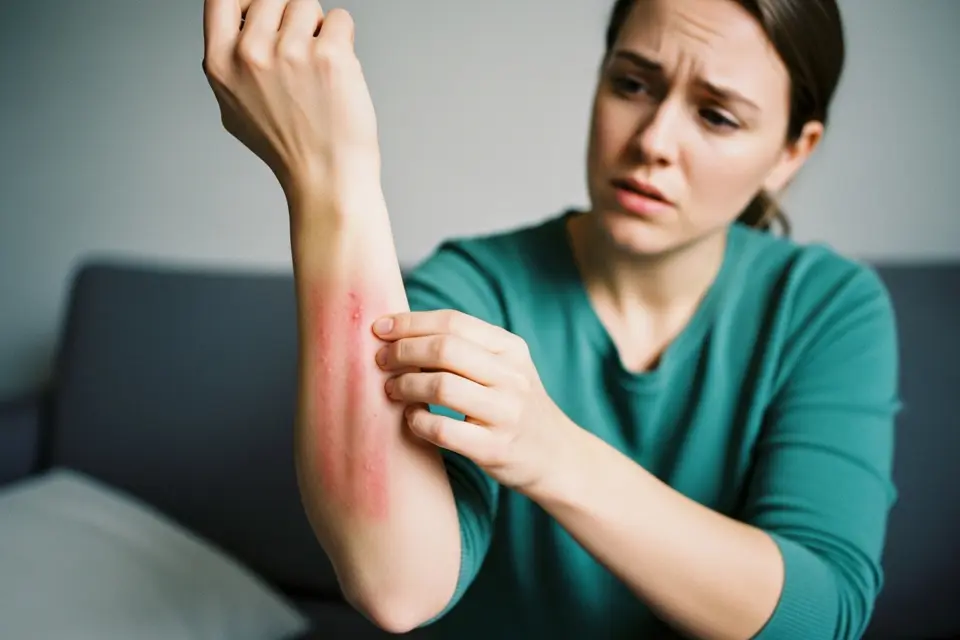
Early signs include redness, swelling, and intense itching. As the reaction progresses, small fluid-filled blisters form and may cluster together. The blisters themselves do not contain urushiol and cannot spread the rash to other areas or to other people. What appears to be spreading is typically delayed reactions in areas that received less oil during the original exposure.
Common sites include the forearms, lower legs, face, and the backs of hands. The rash often appears in streaky lines where the plant or contaminated surface made contact.
Understanding how the rash progresses through stages can help you gauge where you are in the healing process and what to expect over the coming days.
Home Treatment Options
For mild to moderate cases, home care manages symptoms effectively while the immune response runs its course.
Washing the skin thoroughly as soon as possible after exposure is the single most important step. Using lukewarm water and soap to scrub the exposed area within 30 minutes can significantly limit the reaction. Cold water should be avoided during cleanup because it may close pores, limiting oil removal.
Once a rash has developed, several approaches can reduce discomfort:
Calamine lotion applied directly to the rash helps dry weeping blisters and calms itching. Hydrocortisone cream (1 percent, available over the counter) reduces inflammation when applied to affected areas several times daily. Cool compresses provide temporary itch relief. Colloidal oatmeal baths soothe widespread irritation. Oral antihistamines like diphenhydramine help at night when itching disrupts sleep, though they do not accelerate healing. Allergic contact dermatitis diagnosis and treatment is clinically relevant here since poison ivy rash is one of the most common forms of this condition.
Resist the urge to scratch. Breaking blisters opens the skin to bacterial infection and slows healing.
Doctronic.ai providers frequently see patients who have tried several of these remedies without adequate relief. In those cases, prescription-strength topical or oral corticosteroids provide more effective symptom control, especially for moderate reactions in sensitive areas.
Get poison ivy treatment online today
A licensed doctor can review your symptoms and send a prescription to your pharmacy, often the same day.
- $39 video visit
- Insurance accepted
- 4.8 on Trustpilot
Related medications we prescribe
- Deltasone prednisone
- Atarax hydroxyzine pamoate
- Westcort hydrocortisone valerate
- Benadryl diphenhydramine
Contaminated Clothing and Surfaces
Urushiol on clothing, tools, and outdoor gear can remain active for months or longer. Washing contaminated items in hot water with detergent handles most cases. Items that cannot be washed, like leather gloves or boots, may need to be discarded.
Pets do not typically react to urushiol because their fur creates a physical barrier. However, the oil clings to fur and can transfer to hands during petting. Bathing pets that may have been in contact with poison ivy, while wearing gloves, reduces this risk.
When to See a Doctor
Most poison ivy rashes do not require medical treatment, but certain symptoms warrant professional evaluation.
Seek care promptly if the rash covers a large portion of the body, particularly if it involves the face, eyes, lips, or genitals. Swelling around the eyes that makes it difficult to see, swelling in the mouth or throat, or any difficulty breathing are emergencies that require immediate attention. These symptoms suggest the reaction has become systemic and may require epinephrine or intravenous corticosteroids.
Signs of bacterial infection also warrant medical attention. Yellow or green discharge from blisters, rapidly spreading redness, warmth in the surrounding skin, or fever indicate a secondary infection that requires antibiotic treatment.
If a reaction is severe enough to significantly interfere with sleep, work, or daily activity, a doctor can prescribe oral corticosteroids such as prednisone. A tapered course taken over 10 to 21 days is more effective at controlling inflammation than over-the-counter options for serious cases.
Doctronic.ai makes it easy to get this assessment without an in-person visit. A provider can review your symptoms, help distinguish poison ivy from other skin conditions, and recommend appropriate treatment.
Prevention
Avoiding contact is the most reliable prevention. When hiking or working outdoors in areas where poison ivy is common, wear long sleeves, long pants, and gloves. Tuck pant legs into socks to prevent plant contact along the lower legs.
Barrier creams containing bentoquatam (available under the brand name IvyBlock) can be applied before potential exposure. These reduce urushiol absorption but do not fully prevent contact reactions.
Never burn poison ivy plants. When the plant burns, urushiol becomes airborne and can be inhaled, causing dangerous respiratory reactions that require emergency medical care.
After outdoor activity in areas with potential exposure, showering with soap and water as soon as possible significantly reduces the risk.
Frequently Asked Questions
In the earliest stage, the rash appears as red, swollen skin with intense itching in the area that made contact with the plant or contaminated surface. Small raised bumps or fluid-filled blisters may appear within a day or two. The rash often follows a linear or streaky pattern where the plant brushes against the skin.
No. Once urushiol has been absorbed by the skin or washed off, scratching cannot spread the reaction to new areas. What looks like spreading is usually delayed reactions in spots that received less urushiol during the original exposure.
Most cases resolve within two to three weeks without treatment. Mild cases may clear in one to two weeks. Severe reactions, particularly those requiring oral corticosteroids, may take up to three to four weeks to fully resolve.
No. The rash cannot spread from person to person. Even direct contact with another person's blisters will not cause a reaction because the blisters contain serum, not urushiol.
Scratching does not spread the rash, but it does break the skin and increase the risk of bacterial infection. If blisters become infected, treatment becomes more complicated and recovery takes longer.
For most people, it is uncomfortable but not dangerous. However, reactions affecting the airway, eyes, or covering a very large portion of the body require immediate medical evaluation. People who develop systemic reactions need prompt care.
Yes. First exposures typically sensitize the immune system without producing obvious symptoms. Subsequent exposures then trigger a reaction. Some people also develop sensitivity for the first time later in life, after years of uneventful contact.
The Bottom Line
Most poison ivy rash cases resolve at home with calamine lotion, hydrocortisone cream, and time. The most important steps are washing the skin immediately after exposure and learning to recognize the plant before contact.
If your reaction is severe, covers sensitive areas, or shows signs of infection, Doctronic.ai lets you connect with a licensed provider from home for a proper assessment and treatment plan, including prescriptions when needed.
Related articles
Explore treatment options
Chat Now