

Itchy Mole: Is It Normal or a Warning Sign?
Why Moles Sometimes ItchMost people have somewhere between 10 and 40 moles on their bodies by adulthood, and the vast majority are completely benign. An occasional itch from [...]
Read More
Medically reviewed by Alan Lucks | MD , Alan Lucks MDPC Private Practice - New York on May 23rd, 2026. Updated on May 23rd, 2026
Most itchy moles are harmless and caused by friction, dry skin, or hormonal shifts, not cancer.
An itching mole paired with any ABCDE change (asymmetry, irregular border, multiple colors, diameter growth, or evolution) warrants prompt dermatologist evaluation.
Melanoma can cause itching, tenderness, or bleeding, so a mole that itches and is changing should never be self-monitored indefinitely.
Photographing the mole every few weeks helps you detect subtle changes before your appointment.
Doctronic.ai connects you with a licensed clinician for an initial mole assessment without waiting weeks for an in-person referral.
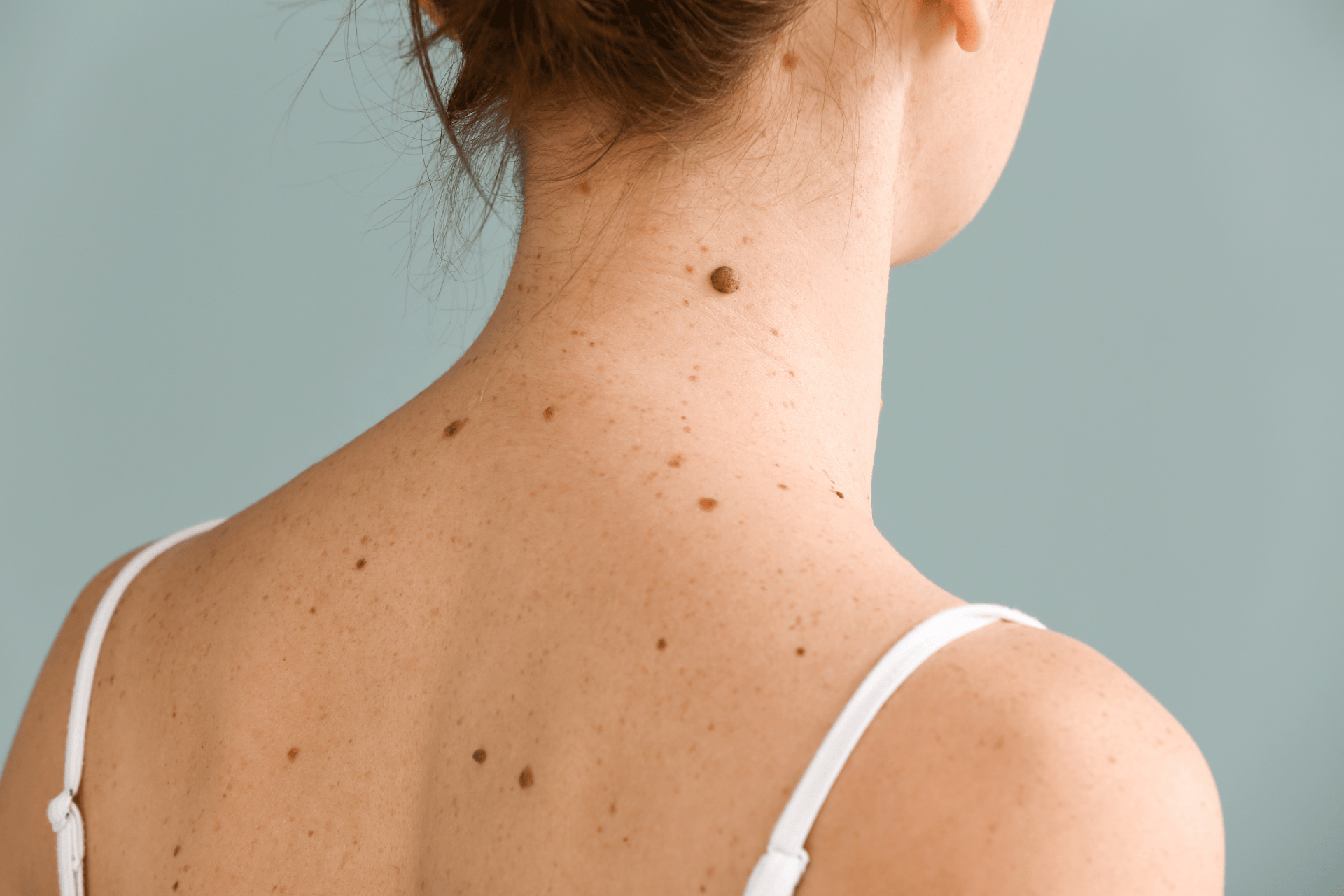
Most people have somewhere between 10 and 40 moles on their bodies by adulthood, and the vast majority are completely benign. An occasional itch from a mole is more common than most people realize, and the cause is usually mundane.
Common benign reasons a mole might itch include:
Friction from clothing or a bra strap rubbing directly over a raised mole can irritate the surrounding skin. The irritation triggers a mild inflammatory response that registers as itching.
Dry skin is another frequent culprit. When the skin dries out in winter or after long showers, the surface layer can tighten and flake, and a mole sitting in that area will itch along with everything else nearby.
Hormonal changes during puberty, pregnancy, or perimenopause cause the skin to stretch and shift. Moles can slightly enlarge during these periods, and this physical change can cause a temporary itching or tingling sensation.
Contact irritation from a new soap, sunscreen, or laundry detergent can cause localized dermatitis. If the product touches a mole, the mole may feel itchier than the surrounding skin because the texture difference traps more of the irritant.
Shaving over a raised mole is a common trigger, too, since the blade drags across the lesion, causing microtrauma and a lingering itch that fades within a day or two.
None of these situations is an emergency. The itch resolves on its own, and the mole remains visually unchanged.
Not all mole itching is benign. The concern arises when itching is accompanied by visible changes to the mole itself.
Melanoma, the most serious form of skin cancer, can develop within an existing mole or appear as a new lesion. As abnormal cells multiply, they alter the structure of the mole, and that structural change can produce sensations including itching, burning, or tenderness. Some people with early-stage melanoma report that the affected mole began itching months before any visible change was noticeable to them, though visible changes are typically detectable under dermoscopy by that point.
A mole that bleeds without being scratched or bumped is a more urgent signal. Bleeding indicates vascularization within the lesion, which is not a feature of a normal benign mole.
The key distinction: itching alone in a mole that looks exactly as it always has is unlikely to be melanoma. Itching, combined with any visual or tactile change, demands attention.
Dermatologists use the ABCDE framework to help patients and clinicians identify moles that warrant evaluation. Apply it any time a mole changes or causes symptoms.
Asymmetry: Draw an imaginary line through the center of the mole. In a benign mole, both halves roughly mirror each other. In a concerning mole, the two halves look noticeably different.
Border: Benign moles have smooth, well-defined edges. Irregular, notched, scalloped, or blurred borders are a flag.
Color: A single, uniform shade of brown or tan is typical. Multiple shades within one mole, or areas of red, white, blue, or very dark brown, indicate possible abnormality.
Diameter: Most benign moles are smaller than 6 millimeters across, roughly the diameter of a pencil eraser. Any mole that has grown beyond that threshold should be assessed.
Evolution: This is the most practically important criterion for itching. Any change in size, shape, color, texture, or sensation over weeks or months matters, and "itching where it didn't itch before" falls under evolution.
When a mole checks one or more of these boxes, a dermatologist needs to examine it, not because every such mole is cancer, but because only clinical examination and, when indicated, a biopsy can rule it out.
A few other benign situations produce mole itching that is worth understanding, so you do not alarm yourself unnecessarily.
Growing moles during adolescence are often itchy simply because the tissue is expanding. This is normal unless the growth is rapid or the ABCDE criteria are met.
A mole healing after minor trauma, such as catching on a zipper or being nicked while shaving, will itch during the repair process, just as any small wound does.
Seborrheic keratoses, which are rough, waxy skin growths often mistaken for moles, tend to itch more than true moles. If you have a growth you assumed was a mole, but it has a stuck-on, warty, or crumbly texture, it may be a seborrheic keratosis. These are benign but worth having identified correctly. An article comparing seborrheic keratosis and melanoma details the visual differences.
Atypical (dysplastic) nevi are moles that already have some irregular features. They are more likely than typical moles to itch, and people who have them should keep a closer eye on any new symptoms.
Resist the urge to scratch, especially if the mole is raised. Scratching can break the surface, introduce bacteria, and make it harder for a clinician to visually assess the lesion without the distraction of a healing abrasion.
Apply a gentle, fragrance-free moisturizer around (not on top of) a raised mole if dry skin seems to be the cause. For flat moles, moisturizer can be applied directly.
Photograph the mole in consistent lighting every two to three weeks. Use the same angle, and include something for scale, such as a ruler or coin. This record becomes immediately useful when speaking to a dermatologist.
Note any other changes: when the itching started, whether anything specific triggers or relieves it, whether the mole looks different from a month ago, and whether there is any bleeding or crusting.
See a dermatologist if the itch persists beyond two to three weeks without a clear benign explanation, or sooner if any ABCDE criteria are met. Do not wait months to see if it resolves on its own when a visual change is involved.
When you see a dermatologist for a suspicious mole, two tools may be used beyond a simple visual inspection.
Dermoscopy is a non-invasive technique in which the clinician uses a handheld, illuminated magnifier to visualize beneath the skin's surface. Features invisible to the naked eye, such as vascular patterns, pigment networks, and regression structures, become visible and help distinguish benign from potentially malignant lesions with significantly better accuracy.
Mole mapping is a full-body photographic documentation process used for patients with a large number of moles or a personal or family history of melanoma. High-resolution photographs of every mole are taken at baseline and compared at subsequent visits. Changes that would be nearly imperceptible year to year become visible when photographs are placed side by side. Patients with multiple atypical moles benefit most from this approach.
Both tools reduce unnecessary biopsies and help detect genuine changes early, significantly improving outcomes.
Not every concerning mole requires removal. The decision depends on the clinical picture.
A biopsy, in which a small sample of the mole is removed and examined under a microscope, is recommended when dermoscopy findings are ambiguous or when a mole meets multiple ABCDE criteria. A biopsy result takes several days to return and definitively confirms or rules out malignancy.
Complete excision (surgical removal) is recommended if the biopsy confirms abnormal or cancerous cells. The surgeon removes the mole along with a small margin of surrounding tissue to ensure all abnormal cells are cleared.
Some patients choose removal for benign moles that are repeatedly irritated by clothing, are in an awkward location for monitoring, or produce persistent discomfort. That is considered a cosmetic or practical choice rather than a medical necessity.
Stress does not directly cause moles to itch, but it can trigger skin conditions such as eczema or general pruritus that may make the skin around a mole feel irritated. If stress-related skin symptoms are widespread, the mole itching is likely part of a broader pattern rather than a sign specific to the mole itself.
Applying a low-strength hydrocortisone cream to the skin around a mole for contact irritation or dry skin is generally low risk, but it is not a substitute for evaluation. If the itch is coming from within the mole, or the mole is changing, no topical cream will address the underlying issue.
The timeline varies considerably. Some melanomas evolve over years, while a smaller subset, nodular melanomas in particular, can develop rapidly over weeks to months. This is why persistent symptoms or visible changes should not be observed indefinitely without a clinical opinion.
No. Many melanomas are asymptomatic in early stages, which is why the visual ABCDE criteria remain the primary screening tool. Itching is a possible but not universal symptom.
Yes, and most of the time it is benign. Children’s moles can itch for the same reasons as adults: friction, dry skin, growth spurts, or eczema-prone skin. If a mole itches repeatedly, bleeds, or looks different from other moles on the child’s body, it warrants a visit to a pediatric dermatologist.
An itchy mole is common and usually benign, often caused by something as simple as dry skin or friction from clothing. The situation changes when itching is accompanied by visible changes to the mole's appearance, texture, or borders. Using the ABCDE rule is a practical way to assess whether the mole needs professional attention. Photographing the mole regularly and monitoring for evolution gives you useful information to share with a clinician.
If you have a mole that has been itching and you are unsure whether it warrants a visit, Doctronic.ai lets you describe your symptoms and share a photo with a licensed provider who can help you decide on next steps, without the wait.
Why Moles Sometimes ItchMost people have somewhere between 10 and 40 moles on their bodies by adulthood, and the vast majority are completely benign. An occasional itch from [...]
Read More
Join 50,000+ readers using Doctronic to understand symptoms, medications,
and next steps.
Add your phone number below to get health updates and exclusive VIP offers.
By providing your phone number, you agree to receive SMS updates from Company. Message and data rates may apply. Reply “STOP” to opt-out anytime. Read our Privacy Policy and Terms of Service for more details.
Save your consults. Talk with licensed doctors and manage your health history.
