Diseases and Conditions
Omeprazole Side Effects Timeline: Week by Week Guide
May 17, 2026
5 min read

Medically reviewed by Oghenefejiro Okifo | MD, Harvard Medical School | Henry Ford Hospital - Detroit, MI on April 11th, 2026.
Published on April 9th, 2026. Updated on July 23rd, 2026.
Eczema is not contagious. You cannot catch it from another person through touch, shared items, or any form of contact.
The condition stems from a combination of genetic skin barrier dysfunction and immune system overactivity, not an infectious agent.
Common triggers include dry air, heat, sweat, certain fabrics, soaps, and stress. Identifying yours is the most effective way to reduce flares.
Eczema-affected skin can develop secondary bacterial or viral infections that are contagious. Eczema herpeticum, caused by the herpes simplex virus, is a medical emergency.
Doctronic.ai offers telehealth evaluations for eczema. You can get a personalized assessment from a licensed provider without leaving home.
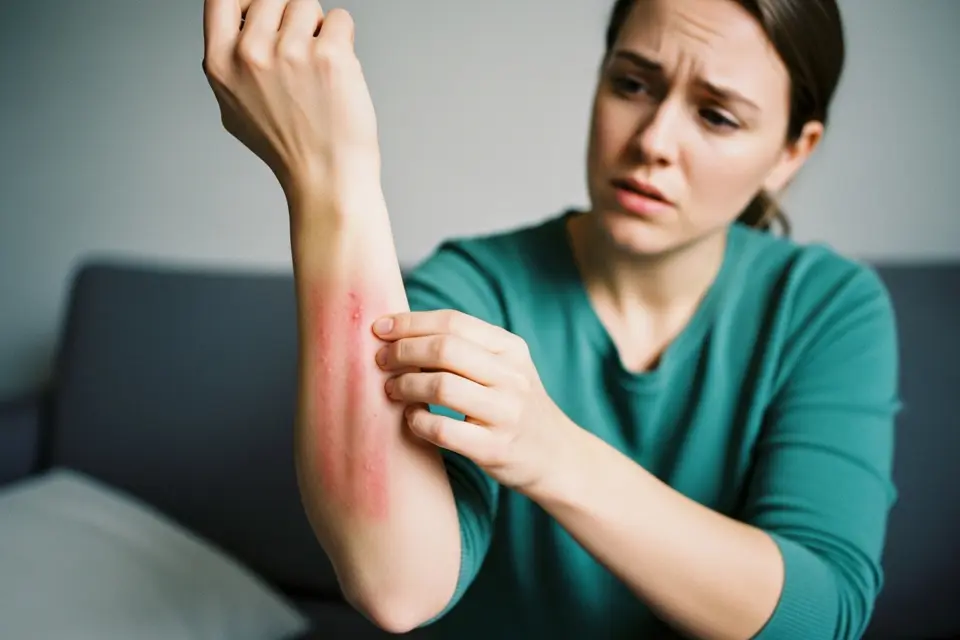
When eczema flares, the skin can look alarming. Red, weeping, crusted patches on the arms, neck, or face may resemble infectious conditions like impetigo or ringworm. Parents of children with visible flares often field questions from teachers or other parents about whether the rash is contagious.
The confusion is understandable. Many rashes that look similar, such as scabies or cellulitis, do spread through contact. But eczema is fundamentally different: there is no pathogen driving it. No bacteria, no virus, no fungus. Nothing transmissible.
Atopic dermatitis cannot spread from person to person. It is a non-contagious, chronic skin condition with genetic and environmental roots. Eczema develops from the inside out, not from exposure to someone else's skin.
Eczema, particularly atopic dermatitis (the most common form), develops when two systems go wrong at the same time: the skin barrier and the immune response.
Healthy skin holds moisture in and keeps irritants out. People with eczema often carry mutations in the gene that encodes filaggrin, a protein essential for skin barrier function. Without sufficient functional filaggrin, the outermost layer of the skin becomes porous. Moisture escapes. Allergens and irritants enter. The result is chronically dry, reactive skin that is primed to flare with minimal provocation.
Alongside the barrier defect, the immune system behaves abnormally. In eczema, it mounts an exaggerated inflammatory response to stimuli that would go unnoticed in unaffected skin. This response produces the redness, swelling, and intense itch that define a flare.
This combination, barrier failure plus immune dysregulation, is inherited. If both parents have eczema or other atopic conditions like asthma or hay fever, the likelihood of a child developing eczema increases substantially.
Having eczema does not mean flares are inevitable. Most people can reduce their frequency and severity once they identify their personal triggers. These vary by individual, but some appear consistently across those with the condition.
Dry air, particularly in winter, strips the skin of moisture and further compromises the skin barrier. Central heating makes this worse. A humidifier in the bedroom can help.
Irritants in everyday products are a major driver. Fragranced soaps, detergents, shampoos, and cleaning products all contain chemicals that penetrate compromised skin and provoke inflammation. Unscented, dye-free formulations are generally better tolerated.
Allergens, both airborne and food-based, can trigger immune activity that manifests as a skin flare. Dust mites, pet dander, pollen, and mold are common culprits. Food triggers are more prevalent in children than adults, but can affect both.
Heat and sweat are underappreciated triggers. Sweat increases skin pH and introduces salt, which irritates already sensitive skin. Overheating during exercise or sleep can precede a flare by hours.
Scratchy or synthetic fabrics, especially wool and certain polyester blends, cause friction and trap heat. Loose, breathable cotton clothing tends to be better tolerated.
Stress does not cause eczema, but it reliably worsens it. The inflammatory hormones released during stress, particularly cortisol dysregulation in chronic stress, can disrupt immune balance and lower the threshold for a flare.
Here is the important nuance: eczema itself cannot spread, but infections that colonize eczema-affected skin can.
Broken skin invites bacteria. Staphylococcus aureus colonizes the skin of most people with atopic dermatitis, and it can cause active infection in open sores. Signs include honey-colored crusting, increased warmth, pus, and worsening inflammation that does not respond to usual care. The staph infection itself can spread to others through direct skin contact or shared items.
This is the more serious complication. If the herpes simplex virus (HSV-1, the same virus that causes cold sores) comes into contact with skin affected by eczema, it can spread rapidly across large areas of skin. The result is eczema herpeticum: clusters of painful, punched-out blisters that appear suddenly, often accompanied by fever and swollen lymph nodes.
Eczema herpeticum is a medical emergency. It requires urgent antiviral treatment, typically with oral or intravenous acyclovir. Left untreated, the infection can spread to the eyes and, in severe cases, to internal organs. If you or your child has eczema and develops sudden clusters of blisters with fever, seek emergency care immediately.
The herpes simplex virus in someone with eczema herpeticum can spread to others. People with active cold sores should avoid close contact with anyone who has eczema, particularly infants and young children.
Management is not about curing eczema, which has no permanent cure, but about keeping flares infrequent and mild.
Moisturizing consistently is the cornerstone of eczema care. Thick creams and ointments work better than thin lotions for barrier repair. Applying moisturizer within a few minutes of bathing, while skin is still slightly damp, locks in hydration. The best lotions for eczema prioritize ingredients like ceramides, colloidal oatmeal, and shea butter over fragrances or alcohol.
Topical corticosteroids reduce inflammation during flares. They come in varying strengths and are matched to the severity of the flare and the location on the body. Face and skin folds require lower-potency options than thicker skin on the legs or trunk.
Calcineurin inhibitors, such as tacrolimus and pimecrolimus, are non-steroidal prescription options that work particularly well on sensitive areas like the face and eyelids, where long-term steroid use carries more risk.
For moderate-to-severe cases that do not respond to topical treatments, biologics and JAK inhibitors offer newer approaches. These systemic medications target specific components of the immune response driving the inflammation.
Wet wrap therapy, a technique involving dampened fabric over moisturizer and medication, can help during severe flares and is often used in children.
Some situations with eczema require professional evaluation rather than self-management.
See a provider if your eczema is worsening despite consistent moisturizing and avoidance of known triggers. If you have been using topical steroids for more than two weeks without improvement, a reassessment is warranted.
Signs of infection, including spreading redness, warmth, pus, or honey-colored crusting, require prompt medical attention. As noted above, sudden blistering accompanied by fever requires immediate emergency care.
Children with eczema may need to be evaluated for food allergies if flares consistently follow certain meals. Patch testing can identify contact allergens that are not obvious from history alone.
Telehealth is a practical option for eczema evaluation, particularly for adults with mild-to-moderate symptoms in accessible locations. A provider can review photos, discuss triggers, and prescribe treatment without requiring an in-person visit.
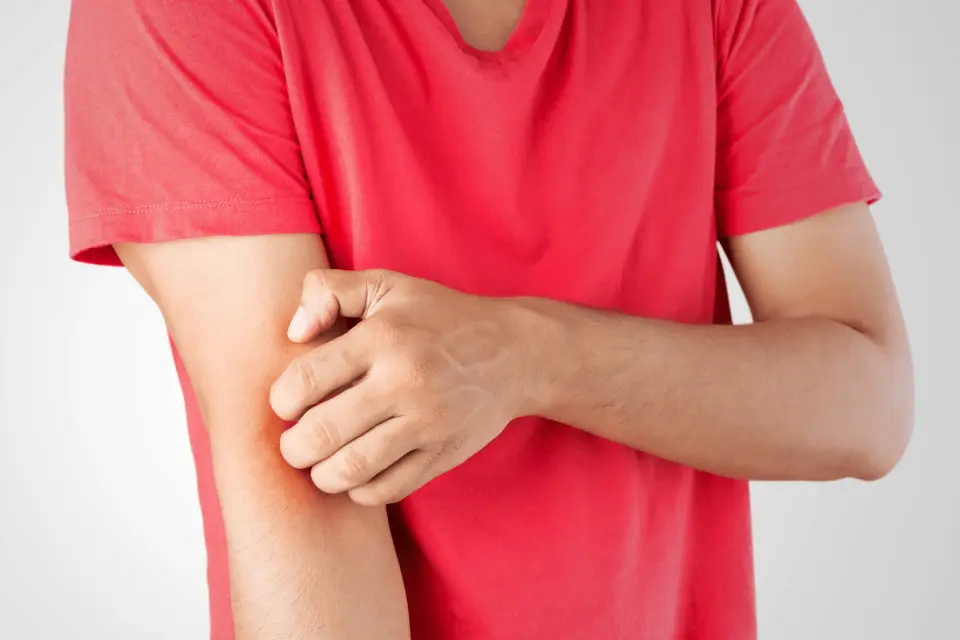
No. Eczema is not caused by a pathogen and cannot be transferred from one person to another through any form of contact. If you touch someone’s eczema-affected skin during a flare, you will not develop eczema as a result.
Eczema flares can produce weeping, crusted skin that closely resembles bacterial infections like impetigo. Sometimes it is both: the eczema is flaring and a secondary staph infection has developed. If the skin looks more crusty or wet than usual, or if your child seems unwell, have it evaluated rather than assuming it is just eczema.
Yes, to a significant degree. Eczema has a strong genetic component, particularly involving variants of the filaggrin gene that affect skin barrier function. Having one or both parents with eczema, asthma, or seasonal allergies increases a child’s likelihood of developing atopic dermatitis.
Eczema can appear in new locations over time, particularly with new exposures to triggers or changing immune patterns. This is not the eczema “spreading” in an infectious sense. It is the same underlying condition expressing itself in additional areas. Scratching heavily affected skin and then touching other areas can, however, transfer irritants and worsen inflammation elsewhere.
It typically appears as clusters of small, uniform blisters with a punched-out appearance. They often start in an area already affected by eczema and spread rapidly. The blisters may ooze or become crusty, and they are usually accompanied by fever, chills, and swollen lymph nodes. This is a medical emergency and requires immediate care.
Yes. While most cases begin in childhood, adult-onset eczema does occur. It may be triggered by new exposures to contact allergens, climate changes, stress, or occupational exposures. Adult-onset eczema often appears on the hands.
Eczema is not contagious. It develops from within: a combination of inherited skin barrier defects and immune dysregulation that no one can pass to another person. What can spread is a secondary infection in eczema-affected skin, particularly bacterial infections or, most seriously, eczema herpeticum caused by the herpes simplex virus.
Managing eczema means understanding your triggers, maintaining a consistent moisturizing routine, and using appropriate medications during flares. For many people, telehealth provides a convenient path to evaluation and prescription treatment. Doctronic.ai connects you with licensed providers who can assess your eczema, recommend treatment, and help you build a management plan tailored to your skin.
Get skin care advice
Chat Now
Join 50,000+ readers using Doctronic to understand symptoms, medications,
and next steps.
Add your phone number below to get health updates and exclusive VIP offers.
By providing your phone number, you agree to receive SMS updates from Company. Message and data rates may apply. Reply “STOP” to opt-out anytime. Read our Privacy Policy and Terms of Service for more details.
Save your consults. Talk with licensed doctors and manage your health history.