Mental Health
How to Calm an Anxiety Attack: Techniques That Work in the Moment
April 17, 2026
6 min read

Medically reviewed by Oghenefejiro Okifo | MD, Harvard Medical School | Henry Ford Hospital - Detroit, MI on April 26th, 2026.
Published on April 9th, 2026. Updated on July 24th, 2026.
Most people who skip sunscreen cite the white cast, greasy texture, or heavy feel as the main reasons, but modern formulations have largely solved these problems
Chemical sunscreen filters are absorbed into skin and convert UV rays into heat, leaving no visible residue and making them the traditional go-to for a "no-trace" finish
Micronized zinc oxide and newer next-generation UV filters like Tinosorb S and Tinosorb M offer mineral-level safety with significantly reduced white cast
Oily skin does best with gel or fluid formulas, dry skin benefits from moisturizing SPF, and darker skin tones should look for tinted or chemical options to avoid ashiness
SPF in makeup or moisturizer rarely provides adequate protection on its own and should not replace a dedicated sunscreen step
If you experience a skin reaction to sunscreen ingredients, Doctronic.ai can connect you with a telehealth provider to identify the cause and recommend a tolerable alternative
Sunscreen is the most evidence-based tool for preventing skin cancer and premature aging, yet it remains used inconsistently. The reason is rarely a lack of understanding about UV damage. More often than not, it comes down to the wearing experience: thick white residue, heavy grease, a sticky finish, or an unpleasant scent. For people with darker skin tones, the white cast makes most mineral sunscreens genuinely unflattering and unusable for daily use.
If a product feels bad to wear, people do not wear it. Understanding what causes that unpleasant experience and what formulation science has done to address it helps in choosing products that disappear from the skin.
Visible residue is primarily a function of active ingredients and particle size. Traditional mineral sunscreens use zinc oxide and titanium dioxide, which are white opaque particles that sit on the skin surface and scatter UV light, producing the classic cast.
Chemical sunscreens work differently. Their actives (avobenzone, oxybenzone, octinoxate, octocrylene) penetrate the outermost layer of the skin and convert UV energy into heat, leaving no visible trace.
Formulation matters too. Lighter carriers like water, silicone, or light esters allow thinner textures. Gels and serums dry down quickly; fluids sit lighter than creams. The same active at the same concentration can feel dramatically different depending on how it is formulated.
Chemical filters remain the standard for invisible finish. They spread easily, absorb fully, leave no residue, and pair well with any makeup routine.
The main concern with oxybenzone and octinoxate relates to potential hormonal disruption and environmental impact (both are banned in several reef-protected regions). Understanding how chemical sunscreen works and who it suits best can help you weigh these tradeoffs. The FDA has not classified them as unsafe, but uncertainty has driven demand for alternatives. Formulas based on avobenzone, octocrylene, or homosalate are widely available. Newer European filters, including Tinosorb S, Tinosorb M, and Mexoryl SX, offer broader UV coverage with better photostability and are increasingly available in the US market.
Micronization has changed the white cast problem. Smaller zinc oxide or titanium dioxide particles scatter less visible light. Nano-particle formulas go further, though some prefer non-nano options due to ongoing questions about skin penetration.
Micronized mineral formulas can be nearly invisible on light to medium skin tones; on deeper tones, some residue typically remains. Tinted mineral sunscreens address this more reliably by counteracting the cast with pigments that blend across a wider range of tones.
Mineral options are often recommended for sensitive skin because actives sit on the surface rather than absorbing. They are also less likely to sting broken or inflamed skin, though some people find even micronized zinc formulas too chalky for daily use.
Oily skin benefits from lightweight textures that do not add to sebum production. Gel formulas, water-based fluids, and dry-touch finishes work well, as do chemical sunscreens with a matte finish or silica for oil absorption. Mineral formulas in a lightweight gel or emulsion base can also work, as long as they are not built on heavy creams. Avoid occlusive ingredients like petrolatum or heavy silicones to reduce the chance of clogged pores.
Dry skin does well with moisturizing SPF formulas that combine humectants (like hyaluronic acid or glycerin) and emollients with the sunscreen actives. These products serve a dual purpose, reducing the number of steps in a routine while providing hydration and UV protection. Cream-based formulas with a satin or natural finish tend to be most comfortable on dry skin throughout the day.
White cast is the most significant practical concern for people with medium to deep skin tones. Tinted mineral sunscreens are the most reliable solution: the mineral actives provide UV protection, and the iron oxide pigments in the tint counteract the white and grey cast while also blocking some visible light (which can contribute to hyperpigmentation). Chemical formulas are another straightforward option, as they leave no visible residue regardless of skin tone.
Universal tints have improved significantly, and some formulas now offer several shade options rather than a single "universal" tone that suits few people well.
Sensitive skin often responds better to fragrance-free, preservative-limited formulas with mineral actives, since chemical filters can cause stinging or allergic reactions in some individuals. Simple ingredient lists with fewer additives reduce the chance of a reaction. If a sunscreen causes redness, burning, or breakouts, the culprit may be a fragrance, a preservative, or a specific filter rather than the sunscreen category itself.
SPF ratings are tested at 2 mg/cm², roughly a quarter teaspoon for the face and neck or a full shot glass for the body. Most people apply far less, which substantially reduces effective SPF.
Apply sunscreen as the last step in your skincare routine before makeup, allow it to set for a few minutes, and reapply every 2 hours during sun exposure. Sweat and water require more frequent reapplication regardless of water-resistance claims. Choosing the right sunscreen depends on your skin type, activity level, and whether you need a formula that layers well under makeup.
SPF-labeled foundations, BB creams, setting powders, and moisturizers provide some UV protection, but rarely enough to rely on alone. The SPF number on a makeup product is tested at the same application thickness as a dedicated sunscreen, and most people apply far less makeup than that. A foundation with SPF 30, applied at a normal makeup thickness, may perform closer to SPF 5 or 10 in practice.
These products can add a meaningful supplemental layer over dedicated sunscreen, but they are not a replacement for it. Using a broad-spectrum SPF 30 or higher sunscreen as the foundation of UV protection, and then applying makeup over it, provides more consistent protection than relying on SPF in makeup products.
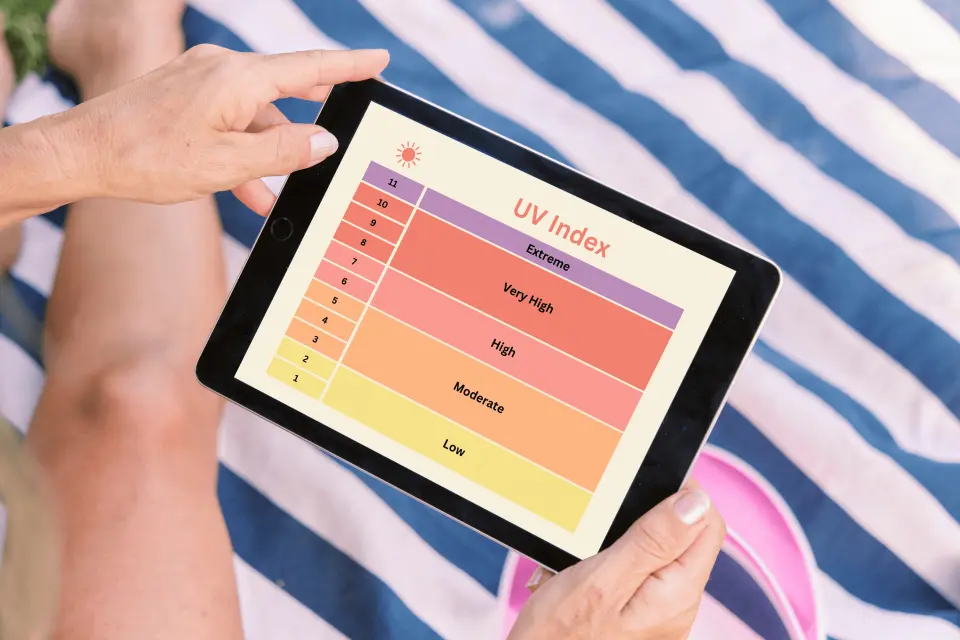
Broad-spectrum labeling indicates that a sunscreen protects against both UVA and UVB radiation. UVB rays are primarily responsible for sunburn and play a central role in the development of skin cancer. UVA rays penetrate more deeply, driving premature aging and contributing to skin cancer risk, and they pass through glass. Daily broad-spectrum protection addresses both.
The SPF number only measures UVB protection. A sunscreen can carry a high SPF while offering minimal UVA protection if it is not formulated for broad-spectrum coverage. Looking for "broad-spectrum" on the label is therefore as important as the SPF number itself. The Skin Cancer Foundation and AAD both recommend broad-spectrum SPF 30 or higher for daily use, and SPF 50 or higher for extended outdoor exposure.
Cumulative sun exposure over the years is what drives both photoaging and skin cancer risk, which is why daily protection matters even on overcast days.
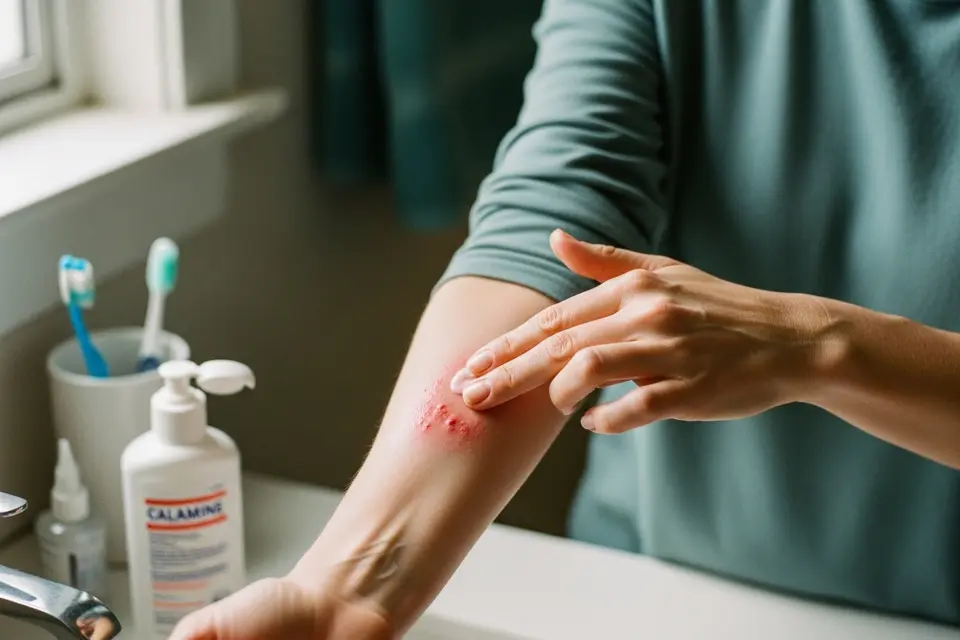
Some people experience contact dermatitis, stinging, redness, or breakouts when trying sunscreen products, which makes it harder to maintain a consistent routine. These reactions are usually triggered by a specific ingredient rather than sunscreen as a whole, but identifying the culprit often requires some investigation. Common triggers include fragrances, benzophenones, parabens, or specific chemical UV filters.
If reactions make it difficult to find a tolerable formula, a dermatology consultation can help narrow down the cause. Patch testing can identify specific sensitivities, and a provider can recommend formulation types or ingredients to seek out or avoid.
Doctronic.ai connects patients with licensed telehealth providers who can help evaluate skin sensitivity and sunscreen reactions without requiring an in-person visit.

Chemical UV filters absorb into the outer layer of skin rather than sitting on the surface, so they leave no visible residue. Mineral formulas using micronized zinc oxide or titanium dioxide can also be nearly invisible because smaller particles scatter less light. Formulation factors like texture, carrier ingredients, and finish also affect how much a product shows on the skin.
Yes. Chemical sunscreens leave no visible residue on any skin tone. Tinted mineral sunscreens are also a good option because the added pigment counteracts the white cast that zinc oxide and titanium dioxide create. Avoid untinted mineral sunscreens unless they are specifically formulated as sheer or universal tints.
For most people, yes. Chemical UV filters are widely used and generally well tolerated. Some filters like oxybenzone have drawn scrutiny over potential hormone disruption, though regulatory bodies have not concluded they are unsafe at normal use levels. If you prefer to avoid disputed ingredients, formulas based on avobenzone, octocrylene, or newer European filters like Tinosorb are available alternatives.
Pilling usually happens when too many product layers have not fully dried before the next one is applied, or when incompatible formulas (water-based and silicone-based products in certain combinations) interact. Allowing sunscreen to set for two to three minutes before applying makeup, and using products with compatible bases, typically resolves the issue.
No. Makeup is applied too thinly to deliver the SPF shown on the label. The SPF rating is measured at a much thicker application than most people use for foundation or powder. Sunscreen should be applied as a dedicated step, with makeup layered on top.
Every two hours during outdoor sun exposure, and immediately after swimming or heavy sweating. For typical indoor days with brief outdoor exposure, morning application may be sufficient, but any extended time outdoors requires reapplication.
Invisible sunscreen is no longer a compromise. Chemical formulas and modern mineral options using micronized zinc oxide or next-generation UV filters provide reliable broad-spectrum protection without a visible trace on most skin types. The key is matching the formulation type to your skin's needs: lightweight gels for oily skin, moisturizing SPF for dry skin, and tinted or chemical options for darker skin tones where white cast is a concern. Apply enough, reapply when needed, and do not rely on SPF in makeup as a substitute for a dedicated sunscreen.
If a skin sensitivity or reaction is getting in the way of consistent sunscreen use, Doctronic.ai connects you with telehealth providers who can help identify the issue and find a formula that works for your skin.
Get skin care advice
Chat Now
Join 50,000+ readers using Doctronic to understand symptoms, medications,
and next steps.
Add your phone number below to get health updates and exclusive VIP offers.
By providing your phone number, you agree to receive SMS updates from Company. Message and data rates may apply. Reply “STOP” to opt-out anytime. Read our Privacy Policy and Terms of Service for more details.
Save your consults. Talk with licensed doctors and manage your health history.