Bone & Joint Health
What Is a Dangerously High Calcium Level and What Does It Mean?
July 21, 2026
6 min read

Medically reviewed by Lauren Okafor | MD, The Frank H Netter MD School of Medicine, Loyola University Medical Center on April 19th, 2026.
Published on April 9th, 2026. Updated on July 23rd, 2026.
Ligaments cannot heal overnight, but you can dramatically reduce swelling and pain within 24 to 48 hours by acting quickly with compression, elevation, and the POLICE protocol.
The single most important thing you can do in the first hour is apply compression and elevate the ankle above heart level to limit fluid accumulation.
Early, controlled movement speeds recovery more than complete rest, which is one of the most significant shifts in sports medicine thinking over the past decade.
Heat, alcohol, and walking normally on a sprained ankle in the first 48 hours are the most common mistakes that extend recovery time.
A grade 1 sprain can realistically feel much better within 3 to 5 days; a grade 2 typically takes 3 to 6 weeks; a grade 3 may take months.
Doctronic.ai offers telehealth injury assessments so you can get guidance on your ankle sprain without leaving home.
Ligaments do not heal overnight. They have a limited blood supply compared to muscle tissue, and even a mild grade 1 sprain involves microscopic tearing of collagen fibers that requires days to weeks of biological repair. No product, wrap, or supplement changes this underlying biology.
What you can accomplish in the first 24 to 48 hours is meaningful: dramatically limiting swelling, reducing pain, and creating the best possible conditions for efficient ligament repair. That is where the difference between a 3-day recovery and a 3-week recovery often lives.
The fastest recoveries do not come from magic solutions. They come from doing the right things immediately and consistently in the first few days.
The inflammatory response begins within minutes of injury. Fluid rushes to the ankle to protect the joint, and while some inflammation is necessary for healing, excess swelling slows recovery and increases pain.
Compression and elevation in the first hour limit how much fluid accumulates before the soft tissue becomes saturated. This is the single most time-sensitive step. Every hour you wait with an uncompressed, hanging ankle allows more swelling to build that will take days to resolve.
Modern sports medicine has moved beyond the old RICE method toward POLICE: Protection, Optimal Loading, Ice, Compression, and Elevation.
Protection means avoiding movements that cause sharp pain and using a brace or wrap to stabilize the joint, not complete immobilization.
Optimal Loading replaces the old "rest" instruction. Controlled movement and gentle weight-bearing promote collagen remodeling and speed functional recovery.
Ice applied for 15 to 20 minutes every 2 to 3 hours reduces pain and allows earlier movement.
Compression with an elastic bandage from the toes to the mid-calf controls swelling. Wrap firmly but not so tight that circulation to the toes is compromised.
Elevation above heart level requires lying down with the foot raised, not just propping it on a chair.
The inflammatory response in the first 72 hours is part of the healing signal. Taking NSAIDs routinely from the moment of injury may blunt this signal. Some sports medicine research suggests holding ibuprofen for the first 24 to 48 hours unless pain is unmanageable, then using it strategically to reduce persistent swelling and allow earlier movement. Acetaminophen handles pain without the anti-inflammatory effect and can be used from the start.
Propping the ankle on an ottoman is not true elevation. The ankle must be above heart level, which requires lying down with the foot elevated. Maintain this position as consistently as possible during the first 24 to 72 hours, including while sleeping.
One of the most important shifts in ankle sprain first aid is the move away from immobilization toward early, controlled movement. Ankle alphabet exercises (tracing each letter in the air with the foot), gentle circles, and towel scrunches can begin within 24 to 48 hours of injury.
Early movement maintains joint range of motion, stimulates tissue remodeling, and prevents the stiffness that makes later rehab harder. The key is pain-guided loading: movement that causes mild discomfort is typically fine, but movement that reproduces sharp or severe pain should be avoided.
Complete rest is appropriate for grade 3 sprains. For grade 1 and most grade 2 sprains, walking as tolerated with a supportive brace is better than staying off the foot entirely. Crutches can bridge the first day or two when pain makes weight-bearing difficult, but the goal is to transition off them as soon as possible. The ankle heals through loading, not despite it.
Heat increases blood flow and vasodilation. During the acute inflammatory phase, applying heat amplifies swelling. This is one of the most common mistakes people make, particularly those who find ice uncomfortable. Heat can be used after 72 hours to loosen stiff tissue before exercise, but not before.
Alcohol dilates blood vessels and contributes to increased swelling. It also impairs sleep quality, during which the majority of tissue repair occurs. Even moderate alcohol use in the first week of a sprain can meaningfully extend recovery.
The instinct to "push through" and walk as if the ankle is fine causes repeated microtrauma to the injured ligament. The ligament needs protection and controlled loading, not normal high-speed ambulation that stresses it repeatedly. An ankle brace or lace-up support stabilizes the joint and prevents the side-to-side motion that re-injures healing fibers.
The most reliable predictor of repeated ankle sprains is incomplete rehab, not the original injury. After swelling resolves, the ligament may appear healed, but proprioception (the ankle's ability to sense joint position) remains disrupted. Without targeted balance and strength work, the next sprain happens sooner and often more severely.
Knowing what is realistically achievable helps set expectations and avoid the frustration of expecting overnight results.
Grade 1 sprains involve microscopic tearing of fibers. With immediate treatment and early movement, pain and swelling improve noticeably within 3 to 5 days. Full recovery takes 1 to 3 weeks.
Grade 2 sprains involve partial tearing and some instability. Significant improvement takes 1 to 2 weeks, but the ligament needs 3 to 6 weeks to regain full strength. Rushing back before this window closes is the primary cause of chronic ankle instability.
Grade 3 sprains involve complete ligament rupture. Recovery takes 3 to 6 months and often requires physical therapy, a walking boot, and sometimes surgical evaluation.
Get ankle pain treatment online today
A licensed doctor can review your symptoms and send a prescription to your pharmacy, often the same day.
Related medications we prescribe
Learn moreResearch on early mobilization in ankle sprains is well-established. Immobilization leads to muscle atrophy, joint stiffness, and prolonged return-to-function timelines. Controlled movement, even when the ankle is still tender, produces better outcomes than cast immobilization at both short and long-term follow-up.
Mechanical loading stimulates fibroblasts (the cells responsible for collagen repair) and signals the body to produce organized, functional collagen rather than the disorganized scar tissue that forms with complete rest. Early movement also maintains proprioception, which immobilization degrades rapidly.
Gentle, guided loading within pain tolerance is not just acceptable but beneficial for most sprains, and is what produces the fastest meaningful recovery.
Ice reduces pain and may modestly limit initial swelling, but it does not directly speed healing. Its value is pain management: less pain allows earlier movement, which speeds recovery.
Apply a cloth-wrapped ice pack for 15 to 20 minutes every 2 hours during the first 24 to 48 hours. Never apply ice directly to the skin, and do not ice for more than 20 minutes per session. Compression wrapping between icing sessions helps control swelling, and proper first aid for sprains in the first hour makes a measurable difference in recovery speed.
Most ankle sprains do respond to home care within the expected timeframes. But some presentations require professional evaluation rather than home treatment.
Signs that warrant imaging or in-person assessment include:
Inability to bear any weight immediately after injury
Pain directly over the tip of the fibula or the base of the fifth metatarsal (the bony bump on the outside of the midfoot), which suggests a possible fracture
Significant numbness or tingling in the foot or toes
Swelling that is severe, spreading rapidly, or not improving after 48 to 72 hours
An ankle that feels unstable or "gives way" when you try to walk
No meaningful improvement after 5 to 7 days of consistent home treatment
The Ottawa Ankle Rules are a validated clinical tool for determining whether X-ray is needed after an ankle injury. Applying pressure to specific bony landmarks and assessing weight-bearing ability can guide whether a fracture needs to be ruled out.
If any of these apply, getting evaluated sooner rather than later prevents a minor delay from becoming a major setback. For many people, urgent care for a sprained ankle provides prompt imaging and a treatment plan without the cost and wait of an emergency department.
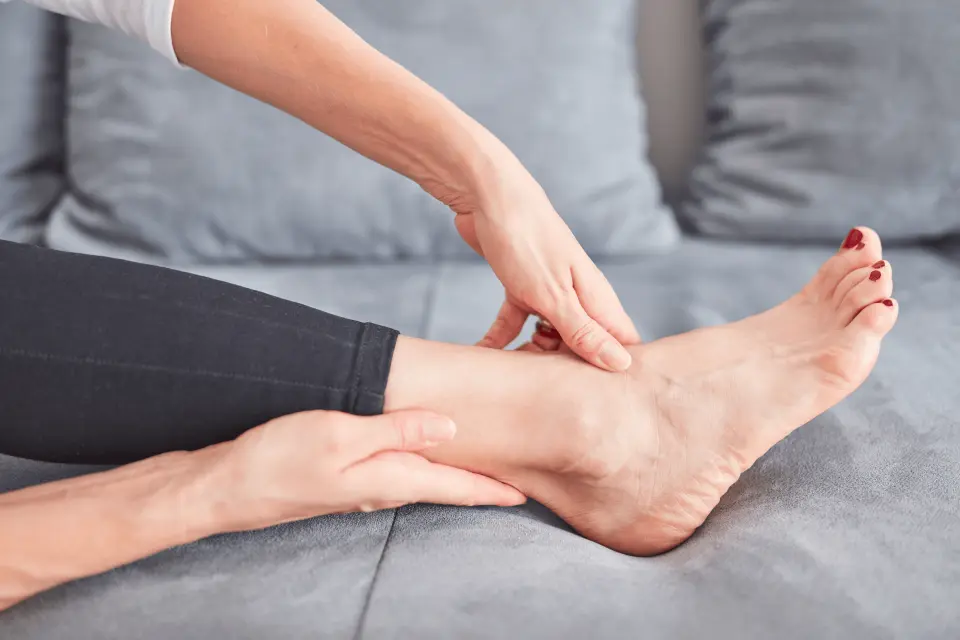
The ligament itself cannot heal overnight. Collagen repair takes days to weeks, depending on severity. What is possible overnight is a meaningful reduction in swelling and pain when compression, elevation, and ice are applied immediately and consistently.
Inability to bear weight, pain directly over the ankle bones, numbness, severe swelling that is not improving, or a sensation of instability are key signs that warrant imaging and professional evaluation. The Ottawa Ankle Rules are the clinical standard for this decision.
For grade 1 sprains and most grade 2 sprains, walking as tolerated with a brace is better than complete rest. Gentle loading promotes healing. However, walking without support and without limiting painful motions prolongs recovery.
Ice is appropriate for the first 48 to 72 hours to manage pain and limit swelling. After the acute phase resolves, gentle heat before movement can help with stiffness. Never apply heat during the acute inflammatory phase, as it worsens swelling.
With immediate compression and consistent elevation, swelling can improve noticeably within 24 to 48 hours. Complete resolution of swelling typically takes 1 to 2 weeks for mild sprains and longer for moderate to severe injuries.
RICE (Rest, Ice, Compression, Elevation) was the standard for decades. POLICE replaces “Rest” with “Protection” and “Optimal Loading,” reflecting evidence that controlled movement outperforms complete rest for ankle sprain recovery.
Healing a sprained ankle fast starts within the first hour: compress and elevate immediately, apply ice for pain management, protect the joint with a brace, and begin gentle movement within 24 to 48 hours. Avoid heat, alcohol, and unsupported walking in the acute phase, and complete rehabilitation exercises before returning to full activity.
The gap between a 5-day recovery and a 5-week recovery almost always comes down to what happens in the first 48 hours and whether rehab is finished.
For a personalized injury assessment or to find out whether your sprain needs imaging, Doctronic.ai connects you with licensed providers via telehealth any time of day.
Get pain relief advice
Chat Now