Healthy Living
What UV Index Do You Need to Tan? The Science Behind Safe Sun Exposure
April 17, 2026
7 min read

Medically reviewed by Lauren Okafor | MD, The Frank H Netter MD School of Medicine, Loyola University Medical Center on April 14th, 2026.
Published on April 6th, 2026. Updated on September 11th, 2026.
The body's stress response (fight-or-flight) was designed for short-term threats, not the chronic, low-grade pressure most people face daily.
Techniques like diaphragmatic breathing, progressive muscle relaxation, and mindfulness meditation have measurable physiological effects that counteract the stress response.
"Just relax" fails because the nervous system doesn't respond to instructions; it responds to specific physical and behavioral cues.
Regular aerobic exercise, cold water exposure, and time in nature each produce distinct neurochemical changes that lower baseline stress levels.
When stress feels unmanageable or lasts weeks at a time, a clinician can evaluate whether anxiety or another condition is involved. Doctronic.ai connects you with a provider quickly, without waiting for an in-person appointment.
Most people have been told to relax at exactly the wrong moment, when the body is fully primed for threat. The instruction fails because the sympathetic nervous system, the branch responsible for fight-or-flight, does not take direction from conscious thought. Once activated, it stays on until the body receives physiological signals that the threat has passed.
The cascade looks like this: the brain's amygdala detects a stressor, real or perceived, and sends a signal to the hypothalamus, which activates the adrenal glands. Cortisol and adrenaline (epinephrine) flood the bloodstream. Heart rate climbs, breathing becomes shallow and fast, muscles tense, and digestion slows. Blood is redirected away from the prefrontal cortex, the part of the brain responsible for rational decision-making, toward the muscles and sensory organs.
This system is brilliant for outrunning predators. It is poorly suited to email backlogs and financial stress, where the threat never fully resolves and the activation never fully switches off. Understanding how stress affects health at a physiological level helps explain why evidence-based techniques work better than willpower.
A single stressful event triggers a sharp cortisol spike that should normalize within an hour or two. With chronic stress, cortisol levels never fully return to baseline. Elevated cortisol over weeks or months suppresses immune function, disrupts sleep architecture, increases blood pressure, and accelerates cardiovascular disease risk. It also impairs hippocampal memory and contributes to anxiety and depression.
Adrenaline creates a faster-acting but shorter-lived version of this response. Where cortisol operates on a timescale of hours, adrenaline acts in seconds. Together, they create both the immediate sensation of being wired and the grinding exhaustion that comes from staying in that state too long.
None of this is a character flaw. It is a biological system doing exactly what it was built to do, just in a context it was never designed for.
The techniques below have been studied in randomized controlled trials and consistently produce measurable reductions in cortisol, heart rate, and self-reported anxiety. They work by activating the parasympathetic nervous system (the "rest-and-digest" counterpart to fight-or-flight) or by depleting the stress hormones through physical action.
Slow, belly-led breathing is one of the fastest ways to shift the autonomic nervous system toward the parasympathetic state. The mechanism involves the vagus nerve, which runs from the brainstem to the abdomen and carries signals in both directions. Slow exhalations activate vagal tone and send a "safe" signal to the brain.
Two well-researched protocols:
4-7-8 breathing: Inhale through the nose for 4 counts, hold for 7 counts, exhale through the mouth for 8 counts. Repeat 4 times. The extended exhale is the active ingredient.
Box breathing: Inhale for 4 counts, hold for 4, exhale for 4, hold for 4. Used by the US Navy SEALs to manage acute stress, this pattern is particularly useful in high-pressure situations.
Developed by physician Edmund Jacobson in the 1920s, progressive muscle relaxation (PMR) involves systematically tensing and releasing muscle groups throughout the body. The logic is counterintuitive: by deliberately creating tension, you increase awareness of the contrast when you release it. Over time, the body learns to identify and release habitual holding patterns.
A standard PMR session takes 15 to 20 minutes and moves from feet to face, or face to feet. Consistent practice over two to four weeks produces measurable reductions in anxiety and improves sleep onset in people with insomnia.
Mindfulness meditation involves sustained, non-judgmental attention to present-moment experience, typically the breath, body sensations, or sounds. The practice does not suppress stress; it changes the relationship to it. Regular practitioners show reduced amygdala reactivity to stressors, greater gray matter density in the prefrontal cortex, and lower baseline cortisol.
Eight weeks of mindfulness-based stress reduction (MBSR), the most studied protocol, produces significant reductions in anxiety, depression, and perceived stress in clinical populations. Even shorter daily practices of 10 to 15 minutes show measurable effects when maintained consistently.
The key is consistency over duration. Ten minutes daily outperforms an occasional 45-minute session.
Exercise is arguably the most evidence-supported intervention for stress. Aerobic activity uses the cortisol and adrenaline that the stress response produces, completing the biological cycle that those hormones were designed to facilitate. After a run or a fast walk, the body metabolizes those stress hormones rather than allowing them to circulate indefinitely.
Exercise also increases brain-derived neurotrophic factor (BDNF), which supports hippocampal neurogenesis and counteracts some of the cognitive damage from chronic stress. Endorphins contribute to mood elevation. Even 20 to 30 minutes of moderate-intensity cardio, three to five times per week, produces significant and lasting reductions in anxiety symptoms.
Resistance training shows similar benefits. It does not need to be intense or lengthy to work.
Brief cold water exposure (cold showers lasting 30 to 90 seconds, or cold water face immersion) activates the dive reflex, a hardwired parasympathetic response that slows heart rate and redistributes blood flow. It also produces a sharp, short-lived norepinephrine spike that, paradoxically, reduces anxiety over time through habituation.
Cold exposure is not a replacement for other interventions, but it is a fast-acting tool for acute stress. Consistent morning cold showers have been associated in observational studies with improved mood and resilience to psychological stressors.
Spending time in natural environments consistently reduces cortisol, blood pressure, and sympathetic nervous system activity. Japanese researchers have studied this under the term "forest bathing" (Shinrin-yoku). Walking through natural settings, even urban parks, produces measurable stress hormone reductions after 20 minutes.
The effect appears to be partly visual (natural scenes activate the parasympathetic system differently than urban environments) and partly related to reduced sensory overload. Nature exposure is additive with exercise and mindfulness; all three together compound the benefit.
Scrolling through news or social media maintains low-grade amygdala activation. Headlines are optimized for emotional salience (urgency, threat, outrage) because that content drives engagement. Each emotionally charged stimulus triggers a small stress response, and many of these in sequence keep the sympathetic nervous system in a semi-activated state.
Practically, this means:
Setting a defined window for news consumption (one 20-minute block, not intermittent checking)
Keeping phones out of the bedroom to protect sleep
Replacing evening screen time with a lower-stimulation activity (reading, stretching, conversation)
The goal is not to ignore the world. It is to interact with information on your terms, not an algorithm's.
Telling someone to relax is like telling them to manually lower their blood pressure. The command arrives at the prefrontal cortex, but the stress response is running in subcortical structures that predate conscious thought by hundreds of millions of years.
Relaxation is a skill, not a decision. It requires practicing specific behaviors until the nervous system learns to associate them with safety. This is why techniques feel awkward or ineffective at first and improve with repetition. The brain is literally building new associations between the behavior and the parasympathetic state.
It also helps to understand that wanting to relax but being unable to is not a failure. It is evidence that the nervous system is doing its job, just too aggressively for the current context.
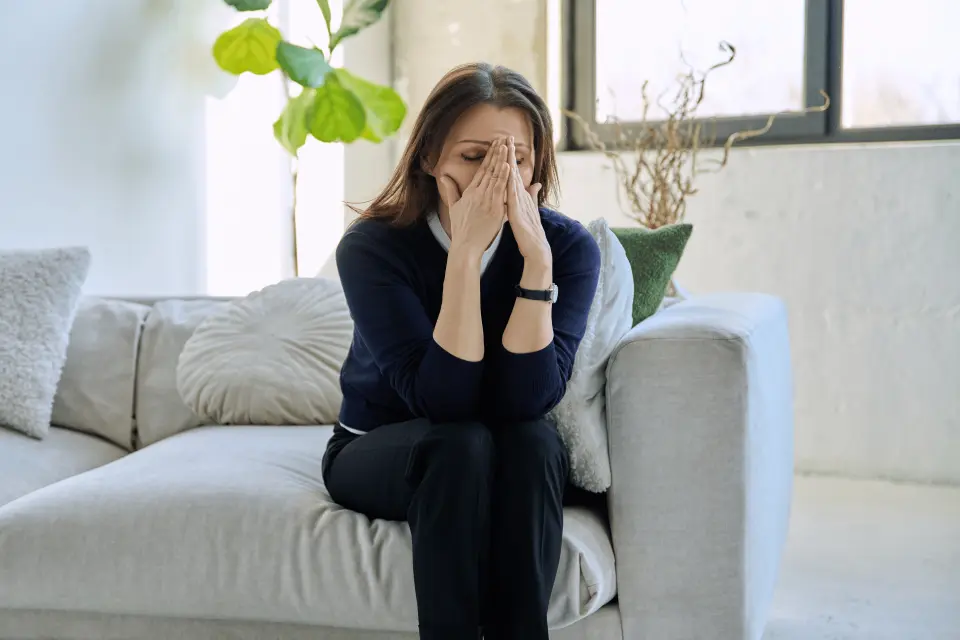
Occasional stress is universal. When it becomes the baseline, when symptoms persist for weeks, when it interferes with sleep, work, or relationships, something more than a breathing exercise may be needed.
Generalized anxiety disorder (GAD), panic disorder, and adjustment disorders all produce stress-like symptoms that do not respond to self-care alone. These are treatable conditions. The same is true of burnout, which can present as emotional numbness and fatigue rather than the hyperarousal most people associate with stress.
If your anxiety makes certain situations feel unmanageable, or if you are wondering whether medication might help, it is worth talking to a provider. A question as specific as can urgent care prescribe anxiety medication reflects how common it is to reach a point where self-management is not enough.
Consistent use of the relaxation techniques described above produces meaningful results for most people. But meaningful does not mean complete, and professional evaluation is appropriate when the stress response feels stuck in the on position.
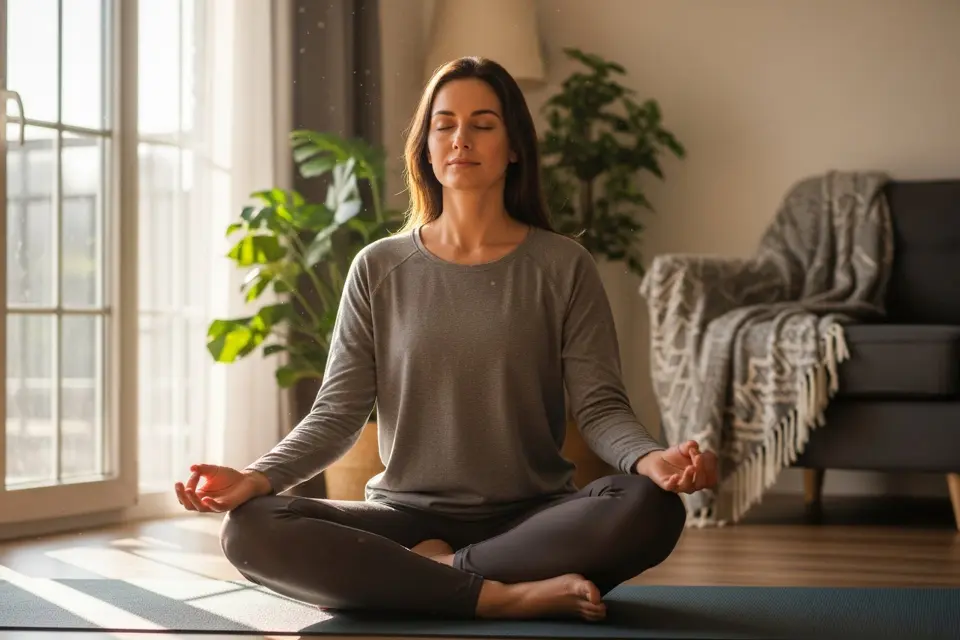
Some methods like box breathing produce immediate physiological changes. Mindfulness meditation and progressive muscle relaxation require consistent practice over two to four weeks before producing significant, sustained improvements in baseline anxiety.
Morning practice tends to set a calmer physiological baseline for the day. Evening practice, particularly diaphragmatic breathing or PMR, can improve sleep onset. The most effective time is whichever one you will actually maintain consistently.
High-intensity exercise performed when already overstressed can temporarily elevate cortisol. Moderate-intensity aerobic exercise (a brisk walk, easy cycling, swimming) is consistently beneficial even during high-stress periods. Save intense training for days when the baseline feels manageable.
Chronic stress is a response to ongoing external demands, though it can feel identical to anxiety from the inside. Anxiety disorders involve excessive worry or fear that persists independently of external stressors and often interferes significantly with daily function. A clinician can help distinguish between the two.
Brief cold exposure activates the dive reflex and produces norepinephrine release that builds stress tolerance over time through habituation. The evidence base is smaller than for breathing techniques or exercise, but consistent cold showers have been associated with improved mood and reduced self-reported anxiety in observational studies.
Relaxation is not a passive state you achieve by doing less. It is an active process of engaging specific physiological mechanisms that counteract the stress response. Diaphragmatic breathing, progressive muscle relaxation, mindfulness, exercise, cold exposure, and nature time each work through distinct biological pathways, and combining them produces compounding effects.
When chronic stress is affecting your daily function, you do not have to manage it alone. Doctronic.ai makes it easy to connect with a licensed provider who can assess whether anxiety, burnout, or another underlying condition needs attention, without the wait or the commute.
Get wellness advice
Chat Now
Join 50,000+ readers using Doctronic to understand symptoms, medications,
and next steps.
Add your phone number below to get health updates and exclusive VIP offers.
By providing your phone number, you agree to receive SMS updates from Company. Message and data rates may apply. Reply “STOP” to opt-out anytime. Read our Privacy Policy and Terms of Service for more details.
Save your consults. Talk with licensed doctors and manage your health history.