
Happy Lamps for SAD: Do Light Therapy Lamps Actually Work?

Medically reviewed by Veronica Hackethal | MD, MSc, Harvard University | University of Oxford | Columbia Vagelos College of Physicians and Surgeons on May 25th, 2026.
Published on April 17th, 2026. Updated on May 28th, 2026.
Key takeaways
Light therapy lamps, sometimes called happy lamps or SAD lamps, are a first-line treatment for seasonal affective disorder with strong clinical evidence behind them
The standard protocol is 10,000 lux of white light delivered within 30 minutes of waking, used daily for 20 to 30 minutes
Light therapy works by resetting circadian rhythms and suppressing morning melatonin, which helps stabilize mood, sleep timing, and energy in people who experience winter-pattern mood changes
Response typically begins within one to two weeks of consistent use; most people with seasonal depression show meaningful improvement
Light therapy is generally safe for most adults, but people with bipolar disorder should consult a physician before starting, as it can trigger hypomanic or manic episodes
To connect with a licensed physician who can evaluate seasonal depression or recommend light therapy, Doctronic.ai offers free AI consultations and affordable telehealth visits available any time
What Are Happy Lamps and Why Do People Use Them
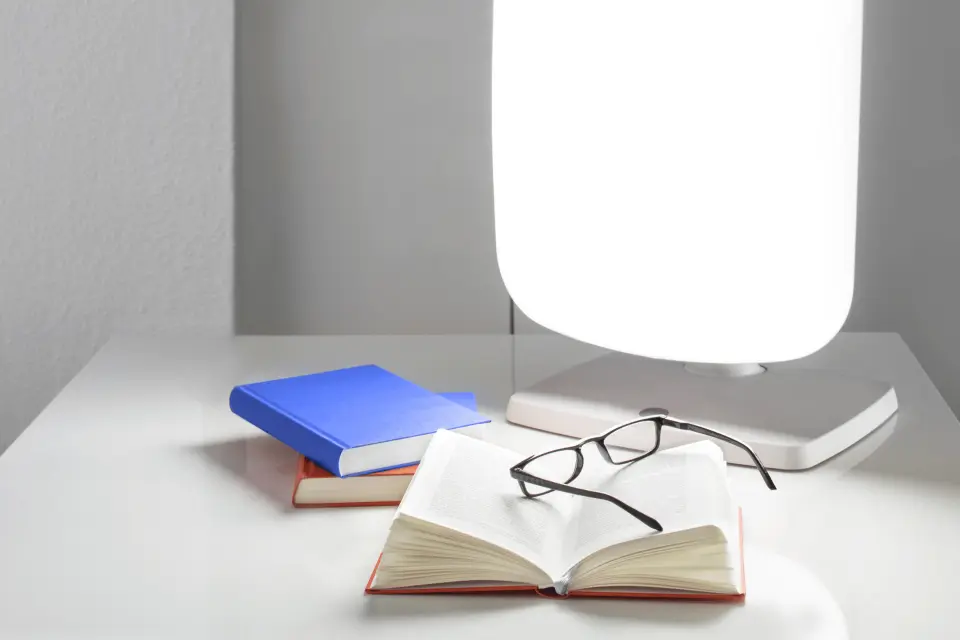
Happy lamps are an informal name for light therapy lamps, also called SAD lamps, bright light therapy boxes, or phototherapy lamps. They are devices that emit very bright white light at an intensity designed to mimic outdoor daylight, used primarily to treat seasonal affective disorder and other conditions that involve disrupted circadian rhythms.
The term comes from the experience many users describe: a noticeable lift in mood, energy, and mental clarity after consistent morning use. The mechanism is not a placebo. Light at the right intensity, delivered at the right time of day, produces measurable neurobiological changes that reduce the symptoms of winter-pattern depression.
How Light Therapy Actually Works
The brain's circadian clock is tuned by light. Specialized photoreceptors in the retina, called intrinsically photosensitive retinal ganglion cells, detect light and send signals to the suprachiasmatic nucleus in the hypothalamus, which coordinates the timing of sleep, hormone release, and metabolic function across the body.
In winter, reduced morning light exposure delays the circadian clock. This delay shifts the timing of melatonin suppression later into the morning, which means people wake up while their brains are still in a biologically nighttime state. The result is the grogginess, low mood, increased sleep drive, and carbohydrate craving that characterize seasonal depression.
Bright light delivered in the morning suppresses melatonin, advances the circadian phase, and resets the clock to a more summer-like timing. Over days to weeks of consistent use, this recalibration reduces the neurobiological conditions that produce seasonal depression. The effect on serotonin availability, while less completely understood, is also thought to contribute to the mood-stabilizing effects.
The Evidence Base
Light therapy for seasonal affective disorder is one of the better-studied non-pharmacological treatments in psychiatry. Multiple randomized controlled trials have demonstrated that morning bright light therapy at 10,000 lux produces significant symptom reduction in people with winter-pattern SAD, with response rates comparable to antidepressant medication.
A comparison trial published in JAMA Psychiatry found that light therapy was as effective as fluoxetine for SAD and that the combination of both produced the strongest effect. Response typically begins within one to two weeks of daily use, which is faster than the standard four to six weeks seen with antidepressants.
Clinical guidelines now recommend light therapy as a first-line treatment for SAD, with extensive documentation in SAD treatment research, and its use has expanded to address other conditions including non-seasonal depression, circadian sleep disorders, and jet lag.
Who Benefits Most
Light therapy has the strongest evidence for winter-pattern seasonal affective disorder, the seasonal mood pattern characterized by depression, oversleeping, increased appetite, low energy, and withdrawal beginning in fall or winter and remitting in spring.
People who notice recurring mood changes tied to the season without meeting the full criteria for SAD also often report meaningful benefit from consistent light therapy use. The neurobiological mechanisms are the same; the severity differs.
People with bipolar and cyclothymic disorder who experience seasonal mood cycling require physician supervision before starting light therapy. Bright light can trigger hypomanic or manic episodes in people with bipolar spectrum conditions, and supervised use with mood monitoring is appropriate.
How to Use a Light Therapy Lamp Correctly
Timing
Morning use is essential. Light therapy works by resetting the circadian clock, and the effect depends on delivering the light signal at the point in the circadian cycle when it has maximum phase-advancing impact. For most people, this means using the lamp within 30 minutes of waking.
Evening use can have the opposite effect, delaying the circadian clock and worsening the seasonal pattern. This is a common user error that can reduce or negate benefit.
Duration and Intensity
The standard protocol is 20 to 30 minutes at 10,000 lux. If using a less intense lamp (2,500 lux), duration increases proportionally to roughly 60 to 90 minutes to deliver the equivalent light dose. Intensity matters: a standard room lamp at a few hundred lux will not produce the same effect.
During the session, the lamp should be positioned at approximately a 45-degree angle to the face, not stared at directly. Reading, eating breakfast, or working on a computer while the lamp is on is the normal usage pattern.
Consistency
Light therapy is most effective when used daily throughout the season, not on an as-needed basis. Skipping days reduces the cumulative circadian effect. Most people begin in October or November and continue through March or April, adjusting based on how their seasonal symptoms track.
What to Look for in a Light Therapy Lamp
The key specifications are lux output, light type, and UV filtering.
A lamp rated at 10,000 lux at the recommended treatment distance is the standard clinical target. Many consumer lamps are rated at peak lux from a closer distance than realistic use; check the lux rating at the manufacturer's recommended distance from the face, typically 12 to 16 inches.
Full-spectrum white light is the standard. Blue-light lamps are marketed as requiring shorter sessions due to the wavelength sensitivity of the circadian photoreceptors, but the long-term ocular safety of high-intensity blue light is less established, and most clinical research has used full-spectrum white light.
UV filtering is important. Light therapy lamps should filter out ultraviolet light, which provides no circadian benefit and can cause eye and skin damage. UV-filtered white light lamps are the standard for clinical use.
Frequently Asked Questions
For winter-pattern seasonal affective disorder, yes. Clinical trials consistently show that morning bright light therapy at 10,000 lux produces significant improvement in seasonal depression symptoms. For non-seasonal depression, the evidence is less robust but suggests benefit, particularly in combination with other treatments. Light therapy is most effective when used consistently at the right time of day.
Most people with seasonal affective disorder notice measurable improvement within one to two weeks of daily morning use. Some people report feeling better within days; others take three to four weeks for full response. If there is no meaningful improvement after four weeks of consistent daily use at proper protocol, evaluation for alternative or additional treatment is appropriate.
Yes. More exposure is not always better. Overuse or extended sessions can cause side effects including headache, eyestrain, irritability, or agitation. For most people, 20 to 30 minutes per morning is sufficient. Evening use should be avoided, as it can shift the circadian clock in the wrong direction.
Light therapy is well-tolerated by most people. Mild side effects including headache, eyestrain, and nausea typically resolve with shorter sessions or moving the lamp farther away. More significant concerns are reserved for people with bipolar spectrum conditions, certain eye conditions, or who take photosensitizing medications; physician consultation before starting is appropriate in those cases.
No. UV tanning lamps emit ultraviolet light that tans or burns skin. Light therapy lamps specifically filter out UV and emit white light in the visible spectrum. They work on the circadian photoreceptors in the eye, not the skin. Looking at a UV tanning lamp can cause eye injury; light therapy lamps, when UV-filtered, are designed for safe proximity use.
The Bottom Line
Light therapy lamps are a clinically validated treatment for seasonal affective disorder, with evidence comparable to antidepressant medication. They work by delivering bright white light in the morning to reset the circadian clock and suppress melatonin, addressing the neurobiological disruption that drives winter-pattern depression. Effective use requires 10,000 lux, 20 to 30 minutes within 30 minutes of waking, used consistently each morning throughout the season. People with bipolar spectrum conditions should consult a physician before starting. For evaluation of seasonal depression or guidance on whether light therapy is appropriate, Doctronic.ai offers affordable telehealth visits with licensed physicians available any time.
Related articles
Get sleep health advice
Chat Now