Symptoms and Diagnosis
Dark Spots on Skin: Causes, Treatment, and Prevention Guide
January 24, 2026
3 min read

Medically reviewed by Alan Lucks | MD, Alan Lucks MDPC Private Practice - New York on May 21st, 2026.
Published on March 30th, 2026. Updated on July 23rd, 2026.
Vitamin C, azelaic acid, arbutin, kojic acid, and tranexamic acid are the most effective ingredients for targeting dark spots
Exfoliants like AHAs and retinoids speed up cell turnover to fade hyperpigmentation faster
Niacinamide prevents melanin from reaching the skin's surface, making it ideal for maintenance
Sensitive skin types should start with gentler options like arbutin or niacinamide before trying stronger actives
Daily broad-spectrum SPF is non-negotiable for preventing new spots and protecting treatment results
Laser, IPL, chemical peels, and cryotherapy are also options
Not sure which dark spot corrector is right for your skin? Doctronic.ai offers 24/7 AI-powered consultations to help match ingredients to your specific concerns
Questions about dark spot treatments?
Free. Anonymous. Built by doctors.
This article covers general information. Ask Doctronic about your symptoms, medications, side effects, or treatment options.
Dark spots frustrate millions of people searching for effective solutions. The skincare aisle offers endless promises, but which dark spot corrector ingredients actually work to fade hyperpigmentation? Understanding the science behind melanin production helps separate proven treatments from marketing hype.
This guide breaks down which brightening agents deliver real results and how to choose the right formula for individual skin types.
Melanin is the pigment that gives skin its color. Special cells called melanocytes produce melanin and transfer it to surrounding skin cells. When melanocytes become overactive or damaged, they produce too much pigment in specific areas. This excess melanin clumps together beneath the skin's surface, creating visible dark patches. The enzyme tyrosinase controls melanin production, which is why many effective treatments target this enzyme directly.
Sun exposure triggers melanocytes to produce extra pigment as a protective response. Years of UV damage accumulate, causing age spots and sun spots to appear. Hormonal changes during pregnancy or from birth control can cause melasma, a type of hyperpigmentation that appears in symmetrical patches. Post-inflammatory hyperpigmentation occurs after acne, cuts, or skin irritation heal. Each cause requires slightly different treatment approaches for optimal results.
The most effective dark spot correctors contain ingredients that interrupt melanin production at the cellular level. These tyrosinase inhibitors prevent new pigment from forming while allowing existing spots to fade naturally.
Vitamin C remains one of the most researched and effective brightening ingredients available. It works by inhibiting tyrosinase activity and neutralizing free radicals that trigger pigmentation. L-ascorbic acid is the most potent form, though it degrades quickly when exposed to light and air. Look for concentrations between 10 and 20% in stable formulations with vitamin E for enhanced effectiveness. Results typically appear within 8 to 12 weeks of daily morning application.
Hydroquinone is the strongest prescription-only brightening agent in many countries, though over-the-counter products up to 2% remain available in some regions. It bleaches existing pigment and prevents new melanin formation. Prolonged use can cause rebound hyperpigmentation, so dermatologists recommend cycling off after 3 to 4 months. Arbutin offers a gentler alternative derived from bearberry plants. It converts to hydroquinone slowly within the skin, providing similar benefits with less irritation risk.
Kojic acid comes from fermented rice and effectively inhibits tyrosinase. It works well for stubborn spots but can cause sensitivity in some users. Tranexamic acid has emerged as a breakthrough ingredient for melasma treatment. Originally used to control bleeding, it blocks the pathway between UV exposure and melanin production. Topical and oral formulations are both used under medical supervision, but oral use should only occur under physician direction due to systemic effects.
While tyrosinase inhibitors prevent new pigment, exfoliants remove existing discoloration by speeding up skin cell renewal. Combining both approaches delivers faster, more dramatic results.
Glycolic and lactic acids dissolve the bonds between dead skin cells, revealing fresher skin underneath. Regular exfoliation removes pigmented surface cells more quickly than natural shedding allows. Start with lower concentrations around 5 to 10% and gradually increase as the skin tolerates. AHAs also improve the penetration of other brightening ingredients, making them excellent partners in a comprehensive routine. Use AHAs at night since they increase sun sensitivity.
Retinoids accelerate cell turnover at a deeper level than AHAs can reach. Prescription tretinoin produces the fastest results, while over-the-counter retinol offers gentler improvement. These vitamin A derivatives push pigmented cells to the surface faster while promoting collagen production. The adjustment period causes flaking and sensitivity for most users during the first few weeks. For those dealing with post-acne dark marks, retinoids can address both texture and discoloration simultaneously.
Niacinamide works differently from other brightening ingredients. Rather than stopping melanin production, it prevents melanosomes from transferring pigment to skin cells. This makes it excellent for maintenance after achieving desired results. Concentrations of 5% or higher provide visible brightening within 8 to 12 weeks. Niacinamide rarely causes irritation, making it suitable for sensitive skin and compatible with most other actives.
Reactive skin requires careful ingredient selection to avoid inflammation that worsens discoloration. Arbutin, niacinamide, and licorice root extract provide effective brightening without irritation risk. Tranexamic acid also tends to be well-tolerated by sensitive types. Avoid high-concentration vitamin C and glycolic acid until skin builds tolerance. Start with one active ingredient and add others gradually over several weeks.
Melasma often resists single-ingredient treatments. Combination formulas containing multiple brightening agents typically produce better outcomes. The classic combination of hydroquinone, tretinoin, and a mild steroid remains highly effective for resistant cases. Tranexamic acid added to existing routines can provide the breakthrough some people need. For targeted dark patch treatment, consulting with a dermatologist helps identify prescription options for particularly stubborn hyperpigmentation.
Sunscreen is the single most important product for treating and preventing hyperpigmentation. UV exposure triggers melanin production within minutes, undoing weeks of treatment progress. Apply broad-spectrum SPF 30 or higher every morning, regardless of weather or indoor plans. Reapply every two hours during direct sun exposure. Mineral sunscreens with zinc oxide provide immediate protection and work well over brightening serums.
Patience determines success with age spot treatments. Most active ingredients require at least 12 weeks of consistent use before visible improvement. Deeper pigmentation takes longer to resolve than surface-level discoloration. Post-inflammatory hyperpigmentation from acne typically fades faster than sun damage or melasma. Taking progress photos every 4 weeks helps track subtle improvements that daily observation misses.
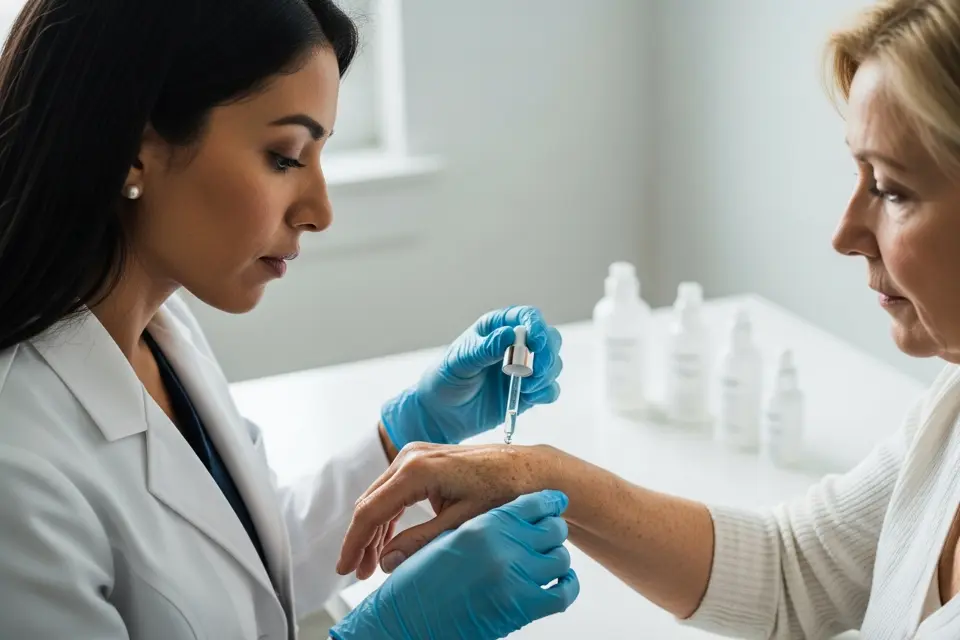
Combining a tyrosinase inhibitor like vitamin C or hydroquinone with an exfoliant like glycolic acid or retinol produces the fastest results. This dual approach stops new pigment formation while removing existing discoloration.
Dark spots can fade significantly or completely with proper treatment. Prevention through daily sunscreen use keeps them from returning. Without sun protection, hyperpigmentation typically recurs.
Arbutin, kojic acid, and licorice root extract are naturally derived ingredients with proven brightening effects. They work more slowly than synthetic options but cause less irritation for sensitive skin types.
Vitamin C works best in the morning to provide antioxidant protection throughout the day. Retinoids and AHAs should be applied at night since they increase sun sensitivity. Niacinamide and tranexamic acid can be used at either time.
Look for gradual lightening of spot edges first, then overall fading of the center. Take photos in consistent lighting every month to track progress accurately.
Effective dark spot treatment requires targeting melanin production with proven ingredients like vitamin C, arbutin, or tranexamic acid while accelerating cell turnover with retinoids or AHAs. Consistent sunscreen use protects your progress and prevents new spots from forming. For personalized guidance on which ingredients suit your specific skin concerns, visit Doctronic.ai for 24/7 AI-powered consultations with licensed physicians.
Get personalized health advice
Chat Now