
Cervical Strain: Neck Muscle Injury Explained

Medically reviewed by Lauren Okafor | MD, The Frank H Netter MD School of Medicine, Loyola University Medical Center on March 16th, 2026.
Published on February 11th, 2026. Updated on July 23rd, 2026.
Key takeaways
Key Takeaways
Cervical strain involves injury to neck muscles or tendons, while cervical sprain refers to ligament injuryaffecting structures that stabilize the cervical spine.
Poor posture and repetitive forward head positioning (“tech neck”) are among the most common contributors to cervical strain due to chronic mechanical stress on the cervical musculature.
Most uncomplicated cervical strains improve within approximately 2–4 weeks with conservative management, including activity modification and symptomatic care.
Physical therapy plays a central role in recovery by addressing biomechanics, strengthening supporting musculature, and preventing recurrence.
Red flag symptoms—such as numbness, weakness, severe or progressive headaches, or neurologic deficits—require prompt medical evaluation to rule out more serious pathology.
Understanding Cervical Strain and Anatomy
A sharp pain shoots through your neck after a sudden movement, and suddenly turning your head feels difficult or restricted. This experience is extremely common. Neck pain affects a significant portion of the adult population, with point prevalence estimates around 10–20% and annual prevalence approaching 30–50%, making it one of the most common musculoskeletal complaints worldwide. Understanding cervical strain begins with knowing the structures involved and how they function together.
The Structure of the Cervical Spine
The cervical spine consists of seven vertebrae (C1–C7) that extend from the base of the skull to the upper thoracic spine. These vertebrae protect the spinal cord while allowing for a wide range of motion, including flexion, extension, rotation, and lateral bending.
Surrounding these structures are muscles, tendons, ligaments, and intervertebral discs, all of which contribute to stability and movement. The cervical musculature works continuously to support the head, which weighs approximately 10–12 pounds (4.5–5.5 kg) in a neutral position.
Muscle vs. Ligament: Strain vs. Sprain
Although often used interchangeably, strains and sprains involve different tissues.
A strain refers to injury of a muscle or tendon
A sprain refers to injury of a ligament
Cervical strain specifically involves overstretching or microtearing of neck muscles or tendons, often resulting in pain, stiffness, and limited range of motion. While symptoms may overlap with sprains, distinguishing between them is important for management and prognosis.
Common Causes and Risk Factors
Acute Trauma and Whiplash
Motor vehicle collisions are a leading cause of whiplash-associated disorders, in which rapid acceleration-deceleration forces cause the head to move abruptly forward and backward. This motion can strain cervical muscles and soft tissues.
Similar mechanisms can occur with sports injuries, falls, or direct impacts. Notably, even low-velocity collisions can produce significant symptoms due to the sensitivity of cervical soft tissues.
Postural Stress and “Tech Neck”
Chronic forward head posture—often referred to as “tech neck”—is a major contributor to cervical strain. Prolonged flexion of the neck increases mechanical load on cervical structures.
Biomechanical modeling studies suggest that forward head tilt progressively increases the effective load on the cervical spine, substantially increasing muscular demand compared to a neutral position. Over time, this sustained stress can lead to muscle fatigue, imbalance, and strain.
Repetitive Motion and Overuse
Occupational and athletic activities that involve repetitive or sustained neck positioning increase the risk of cervical strain. Examples include:
Assembly line or desk-based work
Overhead activities (e.g., painting)
Endurance sports such as cycling or swimming
In these scenarios, insufficient recovery between repeated stress cycles can lead to cumulative microtrauma and eventual muscle injury.
 Identifying Symptoms and Severity
Localized Pain and Stiffness
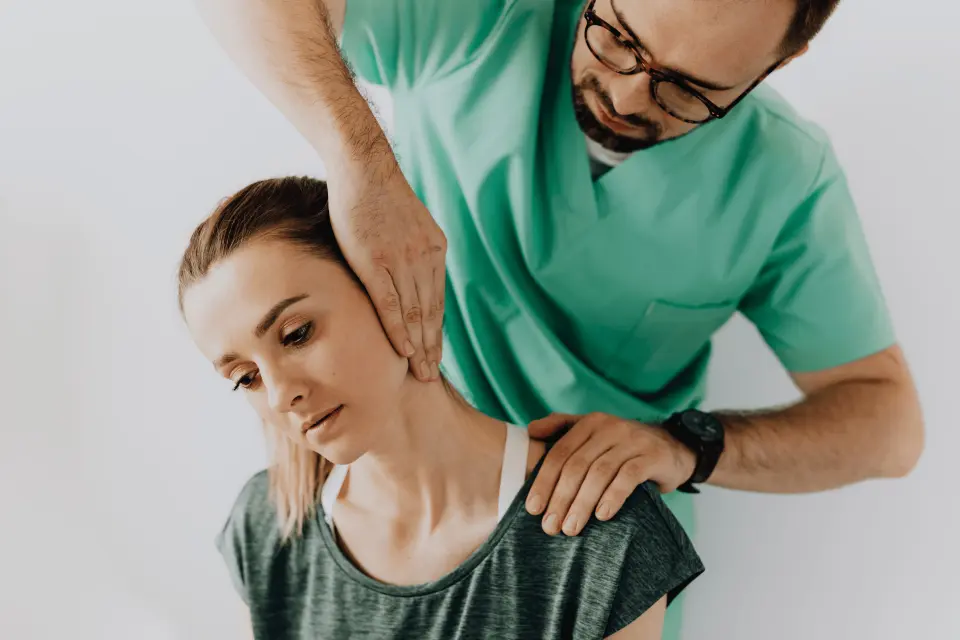
The most obvious sign of cervical strain is pain concentrated in the back or sides of the neck. This pain typically worsens with movement and improves with rest. Stiffness often accompanies the pain, making it difficult to turn the head fully. The affected area may feel tender when touched.
Muscle Spasms and Reduced Range of Motion
Injured muscles often respond by tightening involuntarily. These spasms represent the body's attempt to protect damaged tissue by limiting movement. People with cervical strain frequently notice they cannot look over their shoulder or tilt their head as far as usual. Headaches that start at the base of the skull and radiate upward are common.
When to Seek Immediate Medical Attention
Most neck strains heal on their own, but certain symptoms demand urgent care. Numbness or tingling in the arms or hands suggests nerve involvement. Weakness in the arms or difficulty gripping objects requires evaluation. Severe headaches, fever, or neck pain following a significant injury all warrant immediate medical attention. Doctronic.ai can help determine whether symptoms require urgent care or can be managed at home.
See a doctor online today
A licensed doctor can review your symptoms online, talk through next steps, and send a prescription to your pharmacy if appropriate.
- $39 video visit
- Insurance accepted
- 4.8 on Trustpilot
Diagnostic Procedures for Neck Injuries
Physical Examination and History
Doctors begin by asking about how the injury occurred and what symptoms have appeared. They check range of motion, muscle strength, and reflexes. Pressing on specific areas helps identify which muscles are affected. A thorough history helps rule out other conditions that might cause similar symptoms.
Imaging: When X-Rays or MRIs are Necessary
Most cervical strains do not require imaging studies. X-rays show bones but cannot reveal muscle damage directly. MRIs provide detailed images of soft tissues and may be ordered when symptoms persist beyond expected healing times. Imaging becomes important when doctors suspect disc problems, fractures, or nerve compression.
Treatment Options and Recovery Strategies
At-Home Care and the RICE Method
Initial treatment follows an updated approach known as “PEACE & LOVE,” which emphasizes Protection, Elevation, Avoidance of anti-inflammatory agents in the acute phase, Compression, and Education, followed by Load, Optimism, Vascularization, and Exercise. For neck injuries, ice or gentle heat can be used for short periods to manage discomfort. Gentle movement is better than complete immobilization, which can actually slow healing.
Pharmacological Interventions
Over-the-counter pain relievers like ibuprofen or acetaminophen help manage discomfort. Muscle relaxants may be prescribed for severe spasms. Topical creams containing menthol or capsaicin provide localized relief. Most people do not need prescription pain medications for a simple cervical strain.
Physical Therapy and Rehabilitation
Physical therapy can be beneficial in identifying the root cause of neck pain and establishing a treatment program to decrease pain levels over time. Therapists teach specific exercises that strengthen supporting muscles and improve flexibility. Manual therapy techniques can release tight muscles and restore normal movement patterns. Doctronic.ai offers guidance on whether physical therapy might benefit specific situations.
Long-Term Prevention and Ergonomics
Optimizing Workspace Ergonomics
Position computer monitors at eye level to avoid looking down constantly. Keep keyboards and mice at a height that allows relaxed shoulders. Take breaks every 30-45 minutes to move and stretch. Invest in a supportive chair that maintains the natural curve of the spine.
Strengthening and Flexibility Exercises
Regular neck exercises build resilience against future injuries. Chin tucks strengthen deep neck flexors that support proper posture. Gentle stretching maintains flexibility and reduces muscle tension. Shoulder blade squeezes counteract the forward-rounded posture that strains neck muscles.
Frequently Asked Questions
Most mild to moderate cervical strains improve within two to four weeks. More severe injuries may take six weeks or longer. Factors affecting healing time include injury severity, age, overall health, and how well treatment recommendations are followed.
Light activity is generally safe and may speed recovery. Avoid exercises that strain the neck, such as heavy lifting or contact sports. Walking and gentle stretching are typically appropriate. Listen to your body and stop any activity that increases pain.
Neck braces are rarely recommended for simple strains. Extended use can weaken neck muscles and delay healing. Short-term use may be appropriate for severe pain, but only under medical guidance.
Seek medical care if pain persists beyond two weeks, spreads to arms or hands, or includes numbness, tingling, or weakness. Doctronic.ai provides quick assessments to help determine whether a professional evaluation is needed.
The Bottom Line
Cervical strain is a common but treatable condition that responds well to proper care and prevention strategies. Understanding the causes, recognizing symptoms, and following appropriate treatment protocols leads to full recovery for most people.
For quick answers about neck pain or any health concern, Doctronic offers AI-assisted symptom analysis and telehealth connections with licensed clinicians, drawing on the latest medical research. Get personalized guidance in seconds at Doctronic.ai, or schedule an affordable telehealth visit with a licensed physician available 24/7.
References
Binder AI. Cervical spondylosis and neck pain. BMJ. 2007;334(7592):527–531.
Childs JD, Cleland JA, Elliott JM, et al. Neck pain clinical practice guidelines. Journal of Orthopaedic & Sports Physical Therapy. 2008;38(9):A1–A34.
Côté P, Wong JJ, Sutton DA, et al. Management of neck pain and associated disorders. The Lancet.2016;387(10017):335–346.
Bono CM, Ghiselli G, Gilbert TJ, et al. An evidence-based clinical guideline for the diagnosis and treatment of cervical radiculopathy. The Spine Journal. 2011;11(1):64–72.
Childs JD, Cleland JA, Elliott JM, et al. Neck pain clinical practice guidelines. J Orthop Sports Phys Ther.2008;38(9):A1–A34.
Guzman J, Hurwitz EL, Carroll LJ, et al. A new conceptual model of neck pain. Spine. 2008;33(4 Suppl):S14–S23.
Hansraj KK. Assessment of stresses in the cervical spine caused by posture and position of the head. Surgical Technology International. 2014;25:277–279.
Related articles
Get women's health advice
Chat Now