
Skin Health
Does the Sun Help Acne? The Truth About UV Exposure and Skin Health
January 25, 2026
3 min read

Medically reviewed by Alan Lucks | MD, Alan Lucks MDPC Private Practice - New York on May 21st, 2026.
Published on March 30th, 2026. Updated on July 24th, 2026.
Blue light therapy targets acne-causing bacteria and reduces oil production, making it ideal for oily, breakout-prone skin
Red light therapy penetrates deeper into skin layers to boost collagen, reduce inflammation, and speed healing
Combining both light therapies can address multiple skin concerns simultaneously
At-home devices offer convenience, while professional treatments deliver stronger results
Both therapies are considered safe for all skin tones with minimal side effects
Not sure which light therapy is right for you? Doctronic.ai offers 24/7 AI-powered consultations to help match treatments to your skin needs
Standing in front of a light therapy device, many people face a simple but confusing question: which color light does their skin actually need? Blue light vs. red light therapy both use LED technology to improve skin health, but they work in completely different ways. Blue light sits at the shorter end of the visible spectrum, targeting surface-level concerns like acne. Red light reaches deeper into skin tissue, addressing aging and repair.
The right choice depends entirely on what skin problems need solving. Some people benefit from one type alone, while others see the best results from using both. Understanding how each wavelength works helps create a skincare routine that actually delivers results.
LED phototherapy uses specific wavelengths of light to trigger natural responses in skin cells. Unlike UV light from the sun, therapeutic LED light does not cause burns or damage. Each color of light penetrates to a different depth and activates different cellular processes.
Blue light wavelengths measure around 415 to 420 nanometers, while red light sits between 620 and 700 nanometers. When skin cells absorb these wavelengths, they convert light energy into cellular energy. This process, called photobiomodulation, kickstarts healing, reduces bacteria, or boosts collagen production depending on the wavelength used. The treatment feels gentle and warm, with sessions typically lasting 10 to 20 minutes.
Blue light therapy has become a go-to treatment for people struggling with persistent breakouts. This wavelength works specifically on the bacteria living in pores and the oil glands that feed them.
The bacteria responsible for inflammatory acne, Cutibacterium acnes (formerly Propionibacterium acnes), produce compounds called porphyrins. When blue light hits these porphyrins, it creates a reaction that destroys the bacteria from the inside out. This antibacterial action happens without antibiotics, which matters as antibiotic-resistant acne becomes more common.
Beyond killing bacteria, blue light helps calm overactive oil glands. Excess sebum creates the perfect environment for acne to thrive. Blue light therapy signals these glands to slow down production, reducing the greasy feeling and preventing new breakouts from forming.
Blue light therapy works best for mild to moderate acne, especially inflammatory types with red, swollen pimples. People with oily T-zones, frequent blackheads, or hormonal breakouts often see significant improvement. The treatment is not ideal for deep cystic acne alone, but it can support other treatments.
Red light therapy reaches beneath the surface to address concerns that blue light cannot touch. This wavelength excels at reversing visible aging signs and supporting the skin's natural repair processes.
Collagen and elastin give skin its firmness and bounce. Production of both proteins naturally decreases with age. Red light therapy energizes fibroblast cells, which are responsible for making these proteins. Regular treatments help restore a more youthful texture over time by stimulating new collagen production, decreasing wrinkle depth, and reducing pore size.
Red light has a calming effect on irritated skin. It works well for conditions like rosacea and eczema when used as a supportive therapy under medical guidance. The wavelength reduces inflammatory markers in skin tissue, leading to less redness and discomfort. People with reactive skin often find red light therapy soothing rather than irritating.
Post-procedure healing, minor cuts, and even acne scars benefit from red light exposure. The increased cellular energy speeds up the repair process. Skin heals faster with less scarring when red light therapy supports recovery. Many dermatologists recommend it after chemical peels or microneedling.
See a doctor online today
A licensed doctor can review your symptoms online, talk through next steps, and send a prescription to your pharmacy if appropriate.
Blue light stays in the upper layers of skin, the epidermis and upper dermis. This shallow penetration makes it perfect for surface concerns like bacteria and oil glands. Red light penetrates much deeper, reaching the lower dermis where collagen production happens. This depth difference explains why each color targets such different concerns.
Blue light therapy handles acne, bacteria, oil control, and some inflammatory conditions. Red light therapy addresses wrinkles, fine lines, sagging, inflammation, wound healing, and skin texture. Someone with both acne and aging concerns might need both wavelengths for complete care.
Many modern devices offer both blue and red light options, sometimes used together in a single session. Using blue light first to clear bacteria, followed by red light to reduce inflammation and promote healing, creates a comprehensive treatment. Some devices alternate wavelengths automatically. This combination approach addresses multiple skin concerns without requiring separate equipment.
A typical schedule might include blue light three times weekly for active acne, switching to red light maintenance once breakouts clear. Those focused on anti-aging might use red light four to five times weekly. Combination users often alternate days between wavelengths. Consulting with a dermatologist or using Doctronic.ai can help create a personalized schedule based on specific skin goals and lifestyle factors.
Both blue and red light therapies are considered safe for most skin types. Side effects are rare and typically mild, including temporary redness or dryness. People taking photosensitizing medications should consult a healthcare provider first.
Professional treatments use stronger devices and may show faster results, but at-home devices offer convenience and lower long-term costs. Professional sessions typically cost $75 to $200 each, while quality home devices range from $150 to $600 for unlimited use. Consistency matters more than intensity for most users.
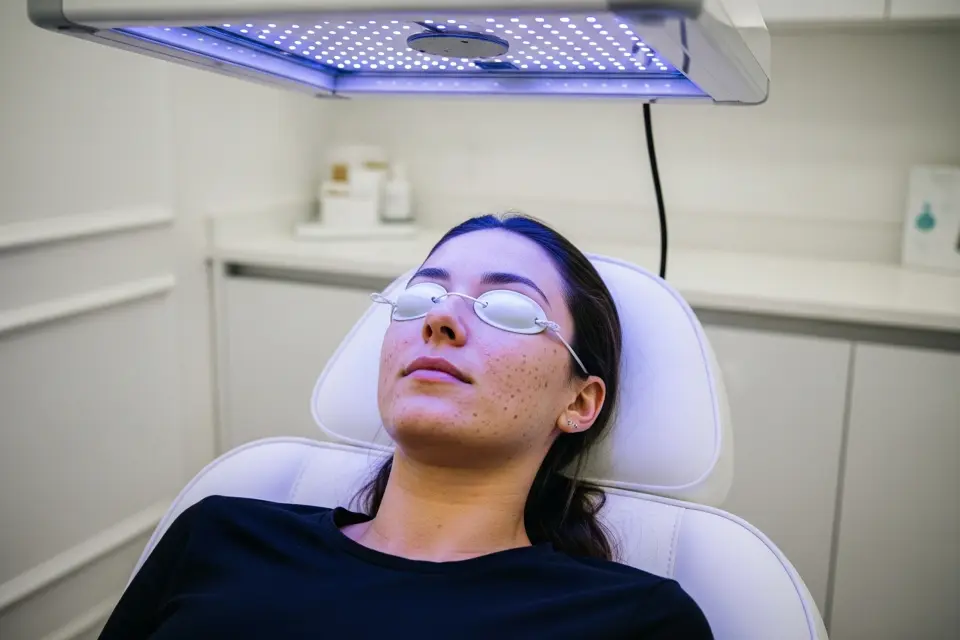
Blue light therapy often shows acne improvement within two to four weeks of regular use. Red light therapy results for anti-aging typically appear after eight to twelve weeks. Consistency with treatments matters more than session length.
Yes. Light therapy works well alongside most skincare routines. Apply treatments to clean, dry skin without heavy products. Serums and moisturizers can be applied after sessions to maximize absorption.
Both blue and red light therapies are generally safe for all skin tones. Unlike laser treatments, LED therapy does not target melanin, reducing the risk of hyperpigmentation. Starting with shorter sessions helps monitor any sensitivity.
Most experts recommend three to five sessions weekly for the first eight to twelve weeks. After reaching skin goals, maintenance treatments of one to two sessions weekly help sustain results.
Choosing between blue and red light therapy comes down to specific skin concerns: blue for acne and oil control, red for aging and repair. Many people benefit from using both. For personalized guidance on which therapy suits your skin, visit Doctronic.ai for a 24/7 AI-powered consultation that considers your complete health history and skincare goals.
Compare your treatment options
Chat Now