
Birthmark vs. Beauty Mark: How to Tell the Difference

Medically reviewed by Alan Lucks | MD, Alan Lucks MDPC Private Practice - New York on May 21st, 2026.
Published on March 30th, 2026. Updated on July 23rd, 2026.
Key takeaways
Birthmarks appear at birth or shortly after, while beauty marks (moles) develop later in life from sun exposure and genetic factors
Vascular birthmarks involve blood vessels and appear red or purple, while pigmented birthmarks result from melanin clusters
True beauty marks are small, flat or slightly raised moles typically found on the face, neck, or shoulders
Physical differences include texture, color uniformity, and size, with birthmarks often being larger and more varied
The ABCDE checklist helps identify potentially concerning changes in any skin mark
Wondering whether a mark on your skin needs attention? Doctronic.ai offers 24/7 AI-powered consultations to help you evaluate skin concerns
Understanding the Marks on Your Skin
That small dark spot on your cheek: is it something you were born with, or did it appear over time? The distinction between a birthmark vs. beauty mark matters more than most people realize. These terms get used interchangeably in casual conversation, but they describe fundamentally different skin features with separate origins, characteristics, and health implications.
Understanding how to tell the difference helps you monitor your skin health effectively and know when a mark deserves medical attention. Most adults have between 10 and 40 moles on their bodies, making this knowledge relevant for nearly everyone.
Defining the Basics: What Sets Them Apart
The fundamental difference comes down to timing and cause. Birthmarks are present at birth or develop within the first few weeks of life. Beauty marks, which are technically moles, form later due to sun exposure, hormonal changes, or genetic predisposition. This distinction matters because it affects how dermatologists evaluate and treat these marks.
Origins and Timing of Appearance
Birthmarks form during fetal development when blood vessels or pigment cells cluster abnormally in one area of skin. No one chooses them, and parents cannot prevent them. Beauty marks tell a different story. These develop as melanocytes, the cells responsible for skin pigmentation, group together in response to ultraviolet light exposure or hormonal shifts during puberty and pregnancy. While many moles appear during childhood and adolescence, new moles can also develop in adulthood, particularly in fair-skinned individuals with higher sun exposure.
The Cultural Evolution of the Beauty Mark
Throughout history, small facial moles have carried significant aesthetic value. In 18th-century France, women applied fake moles called "mouches" to their faces as fashion statements. Hollywood icons transformed ordinary moles into signature features. This cultural appreciation turned common moles into "beauty marks," a term that persists today despite having no medical basis.
Common Types of Birthmarks
Birthmarks fall into two main categories based on their cellular composition. Understanding these categories helps clarify why birthmarks look and behave so differently from acquired moles.
Vascular Birthmarks: Hemangiomas and Port-Wine Stains
Vascular birthmarks result from abnormal blood vessel formation. Hemangiomas appear as raised, bright red marks that often grow during the first year of life before gradually fading. About 4 to 5% of babies are born with a hemangioma, making them the most common type of birthmark. Port-wine stains present differently: flat, pink or deep purple marks that persist throughout life and may darken with age. These marks occur when capillaries in a specific skin area dilate abnormally during development.
Pigmented Birthmarks: Cafe-au-Lait and Mongolian Spots
Pigmented birthmarks contain excess melanin rather than blood vessel abnormalities. Cafe-au-lait spots are flat, light brown patches that can appear anywhere on the body. Having one or two is normal, but multiple spots may indicate an underlying genetic condition worth discussing with a doctor. Mongolian spots appear as blue-gray patches, typically on the lower back or buttocks, and are especially common in babies with darker skin tones. Most Mongolian spots fade by early childhood, though some may persist into adulthood.
Characteristics of a True Beauty Mark
What people call beauty marks are simply moles that happen to appear in aesthetically pleasing locations. Understanding their biology helps distinguish them from birthmarks.
The Role of Melanocytes in Mole Formation
Moles form when melanocytes grow in clusters rather than spreading evenly throughout the skin. Sun exposure triggers this clustering process, which explains why moles commonly appear on sun-exposed areas like the face, arms, and shoulders. Genetics also plays a role: people with fair skin and those with family histories of numerous moles tend to develop more throughout their lives. Although sun exposure can contribute to mole development, many moles form independently of sun exposure, especially those that appear in childhood.
Ideal Placement and Aesthetic Appeal
The "beauty mark" designation typically applies to small, dark moles positioned on the face, neck, or shoulders. Location matters for this label: a mole on your elbow rarely earns the beauty mark title. The most celebrated beauty marks sit near the lips, on the cheekbone, or above the eyebrow. Size matters too. True beauty marks are small, usually no larger than a pencil eraser, and have regular, rounded borders.
Physical Differences: Texture, Color, and Size
Several physical characteristics help distinguish birthmarks from beauty marks at a glance. Birthmarks tend to be larger and more varied in appearance. They can range from tiny dots to marks covering significant portions of the body. Their colors span a wider spectrum: red, purple, brown, tan, blue, or even pale white.
Beauty marks are more uniform. They typically present as small, round or oval spots in shades of brown or black. Their borders are usually regular and well-defined. Texture provides another clue. Vascular birthmarks often feel different from surrounding skin (raised, bumpy, or spongy). Most moles are either flat or slightly raised with a smooth surface.
When examining any mark, note whether it has changed over time. Birthmarks generally remain stable after early childhood, while moles may evolve gradually.
When to Monitor Your Marks for Health
Both birthmarks and moles deserve regular observation. While most are harmless, some can develop into or indicate serious conditions.
The ABCDE Checklist for Skin Safety
Dermatologists recommend the ABCDE method for evaluating suspicious marks:
Asymmetry: One half does not match the other
Border: Edges are irregular, ragged, or blurred
Color: Multiple colors or uneven distribution within the mark
Diameter: Larger than 6 millimeters (about the size of a pencil eraser)
Evolving: Changes in size, shape, color, or symptoms like itching or bleeding
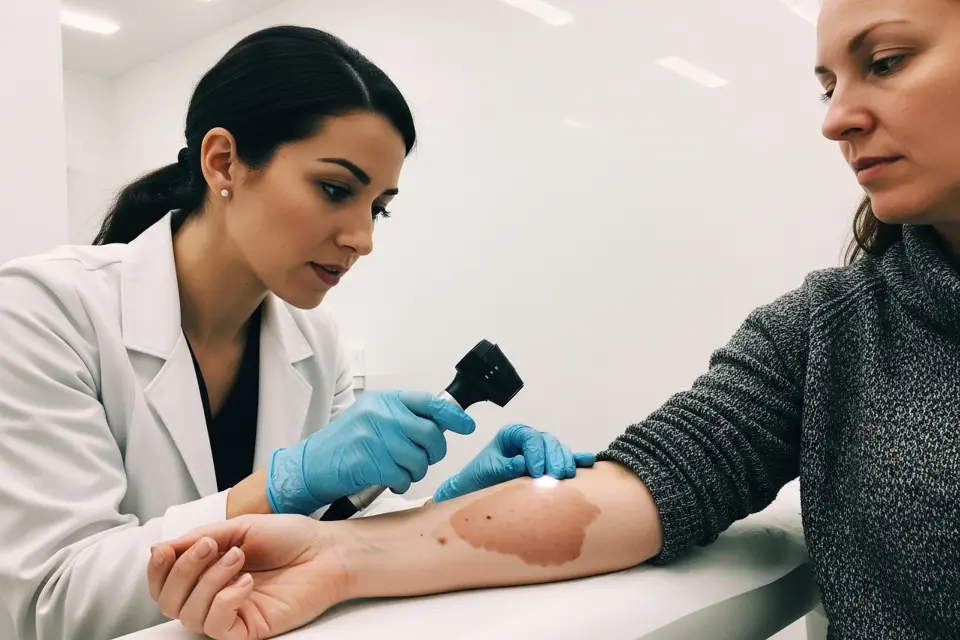
Any mark meeting these criteria warrants professional evaluation. If you are unsure whether a spot looks normal, a skin spot evaluation can help clarify what you are looking at.
When a Birthmark Requires Medical Intervention
Certain birthmarks need monitoring beyond cosmetic concerns. Large congenital moles present at birth carry a slightly elevated melanoma risk. Port-wine stains near the eye may indicate Sturge-Weber syndrome, requiring neurological evaluation. Hemangiomas near the airway, eyes, or mouth sometimes need treatment to prevent functional problems. Any birthmark that changes significantly after childhood stability should prompt medical consultation.
Modern Treatment and Removal Options
Treatment options have expanded significantly for both birthmarks and unwanted moles. Laser therapy effectively fades many vascular birthmarks and can reduce the appearance of pigmented marks. Port-wine stains respond particularly well to pulsed dye laser treatment when started early in life.
Mole removal typically involves surgical excision or shave removal, both quick outpatient procedures. Cosmetic removal of beauty marks remains a personal choice. Medical removal becomes necessary when a mole shows suspicious changes or causes physical discomfort from clothing friction. Before pursuing any treatment, a proper evaluation ensures the mark is benign. Dermatologists may perform a biopsy on concerning moles before removal.
Frequently Asked Questions
No. Birthmarks and beauty marks have different origins. A birthmark present at birth remains a birthmark regardless of how it changes appearance. New moles that develop later are separate from any birthmarks you may have.
Yes. The tendency to develop moles has a genetic component. If your parents have numerous moles, you are more likely to develop many as well. Sun exposure remains the primary trigger, but genetics influence susceptibility.
Some do. Hemangiomas often fade significantly or disappear entirely by age ten. Mongolian spots typically vanish by early childhood. Port-wine stains and cafe-au-lait spots generally persist throughout life without treatment.
New moles in adulthood warrant attention but are not automatically concerning. Monitor any new mark using the ABCDE criteria and consult a healthcare provider if you notice suspicious features or rapid changes.
The Bottom Line
Understanding the difference between a birthmark and a beauty mark helps you monitor your skin health and recognize when professional evaluation is needed. For questions about any skin marks or concerns about changes you have noticed, visit Doctronic.ai for 24/7 AI-powered consultations and telehealth appointments with licensed physicians.
References
Related articles
Omeprazole Side Effects Timeline: Week by Week Guide
Metoprolol Side Effects Timeline: Week by Week Guide
Lupus Vs MS: Key Differences in Symptoms, Diagnosis, and Treatment
Hantavirus Symptoms: Signs, Stages, and When to Seek Care
Should I Be Worried About Hantavirus? A Realistic Look at the Risk
IBS Flare Ups: What Triggers Symptoms and How to Take Control

Stages of Depression: How It Progresses and When to Seek Help
Poison Ivy Rash: Identification, Treatment, and When to See a Doctor
What Triggers Eczema? Common Flare-Ups Including Sun and Seasonal Changes
Melasma vs. Hyperpigmentation: Key Differences and Treatment Approaches
Cancerous Moles vs. Normal Moles: A Visual Guide to Melanoma Warning Signs
Compare your treatment options
Chat Now