
Get Pelvic Floor Treatment Online
Pelvic floor dysfunction can cause urinary leakage, urgency, pelvic pain, and bowel issues that interfere with daily life. Doctronic connects you with licensed physicians who can evaluate your symptoms and recommend an evidence-based treatment plan, without the wait.


What Is Pelvic Floor?
Pelvic floor dysfunction is a condition marked by the inability to correctly relax or coordinate the muscles of the pelvic floor, leading to symptoms such as urinary urgency or incontinence, pelvic pain, bowel difficulties, and discomfort during activity. It can significantly affect quality of life, personal relationships, and daily functioning. With the right treatment and support, most people experience meaningful symptom relief and improved control.
- Affects both women and men, though it is more common in women, particularly after childbirth or menopause
- Get personalized guidance from doctor-trained AI
- Explore treatment and prescription options

Is Online Pelvic Floor Treatment Right for You?
Our physicians evaluate and treat pelvic floor dysfunction, including urinary urgency, urge incontinence, overactive bladder, and related pelvic discomfort. Treatment may include bladder-calming medications, pelvic muscle relaxants, topical therapies, and referrals to pelvic floor physical therapy as appropriate.
A complete picture of your pelvic and urinary health history helps our physicians determine the safest and most effective plan. Please be ready to share details about your symptoms, any prior diagnoses, relevant surgeries or deliveries, and any medications you are currently taking.
- Diagnosed with pelvic floor dysfunction, overactive bladder, or urinary incontinence
- Get personalized guidance from AI and clinicians
- Explore treatment and prescription refill options
- Access care from home, often the same day

Medications We Prescribe for Pelvic Floor

Ditropan
Oxybutynin
An anticholinergic medication that relaxes bladder smooth muscle to reduce urinary urgency, frequency, and urge incontinence caused by overactive bladder.
Myrbetriq
Mirabegron
A beta-3 adrenergic agonist that relaxes the bladder during filling, reducing urgency and urinary leakage with a favorable tolerability profile.
Vesicare
Solifenacin
An anticholinergic agent that selectively targets bladder muscarinic receptors to decrease overactive bladder symptoms including urgency and frequency.
Lioresal
Baclofen
A muscle relaxant that acts on GABA-B receptors to reduce spasticity and tension in pelvic floor muscles, used when hypertonic pelvic floor dysfunction or pelvic pain is present.
How Pelvic Floor Treatment Works at Doctronic

Chat With The #1 AI Doctor
Doctronic answers your health questions with personalized medical insights and helps our doctors create a better treatment plan for you.

Meet With a Licensed Doctor For Treatment
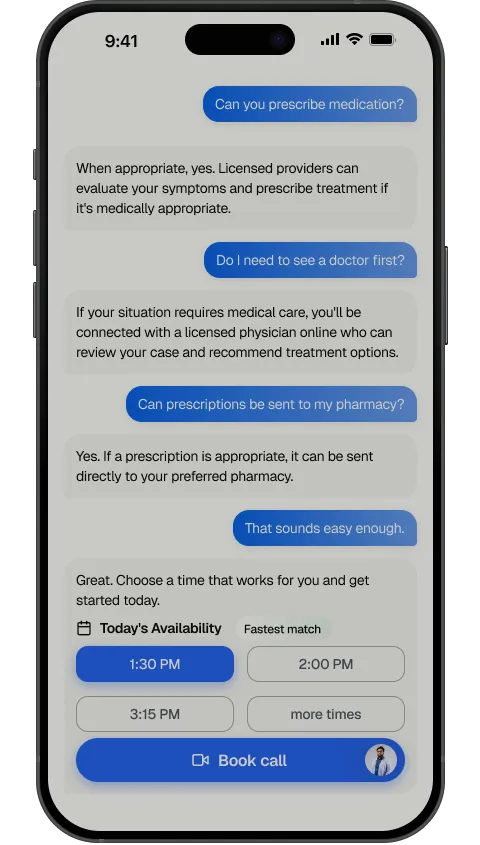
Book a $39 telehealth appointment (or copay) within 30 minutes. Our doctors create personalized treatment plans with prescriptions when needed.

Pick Up Your Prescription
Our doctors prescribe non-controlled medications in all 50 states and send prescriptions to your pharmacy for same-day pickup.
Pricing that won't make you sick
Chat for free, see an online doctor for $39/visit, or refill a prescription online for as low as $0
-
 Available in all 50 states + DC
-
 Insurance accepted

- 24/7 medical care Free
- Specialist referrals Free
- Lifelong health record Free
- Unlimited questions Free
- Prescription refills Starting as low as $0
- Video visit with real doctors $39/visit
These are stories from real users who turned to Doctronic for answers when it mattered most.
- Preparing for a doctor visit
- Finding peace of mind
- Understanding a diagnosis
- Managing chronic illness
- Navigating healthcare
- A second opinion
- Improving health











Frequently asked questions
Pelvic floor dysfunction occurs when the group of muscles and connective tissues forming the base of the pelvis do not work correctly. This can mean these muscles are too tight (hypertonic), too weak, or poorly coordinated, leading to problems controlling urination, bowel movements, or causing pelvic pain.
Common symptoms include urinary urgency or frequency, leaking urine when coughing or sneezing, difficulty fully emptying the bladder or bowel, a feeling of pelvic heaviness or pressure, and pelvic or lower abdominal pain. Symptoms vary depending on whether the muscles are weak or overly tight.
People who have given birth vaginally, had pelvic surgery, experienced pelvic trauma, or gone through menopause are at higher risk. However, it can also affect men, younger adults, and those with chronic straining, heavy lifting habits, or connective tissue disorders.
Yes. The majority of people with pelvic floor dysfunction are treated without surgery. First-line approaches include pelvic floor physical therapy, bladder training, and prescription medications to reduce urgency or relax overactive muscles. Surgery is generally considered only when conservative measures have not provided adequate relief.
Medications are most commonly used for the overactive bladder component of pelvic floor dysfunction. Anticholinergic drugs such as oxybutynin and solifenacin reduce bladder urgency and frequency. Mirabegron works through a different mechanism as a beta-3 agonist. Baclofen may be used when pelvic floor muscle spasm or hypertonic dysfunction is the primary issue.
Pelvic floor physical therapy is delivered by a specially trained therapist and involves exercises to strengthen weak muscles, techniques to relax overly tight muscles, biofeedback to improve muscle awareness, and education on bladder habits. It is considered a cornerstone of pelvic floor dysfunction treatment and can lead to significant long-term improvement.
Doctronic uses an AI-guided intake to collect your symptom history and relevant health details. A licensed physician then reviews your information, confirms the appropriate diagnosis, and creates a personalized treatment plan that may include prescription medications, behavioral recommendations, and referrals to physical therapy as needed.
Yes. Doctronic works exclusively with licensed physicians who are board-eligible or board-certified. All clinical decisions are doctor-reviewed and subject to quality audits. The platform is HIPAA-aligned, and care is available to adults 18 and older in any U.S. state.
Top Conditions We Can Help With
People turn to Doctronic and our licensed medical team for support with all types of conditions.