
Get Urinary Tract Stones Treatment Online
Urinary tract stones can cause sudden, intense pain and disrupt daily life. Doctronic connects you with licensed physicians who can evaluate your situation, manage your symptoms, and guide you through treatment options from the comfort of home.


What Is Urinary Tract Stones?
Urinary tract stones are hard mineral and salt deposits that form in the kidneys or elsewhere along the urinary tract. They can cause severe flank pain, blood in the urine, nausea, and difficulty urinating. Stones range from tiny grains that pass on their own to larger formations that require medical intervention. With the right treatment and support, most people can manage symptoms effectively, pass stones, and take steps to reduce the risk of recurrence.
- Stones form when urine becomes concentrated, allowing minerals such as calcium, oxalate, and uric acid to crystallize and stick together
- Get personalized guidance from doctor-trained AI
- Explore treatment and prescription options

Is Online Urinary Tract Stones Treatment Right for You?
Doctronic can help adults who are experiencing symptoms of urinary tract stones, such as flank or lower abdominal pain, blood in the urine, or frequent and painful urination. Our physicians can also assist patients managing recurrent stone disease who need ongoing medication support or refills.
Because urinary tract stones affect the kidneys and the entire urinary system, a full picture of your urinary health history, fluid intake habits, prior stone episodes, and any related conditions such as gout or hyperparathyroidism helps our physicians provide the most appropriate care.
- Diagnosed with kidney or urinary tract stones
- Get personalized guidance from AI and clinicians
- Explore treatment and prescription refill options
- Access care from home, often the same day

Medications We Prescribe for Urinary Tract Stones

Flomax
Tamsulosin
An alpha-blocker commonly prescribed to relax the muscles of the ureter, helping small stones pass more quickly and with less pain.
Topamax
Topiramate
Sometimes used off-label to reduce urinary citrate loss; physician evaluation required to determine appropriateness for stone prevention.
Azo (Pyridium)
Phenazopyridine
A urinary analgesic that relieves burning, pain, and discomfort associated with irritation of the urinary tract during stone passage.
Magnesium Citrate
Magnesium Citrate
Magnesium citrate supplementation may help reduce the formation of certain types of kidney stones by binding oxalate in the gut.
How Urinary Tract Stones Treatment Works at Doctronic

Chat With The #1 AI Doctor
Doctronic answers your health questions with personalized medical insights and helps our doctors create a better treatment plan for you.

Meet With a Licensed Doctor For Treatment
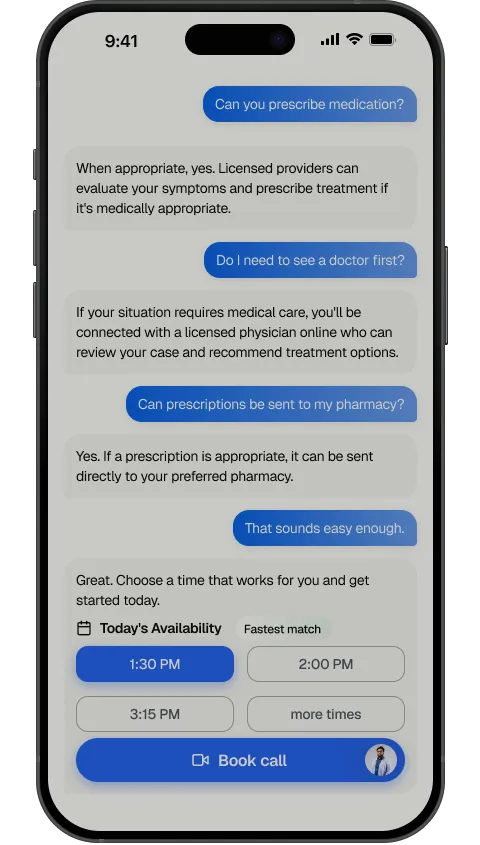
Book a $39 telehealth appointment (or copay) within 30 minutes. Our doctors create personalized treatment plans with prescriptions when needed.

Pick Up Your Prescription
Our doctors prescribe non-controlled medications in all 50 states and send prescriptions to your pharmacy for same-day pickup.
Pricing that won't make you sick
Chat for free, see an online doctor for $39/visit, or refill a prescription online for as low as $0
-
 Available in all 50 states + DC
-
 Insurance accepted

- 24/7 medical care Free
- Specialist referrals Free
- Lifelong health record Free
- Unlimited questions Free
- Prescription refills Starting as low as $0
- Video visit with real doctors $39/visit
These are stories from real users who turned to Doctronic for answers when it mattered most.
- Preparing for a doctor visit
- Finding peace of mind
- Understanding a diagnosis
- Managing chronic illness
- Navigating healthcare
- A second opinion
- Improving health











Frequently asked questions
Stones form when urine becomes too concentrated with certain minerals, such as calcium, oxalate, uric acid, or struvite. When these substances crystallize and clump together, they create stones. Risk factors include low fluid intake, a high-sodium or high-protein diet, obesity, certain medical conditions such as gout or hyperparathyroidism, and a family history of stones.
Common signs include sudden, severe pain in the side, back, or lower abdomen that may radiate to the groin; pink, red, or brown urine; nausea or vomiting; pain with urination; and a persistent urge to urinate. A physician can confirm the diagnosis using imaging and urine tests.
Many small stones, particularly those under 5 mm in diameter, pass on their own within a few weeks with adequate hydration and pain management. Larger stones or stones that cause significant obstruction, infection, or uncontrolled pain may require procedures such as shock wave lithotripsy or ureteroscopy.
Alpha-blockers such as tamsulosin (Flomax) are frequently prescribed as medical expulsive therapy to relax the ureter and facilitate stone passage. Pain relievers and urinary analgesics like phenazopyridine (Azo/Pyridium) can help manage discomfort while the stone passes.
Staying well-hydrated is the single most important preventive measure. Depending on the stone type, dietary changes such as reducing sodium, limiting oxalate-rich foods, or moderating animal protein may be recommended. Certain medications, including thiazide diuretics, allopurinol, or magnesium citrate, may be prescribed based on your stone composition and metabolic evaluation.
Seek emergency care if you have a fever or chills alongside stone symptoms (which may indicate infection), if pain is severe and uncontrolled, if you are unable to keep fluids down, or if you have only one kidney. These situations require prompt in-person evaluation and cannot be managed through telehealth alone.
Doctronic uses an AI-powered evaluation to gather detailed information about your symptoms and medical history. A licensed physician then reviews your case, makes a clinical assessment, and creates a personalized treatment plan, which may include prescriptions when appropriate and safe to do so.
Yes. Doctronic connects patients with fully licensed physicians whose work is reviewed and audited for quality. The platform is HIPAA-aligned, keeping your health information private and secure. Doctronic is available to adults 18 and older in any U.S. state.
Top Conditions We Can Help With
People turn to Doctronic and our licensed medical team for support with all types of conditions.