
Get Tacrolimus Treatment Online
Managing transplant rejection prevention with tacrolimus requires consistent access to your medication. Doctronic connects you with licensed physicians who can review your history and issue a refill quickly and securely, without an in-person visit.


What Is Tacrolimus?
Tacrolimus (Prograf, Envarsus XR) is a prescription medication used to manage organ transplant rejection prevention. It works by suppressing the immune system, specifically inhibiting T-lymphocyte activation, to prevent the body from attacking a transplanted organ. With the right dose and ongoing monitoring, most transplant recipients can maintain stable graft function and quality of life over the long term.
- Calcineurin inhibitor that suppresses T-cell-mediated immune rejection of transplanted organs
- Get personalized guidance from doctor-trained AI
- Explore treatment and prescription options

Is Online Tacrolimus Treatment Right for You?
Doctronic can help eligible patients who are established on tacrolimus for organ transplant rejection prevention obtain a prescription refill. To qualify, you must have an existing diagnosis, a stable dosing history, and recent laboratory monitoring on file or available to share.
Because tacrolimus directly affects immune system function and requires careful management of drug levels, kidney function, and blood pressure, our physicians will review your transplant history and any relevant lab results before issuing a refill. Patients with recent changes in kidney function, significant drug interactions, or unstable tacrolimus blood levels may be referred to their transplant center.
- Diagnosed with organ transplant requiring maintenance immunosuppression
- Get personalized guidance from AI and clinicians
- Explore treatment and prescription refill options
- Access care from home, often the same day

Medications We Prescribe for Organ Transplant Rejection Prevention

Prograf
Tacrolimus
The primary calcineurin inhibitor for transplant rejection prevention, available as immediate-release capsules dosed twice daily.
Envarsus XR
Tacrolimus (extended-release)
Once-daily extended-release formulation of tacrolimus that may improve adherence and provide more stable drug levels.
Cellcept
Mycophenolate
Antimetabolite immunosuppressant commonly used alongside tacrolimus as part of a multi-drug maintenance regimen after transplant.
Imuran
Azathioprine
An alternative antimetabolite immunosuppressant sometimes used with tacrolimus in transplant recipients who cannot tolerate mycophenolate.
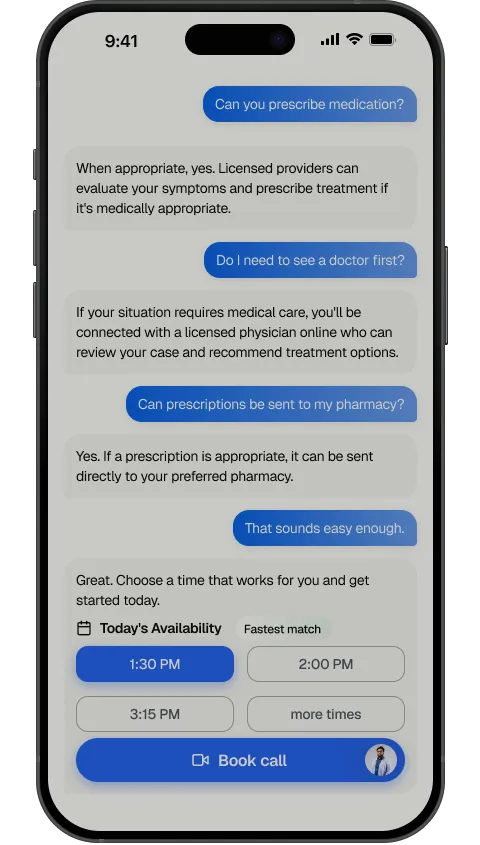
How Organ Transplant Rejection Prevention Treatment Works at Doctronic

Chat With The #1 AI Doctor
Doctronic answers your health questions with personalized medical insights and helps our doctors create a better treatment plan for you.

Meet With a Licensed Doctor For Treatment
Book a $39 telehealth appointment (or copay) within 30 minutes. Our doctors create personalized treatment plans with prescriptions when needed.

Pick Up Your Prescription
Our doctors prescribe non-controlled medications in all 50 states and send prescriptions to your pharmacy for same-day pickup.
Pricing that won't make you sick
Chat for free, see an online doctor for $39/visit, or refill a prescription online for as low as $0
-
 Available in all 50 states + DC
-
 Insurance accepted

- 24/7 medical care Free
- Specialist referrals Free
- Lifelong health record Free
- Unlimited questions Free
- Prescription refills Starting as low as $0
- Video visit with real doctors $39/visit
These are stories from real users who turned to Doctronic for answers when it mattered most.
- Preparing for a doctor visit
- Finding peace of mind
- Understanding a diagnosis
- Managing chronic illness
- Navigating healthcare
- A second opinion
- Improving health








Frequently asked questions
Tacrolimus has a narrow therapeutic index, meaning the difference between an effective dose and a toxic dose is small. Too little drug risks acute rejection of the transplanted organ, while too much increases the risk of nephrotoxicity, infections, and other serious side effects. Regular blood level monitoring is essential to keep levels in the target range.
Patients on tacrolimus routinely have trough blood levels drawn, along with kidney function tests (creatinine, BUN), electrolytes (especially potassium and magnesium), blood glucose, blood pressure, and complete blood counts. The frequency depends on how long post-transplant you are and how stable your levels have been.
Switching between formulations requires careful dose adjustment and more frequent blood level monitoring, as the pharmacokinetic profiles differ. Any switch should only be made under the direct supervision of your transplant team, not independently.
Many substances affect tacrolimus levels. Grapefruit and grapefruit juice can significantly raise levels. Antifungals like fluconazole and itraconazole, some antibiotics like clarithromycin, and rifampin can all alter levels substantially. Always inform any prescriber that you are taking tacrolimus before starting a new medication.
Signs of tacrolimus toxicity can include decreased urine output, swelling, tremors, headache, elevated blood pressure, high blood sugar, numbness or tingling, and unusual infections. If you notice any of these, contact your transplant center or a physician promptly.
Live vaccines such as MMR, varicella, and yellow fever are generally contraindicated while on tacrolimus due to the risk of vaccine-related infection in immunosuppressed patients. Inactivated vaccines are typically permitted but may be less effective. Discuss your vaccination needs with your transplant physician.
Doctronic uses AI-assisted evaluation to gather your medical history and symptom information, which is then reviewed by a licensed physician. The physician determines whether a treatment plan or prescription refill is appropriate and issues it directly. The entire process is designed to be fast, thorough, and convenient.
Yes. Doctronic operates with licensed physicians who review and are accountable for every patient interaction. The platform is HIPAA-compliant to protect your health information, and all clinical decisions are doctor-reviewed and audited to ensure safety and quality of care.
Top Conditions We Can Help With
People turn to Doctronic and our licensed medical team for support with all types of conditions.