
Get Intestinal Candida Treatment Online
Dealing with bloating, digestive discomfort, or persistent gut issues that may be linked to Candida overgrowth? Doctronic makes it simple to get a physician-reviewed evaluation and a personalized treatment plan without leaving home.


What Is Intestinal Candida?
Intestinal Candida is a fungal condition marked by overgrowth of Candida species in the gastrointestinal tract, leading to symptoms such as bloating, gas, abdominal discomfort, diarrhea, and altered bowel habits. It can disrupt the normal gut microbial balance and, in immunocompromised individuals, may progress to more serious infection. With the right antifungal treatment and supportive care, most people experience significant symptom relief and restoration of a healthy gut environment.
- Caused by overgrowth of Candida fungi in the gastrointestinal tract, often triggered by antibiotic use, immune suppression, or dietary factors
- Get personalized guidance from doctor-trained AI
- Explore treatment and prescription options

Is Online Intestinal Candida Treatment Right for You?
Our online evaluation is designed for adults experiencing symptoms consistent with intestinal Candida overgrowth, including bloating, chronic digestive discomfort, and altered bowel patterns. Candidates should not have signs of invasive or systemic fungal infection requiring intravenous therapy.
Because intestinal Candida can be influenced by immune status, prior antibiotic use, and underlying gastrointestinal conditions, our physicians will review your medical history and current medications to confirm that an oral antifungal regimen is appropriate and safe for you.
- Diagnosed with intestinal Candida overgrowth or suspected GI fungal infection
- Get personalized guidance from AI and clinicians
- Explore treatment and prescription refill options
- Access care from home, often the same day

Medications We Prescribe for Intestinal Candida

Diflucan
Fluconazole
The most commonly prescribed first-line oral antifungal for intestinal Candida. Fluconazole works by inhibiting fungal cell membrane synthesis, effectively reducing Candida overgrowth in the GI tract.
Mycostatin
Nystatin
A non-absorbed oral antifungal that acts directly within the gastrointestinal tract to disrupt the Candida cell membrane, making it a well-tolerated option for intestinal overgrowth with minimal systemic effects.
Sporanox
Itraconazole
A broad-spectrum oral azole antifungal used when Candida strains show reduced susceptibility to fluconazole. It targets fungal cell membrane production to reduce GI Candida burden.
Probiotics
Probiotics
Beneficial live microorganisms used as adjunct support to restore healthy gut flora balance after or alongside antifungal therapy, helping to reduce the likelihood of Candida recurrence.
How Intestinal Candida Treatment Works at Doctronic

Chat With The #1 AI Doctor
Doctronic answers your health questions with personalized medical insights and helps our doctors create a better treatment plan for you.

Meet With a Licensed Doctor For Treatment
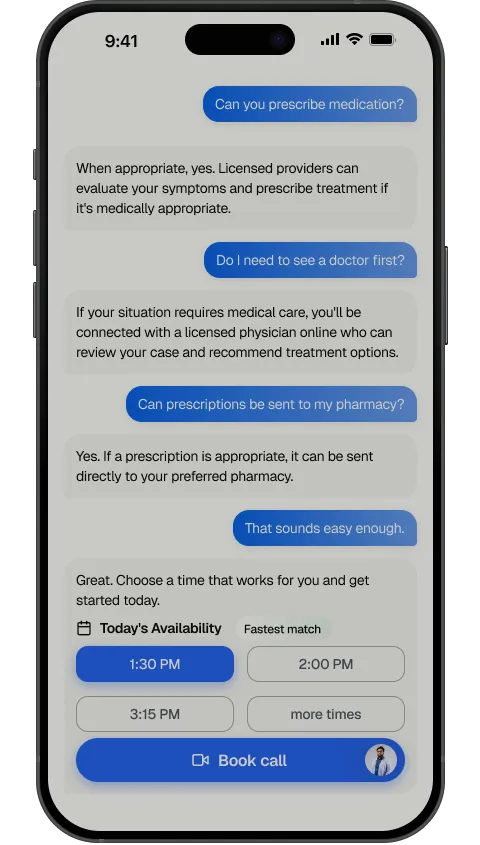
Book a $39 telehealth appointment (or copay) within 30 minutes. Our doctors create personalized treatment plans with prescriptions when needed.

Pick Up Your Prescription
Our doctors prescribe non-controlled medications in all 50 states and send prescriptions to your pharmacy for same-day pickup.
Pricing that won't make you sick
Chat for free, see an online doctor for $39/visit, or refill a prescription online for as low as $0
-
 Available in all 50 states + DC
-
 Insurance accepted

- 24/7 medical care Free
- Specialist referrals Free
- Lifelong health record Free
- Unlimited questions Free
- Prescription refills Starting as low as $0
- Video visit with real doctors $39/visit
These are stories from real users who turned to Doctronic for answers when it mattered most.
- Preparing for a doctor visit
- Finding peace of mind
- Understanding a diagnosis
- Managing chronic illness
- Navigating healthcare
- A second opinion
- Improving health











Frequently asked questions
Intestinal Candida overgrowth occurs when Candida fungi, most commonly Candida albicans, proliferate beyond normal levels in the gastrointestinal tract. This can happen after antibiotic use, in people with weakened immune systems, or with certain dietary patterns. Symptoms may include bloating, gas, abdominal pain, diarrhea, and fatigue.
Diagnosis is typically based on a combination of clinical symptoms and, when needed, stool culture or endoscopic findings showing Candida colonization. A detailed history of antibiotic use, immune status, and dietary habits also helps guide clinical assessment.
Oral fluconazole is the most commonly used first-line treatment. Nystatin oral suspension is another option that acts locally within the gut. In cases of fluconazole-resistant Candida, itraconazole may be considered. Your physician will select the most appropriate option based on your history and symptoms.
Treatment duration varies depending on symptom severity and individual response. Oral antifungal courses commonly range from one to four weeks. Some patients may benefit from a longer course or adjunct probiotic support. Your physician will determine the most appropriate duration for your situation.
Dietary factors may play a role. High intake of refined sugars and simple carbohydrates can provide nutrients that support Candida growth. Many clinicians recommend reducing sugar intake and incorporating probiotic-rich foods during and after antifungal treatment, though dietary changes alone are generally not sufficient to treat established overgrowth.
Yes. Azole antifungals such as fluconazole and itraconazole can interact with a number of medications, including blood thinners, certain statins, and immunosuppressants. Your Doctronic physician will review your current medications carefully before prescribing to ensure safe treatment.
Doctronic uses AI-powered evaluation to gather your symptoms and health history, which is then reviewed by a licensed physician. Based on that review, the physician creates a personalized treatment plan, which may include a prescription sent to your preferred pharmacy.
Yes. Doctronic connects you with fully licensed physicians who review every case. All consultations are doctor-reviewed and audited for quality, and the platform is HIPAA-aligned to protect your personal health information. Care is available to adults 18 and older in any U.S. state.
Top Conditions We Can Help With
People turn to Doctronic and our licensed medical team for support with all types of conditions.