
Get Intracranial Hypertension Treatment Online
Increased pressure inside the skull can cause debilitating headaches, vision changes, and more. Doctronic's licensed physicians can evaluate your symptoms and help you manage intracranial hypertension with a personalized treatment plan.


What Is Intracranial Hypertension?
Intracranial hypertension is a neurological condition marked by abnormally elevated pressure within the skull, often causing severe headaches, pulsatile tinnitus, visual disturbances, and papilledema. It can result from identifiable causes such as venous sinus thrombosis, certain medications, or obesity, or it may occur without a clear underlying cause, as in idiopathic intracranial hypertension (IIH). With the right treatment and support, many people are able to reduce their pressure, protect their vision, and significantly improve their quality of life.
- Elevated cerebrospinal fluid pressure causes characteristic symptoms including severe positional headaches and visual changes
- Get personalized guidance from doctor-trained AI
- Explore treatment and prescription options

Is Online Intracranial Hypertension Treatment Right for You?
Doctronic can evaluate and support patients experiencing symptoms consistent with intracranial hypertension, including chronic headaches, visual disturbances, and pulsatile tinnitus, and can assist in ongoing medical management for those with an established diagnosis.
Because intracranial hypertension involves the central nervous system and can affect vision, our physicians will carefully review your neurological and ophthalmologic history, any prior imaging or lumbar puncture results, and any medications that may contribute to elevated intracranial pressure.
- Diagnosed with intracranial hypertension or idiopathic intracranial hypertension (IIH)
- Get personalized guidance from AI and clinicians
- Explore treatment and prescription refill options
- Access care from home, often the same day

Medications We Prescribe for Intracranial Hypertension

Acetazolamide
Acetazolamide
A carbonic anhydrase inhibitor and first-line pharmacologic treatment for intracranial hypertension, reducing cerebrospinal fluid production to lower intracranial pressure.
Topamax
Topiramate
An anticonvulsant with carbonic anhydrase inhibiting properties, used as a second-line agent to help reduce intracranial pressure, especially in patients who cannot tolerate acetazolamide.
Lasix
Furosemide
A loop diuretic sometimes used adjunctively to reduce fluid retention and intracranial pressure when first-line therapies are insufficient.
Deltasone
Prednisone
A corticosteroid occasionally used short-term in intracranial hypertension associated with inflammatory conditions, though chronic use can worsen IIH and requires careful physician oversight.
How Intracranial Hypertension Treatment Works at Doctronic

Chat With The #1 AI Doctor
Doctronic answers your health questions with personalized medical insights and helps our doctors create a better treatment plan for you.

Meet With a Licensed Doctor For Treatment
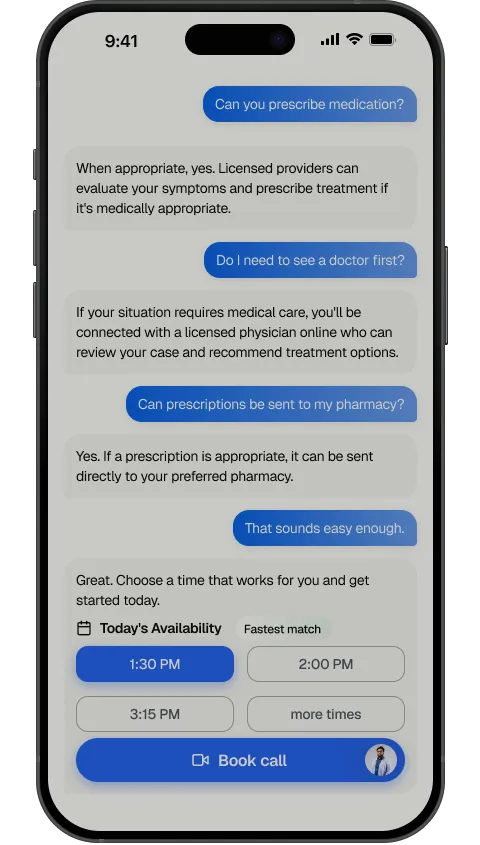
Book a $39 telehealth appointment (or copay) within 30 minutes. Our doctors create personalized treatment plans with prescriptions when needed.

Pick Up Your Prescription
Our doctors prescribe non-controlled medications in all 50 states and send prescriptions to your pharmacy for same-day pickup.
Pricing that won't make you sick
Chat for free, see an online doctor for $39/visit, or refill a prescription online for as low as $0
-
 Available in all 50 states + DC
-
 Insurance accepted

- 24/7 medical care Free
- Specialist referrals Free
- Lifelong health record Free
- Unlimited questions Free
- Prescription refills Starting as low as $0
- Video visit with real doctors $39/visit
These are stories from real users who turned to Doctronic for answers when it mattered most.
- Preparing for a doctor visit
- Finding peace of mind
- Understanding a diagnosis
- Managing chronic illness
- Navigating healthcare
- A second opinion
- Improving health











Frequently asked questions
Intracranial hypertension means the pressure of the cerebrospinal fluid (CSF) inside the skull is too high. It can result from identifiable causes such as certain medications (including tetracycline antibiotics, vitamin A derivatives, or steroids), venous sinus thrombosis, or obesity. When no underlying cause is found, it is called idiopathic intracranial hypertension (IIH). The condition is most common in women of childbearing age who have obesity.
The most common symptom is a severe, daily headache that is often worse in the morning or when lying down. Other symptoms include pulsatile tinnitus (a whooshing sound in the ears in sync with the heartbeat), transient visual obscurations (brief episodes of blurred or lost vision), double vision, and neck or shoulder pain. In serious cases, untreated elevated pressure can lead to permanent vision loss.
Diagnosis typically requires a lumbar puncture (spinal tap) to measure the CSF opening pressure, along with brain imaging (MRI or CT) to rule out structural causes. An eye examination to look for papilledema (swelling of the optic disc) is also a critical part of the workup. A pressure reading above 25 cm H2O in adults is generally considered elevated.
Yes. In patients with IIH and obesity, even modest weight loss of 5 to 10 percent of body weight has been shown to significantly reduce intracranial pressure and improve symptoms. Weight loss is considered an important part of long-term management alongside medication.
Acetazolamide is the first-line medication and works by reducing CSF production. Topiramate is a second-line option with similar properties. Furosemide may be added as an adjunctive diuretic. Short-course corticosteroids may be used in specific inflammatory cases. For patients who do not respond to medications, surgical options such as optic nerve sheath fenestration or CSF shunting may be considered by a specialist.
Yes. Several medications are associated with causing or worsening intracranial hypertension. These include tetracycline-class antibiotics (such as doxycycline and minocycline), high-dose vitamin A or retinoids (such as isotretinoin), oral contraceptives in some cases, growth hormone, and prolonged corticosteroid use or withdrawal. A physician will review your full medication list as part of your evaluation.
Doctronic uses AI-powered evaluation to help you describe your symptoms thoroughly and efficiently. That information is then reviewed by a licensed physician who determines whether treatment is appropriate and, if so, creates a personalized treatment plan. The entire process happens online, so you can get care without an in-person visit.
Yes. Doctronic works exclusively with licensed physicians who review every case. All consultations are HIPAA-aligned and doctor-reviewed. Our platform is designed to provide safe, high-quality medical care online, with physician oversight and regular auditing to maintain clinical standards.
Top Conditions We Can Help With
People turn to Doctronic and our licensed medical team for support with all types of conditions.