
Get Diabetic Retinopathy Treatment Online
Diabetic retinopathy is a serious complication of diabetes that damages the blood vessels in your retina. Doctronic connects you with licensed physicians who can evaluate your condition and help protect your vision with a personalized treatment plan.


What Is Diabetic Retinopathy?
Diabetic retinopathy is a diabetes complication marked by progressive damage to the retinal blood vessels, which can cause swelling, leakage, abnormal vessel growth, and scarring. It can lead to significant vision loss or blindness if left unmanaged. With the right treatment and support, progression can be slowed and remaining vision can be preserved.
- A leading cause of vision loss in adults with type 1 or type 2 diabetes
- Get personalized guidance from doctor-trained AI
- Explore treatment and prescription options

Is Online Diabetic Retinopathy Treatment Right for You?
Doctronic can support adults who have been diagnosed with diabetic retinopathy or who have diabetes and are experiencing vision changes that may indicate retinal involvement. Our licensed physicians review your history and coordinate a treatment approach tailored to your stage of disease.
Because diabetic retinopathy is closely tied to blood sugar control, cardiovascular health, and blood pressure management, a thorough review of your diabetes history, systemic medications, and any prior eye evaluations helps our physicians make the safest and most effective recommendations for you.
- Diagnosed with diabetic retinopathy (any stage)
- Get personalized guidance from AI and clinicians
- Explore treatment and prescription refill options
- Access care from home, often the same day

Medications We Prescribe for Diabetic Retinopathy

Jardiance
Empagliflozin
An SGLT2 inhibitor that improves glycemic control and reduces cardiovascular risk, both key to slowing diabetic retinopathy progression.
Ozempic
Semaglutide
A GLP-1 receptor agonist that lowers blood sugar and supports weight management, helping address the systemic drivers of retinal damage.
Micardis
Telmisartan
An ARB antihypertensive that helps control blood pressure, a critical factor in reducing retinal vascular damage in diabetic patients.
Fortamet
Metformin
A first-line oral diabetes medication that improves insulin sensitivity and lowers blood glucose to reduce the risk of retinopathy progression.
How Diabetic Retinopathy Treatment Works at Doctronic

Chat With The #1 AI Doctor
Doctronic answers your health questions with personalized medical insights and helps our doctors create a better treatment plan for you.

Meet With a Licensed Doctor For Treatment
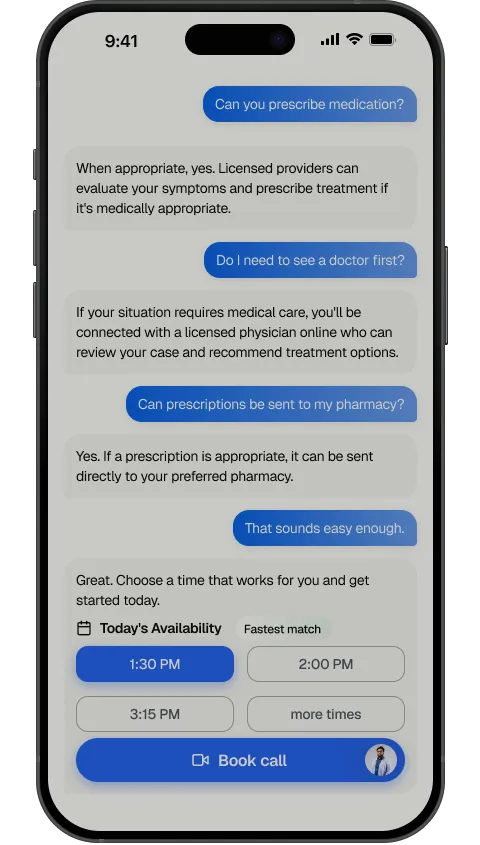
Book a $39 telehealth appointment (or copay) within 30 minutes. Our doctors create personalized treatment plans with prescriptions when needed.

Pick Up Your Prescription
Our doctors prescribe non-controlled medications in all 50 states and send prescriptions to your pharmacy for same-day pickup.
Pricing that won't make you sick
Chat for free, see an online doctor for $39/visit, or refill a prescription online for as low as $0
-
 Available in all 50 states + DC
-
 Insurance accepted

- 24/7 medical care Free
- Specialist referrals Free
- Lifelong health record Free
- Unlimited questions Free
- Prescription refills Starting as low as $0
- Video visit with real doctors $39/visit
These are stories from real users who turned to Doctronic for answers when it mattered most.
- Preparing for a doctor visit
- Finding peace of mind
- Understanding a diagnosis
- Managing chronic illness
- Navigating healthcare
- A second opinion
- Improving health










Frequently asked questions
Diabetic retinopathy occurs when chronically high blood sugar damages the tiny blood vessels supplying the retina. Over time these vessels can leak, swell, or grow abnormally, leading to vision distortion and, in advanced cases, vision loss. It progresses through nonproliferative and proliferative stages.
Yes. Keeping blood sugar as close to target as possible is the single most important step in slowing retinopathy progression. Controlling blood pressure and cholesterol also significantly reduces the risk of worsening retinal damage.
Sudden vision loss, a dramatic increase in floaters, flashes of light, a curtain or shadow across your vision, or any rapid change in visual clarity warrants same-day evaluation by an eye specialist, as these can signal retinal detachment or hemorrhage.
Most guidelines recommend at least one dilated eye exam per year for people with diabetes. If retinopathy has already been detected, your ophthalmologist may recommend exams every three to six months depending on severity.
Yes. Anti-VEGF injections administered by an ophthalmologist are a mainstay of treatment for diabetic macular edema and proliferative retinopathy. Systemic medications that control blood sugar and blood pressure are also essential parts of the overall treatment strategy.
Absolutely. High blood pressure puts extra stress on the already fragile retinal vessels in people with diabetes. Antihypertensive medications, particularly those that block the renin-angiotensin system such as ACE inhibitors or ARBs, are often preferred because of their additional protective effects on retinal vasculature.
Doctronic uses an AI-powered evaluation to gather detailed information about your symptoms, history, and current medications. A licensed physician then reviews your case and creates a personalized treatment plan, which may include prescriptions, referrals, or monitoring recommendations.
Yes. Doctronic connects you exclusively with licensed physicians. All care decisions are doctor-reviewed and audited, and the platform is fully HIPAA-aligned to protect your personal health information. Adults 18 and older in any U.S. state can access care.
Top Conditions We Can Help With
People turn to Doctronic and our licensed medical team for support with all types of conditions.